Best Online Arabic Classes for Kids
At online Arabic classes for kids you well know that Arabic is one of the world’s most widely spoken languages and the sacred language of the Quran. Yet for many Muslim families living in Western countries, giving children a proper Arabic education has historically been difficult limited by geography, a lack of qualified local teachers, and the challenge of making lessons engaging for young learners. That is precisely why Arabic classes have become an increasingly popular and trusted solution.
Whether your goal is for your child to understand the Quran in its original language, communicate with Arabic-speaking family members, or build a valuable bilingual skill for the future, online Arabic education offers a flexible, high-quality path to all of these goals.
Today’s online platforms connect children with native Arabic-speaking teachers, use interactive digital tools, and deliver personalized instruction that adapts to each child’s pace and learning style.
This guide covers everything you need to know as a parent: what online Arabic classes for kids include, the benefits of starting early, how to choose the right program, and practical strategies for supporting your child’s learning at home.
Why Arabic Is One of the Most Valuable Languages for Kids
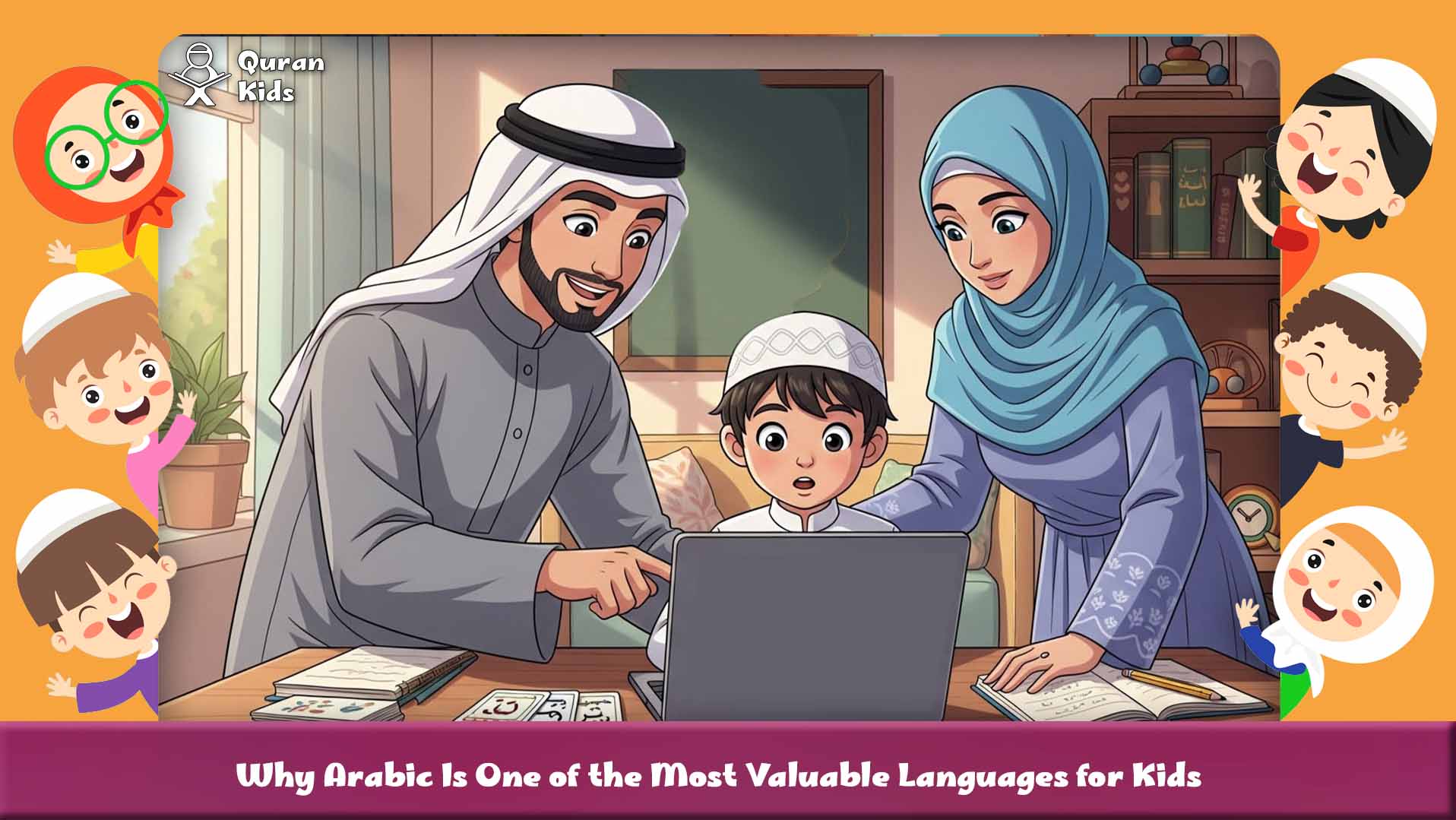
Arabic is the fifth most spoken language in the world, with over 400 million native speakers across 22 countries. It is the official language of the Arab League, a working language of the United Nations, and most importantly for Muslim families the language in which the Quran was revealed. For Muslim children, learning Arabic is not simply an academic exercise; it is a spiritual investment that deepens their connection to their faith, their prayers, and the words of Allah.
Beyond its religious significance, Arabic fluency opens remarkable professional doors. Industries including diplomacy, international business, journalism, and humanitarian work all prize Arabic speakers highly. A child who begins Arabic learning today builds a lifelong competitive advantage that will serve them in ways that are difficult to predict but impossible to overstate.
The earlier a child begins, the easier language acquisition becomes. Children’s brains are uniquely wired for language learning before the age of ten, absorbing new sounds, scripts, and vocabulary with remarkable efficiency. Online Arabic classes for kids capitalize on this natural window, helping children build authentic fluency with native-level pronunciation that becomes much harder to achieve in adulthood.
What Is Taught in Online Arabic Classes for Kids?
A quality online Arabic program for children is structured, progressive, and age-appropriate. Here are the core areas your child will study:
Arabic Alphabet and Phonics
Every Arabic journey begins with the 28 letters of the Arabic alphabet. Children learn to recognize each letter in its different forms at the beginning, middle, and end of a word and to produce the unique sounds that Arabic contains, including letters with no English equivalent such as the ‘Ayn, Ghayn, and Qaf. This phonics foundation is essential before any reading, writing, or Quran study can begin.
Reading and Writing in Arabic Script
Once the alphabet is mastered, children progress to reading words, short sentences, and simple texts. Writing practice runs in parallel children learn to form letters beautifully and join them correctly, developing handwriting skills that are both functional and a source of pride. Many children find Arabic script visually fascinating, which naturally boosts their engagement with writing practice.
Conversational Arabic Vocabulary
Practical vocabulary is introduced from the very first lessons, covering everyday topics such as greetings, numbers, colors, family members, food, animals, and daily routines. Conversational Arabic allows children to use the language actively not just read it passively which dramatically accelerates fluency and builds genuine confidence.
Quranic Arabic
For Muslim families, Quranic Arabic course is often the primary motivation for enrollement. This specialized track teaches children the vocabulary, grammatical structures, and linguistic patterns that appear most frequently throughout the Quran.
Children who study Quranic Arabic alongside their Quran recitation classes experience a profound shift verses they have recited for years suddenly carry deep, personal meaning that transforms their relationship with the Quran.
Arabic Grammar (Nahw and Sarf)
As children advance, programs introduce age-appropriate Arabic grammar, including basic sentence structure, verb conjugations, and noun declensions. Grammar is taught through practical examples and stories rather than abstract rules, making it digestible and memorable for young learners. A solid grammar foundation unlocks the ability to construct original sentences and engage with Arabic texts independently.
Key Benefits of Online Arabic Classes for Kids
- Online platforms give your child access to teachers who grew up speaking Arabic ensuring authentic pronunciation, natural phrasing, and cultural depth that non-native teachers simply cannot replicate.
- Individual sessions mean the teacher focuses entirely on your child, correcting errors in real time, adapting to their learning pace, and designing lessons around their interests to keep engagement high.
- Digital whiteboards, screen sharing, interactive games, and multimedia resources transform what could be dry memorization into a dynamic, visually rich, and genuinely enjoyable experience.
- Reputable academies track attendance, lesson completion, vocabulary acquisition, and reading fluency providing parents with regular reports so you always have a clear picture of your child’s development.
These advantages combine to make online Arabic classes for kids not just a convenient choice, but frequently the most effective route to genuine Arabic fluency available to families today.
Practical Tips to Support Your Child’s Arabic Learning
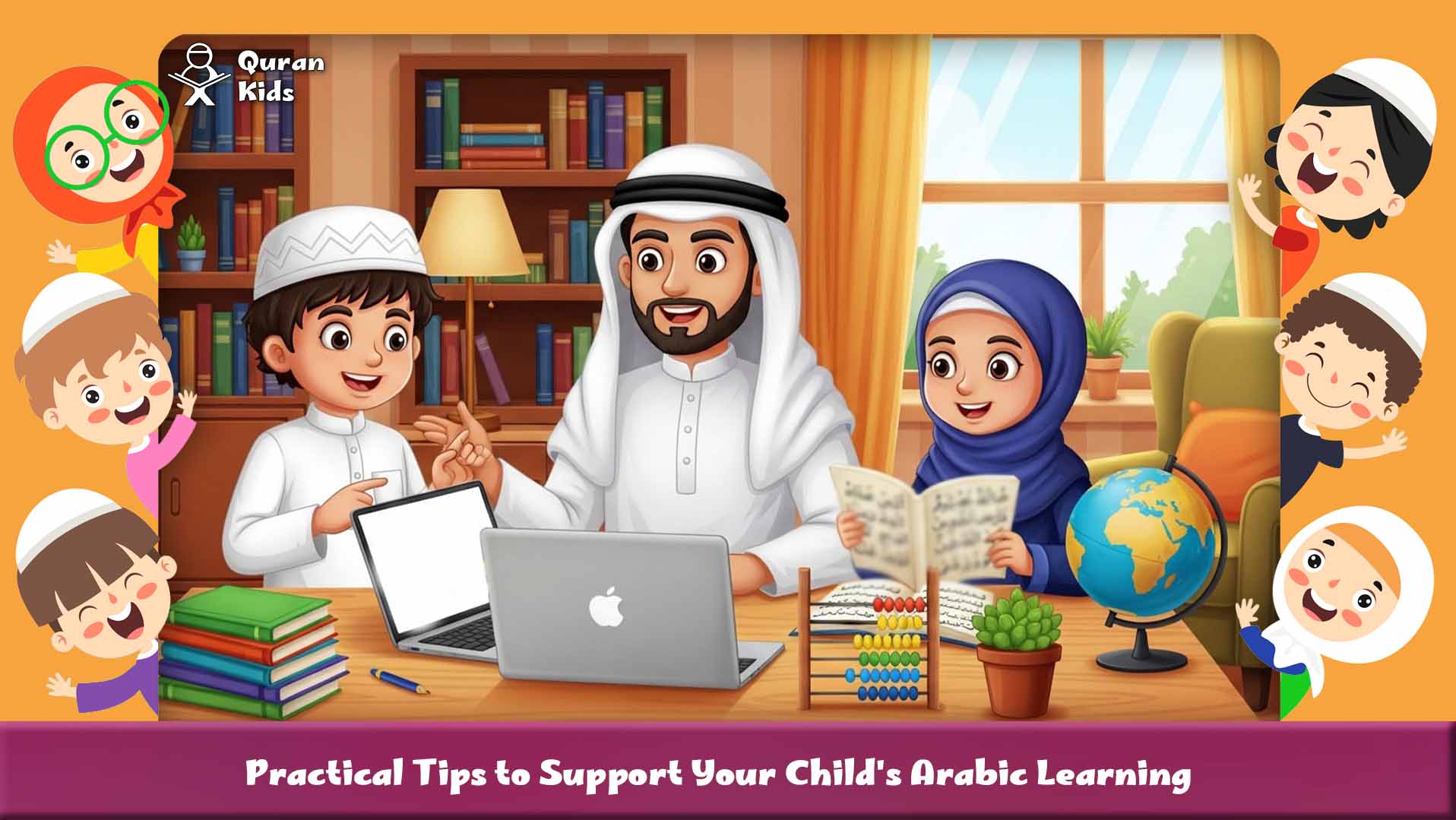
Your child’s success in online Arabic classes depends not only on their teacher, but on the environment and habits you create at home. Here are the most effective strategies:
- Set up a quiet, well-lit learning space with all materials ready before each session. A stable internet connection and a good pair of headphones make a significant difference to lesson quality.
- Practice together daily even for ten minutes. Ask your child to teach you a new Arabic word they learned in class. Teaching others is one of the fastest ways to solidify new language knowledge.
- Label household items in Arabic. Placing small sticky labels on common objects like the door, table, window, and refrigerator turns your home into an immersive Arabic environment that reinforces vocabulary passively throughout the day.
- Introduce Arabic media. Children’s Arabic cartoons, songs, and audio books are powerful supplementary tools. Platforms like Nussa, Arabeyes, and various YouTube channels offer engaging Arabic content designed specifically for young learners.
- Celebrate every milestone completing the alphabet, reading a first sentence, or writing their own name in Arabic. Positive reinforcement builds the intrinsic motivation that sustains language learning over months and years.
Consistency beats intensity every time when it comes to language learning. Twenty minutes of daily exposure is far more effective than a two-hour session once a week. Build Arabic into your family’s daily rhythm, and you will be amazed at how quickly your child progresses.
Frequently Asked Questions
Before reaching out to support, take a look at our frequently asked questions below. We have provided straightforward answers to our users’ most common queries to get you sorted in no time.
Q1: What age should kids start online Arabic classes?
Children can begin online Arabic classes as young as 4 or 5 years old. At this stage, lessons are fully play-based built around songs, colorful animations, games, and storytelling rather than formal instruction.
Language acquisition experts and educators consistently agree that beginning a second language before age seven produces native-level pronunciation and dramatically faster vocabulary growth compared to starting in adolescence or adulthood.
Q2: Should my child learn Modern Arabic or Quranic Arabic?
This depends entirely on your primary goal. If your main objective is for your child to understand the Quran during prayer, recitation, and Islamic study, then Quranic Arabic (also called Classical Arabic or Fusha) is the right choice. It focuses on the vocabulary and grammatical structures that appear throughout the Quran and classical Islamic texts.
Q3: How long does it take for a child to learn Arabic online?
The timeline varies based on the child’s age, the frequency of lessons, and the level of home practice. As a general guide, most children can master the Arabic alphabet and begin reading simple words within two to three months of regular lessons.
In conclusion Online Arabic classes for kids represent one of the smartest educational investments a parent can make. In a world that is increasingly interconnected, Arabic fluency opens doors to a deeper understanding of the Quran,
to meaningful communication with over 400 million people, and to professional opportunities that will only grow in importance over the coming decades.
The digital revolution has made world-class Arabic education accessible to every family, regardless of where they live. Qualified, native-speaking teachers are just a click away. Interactive tools make lessons genuinely fun. And flexible scheduling means that Arabic learning can fit naturally into even the busiest family lives.