Online Islamic Academy for Kids: Faith and Future
For Muslim parents raising children today, providing a solid Islamic education is highly important. Modern life is fast-paced and digitally connected. Fortunately, accessible online learning has fundamentally changed how families receive quality Islamic instruction. Geography and limited local resources are no longer barriers. In addition, inflexible schedules used to make comprehensive Islamic education difficult to sustain. Online platforms completely remove these modern challenges.
Perhaps your goal is Quran memorization or Tajweed mastery. Alternatively, you might want Arabic language fluency or a broad grounding in Islamic studies. A dedicated online Islamic academy for kids offers structured programs to meet these needs.
Furthermore, they provide certified teachers and child-centered learning tools. Consequently, these programs deliver real, measurable results, all from the comfort and safety of your own home.
Why Islamic Education Matters for Children
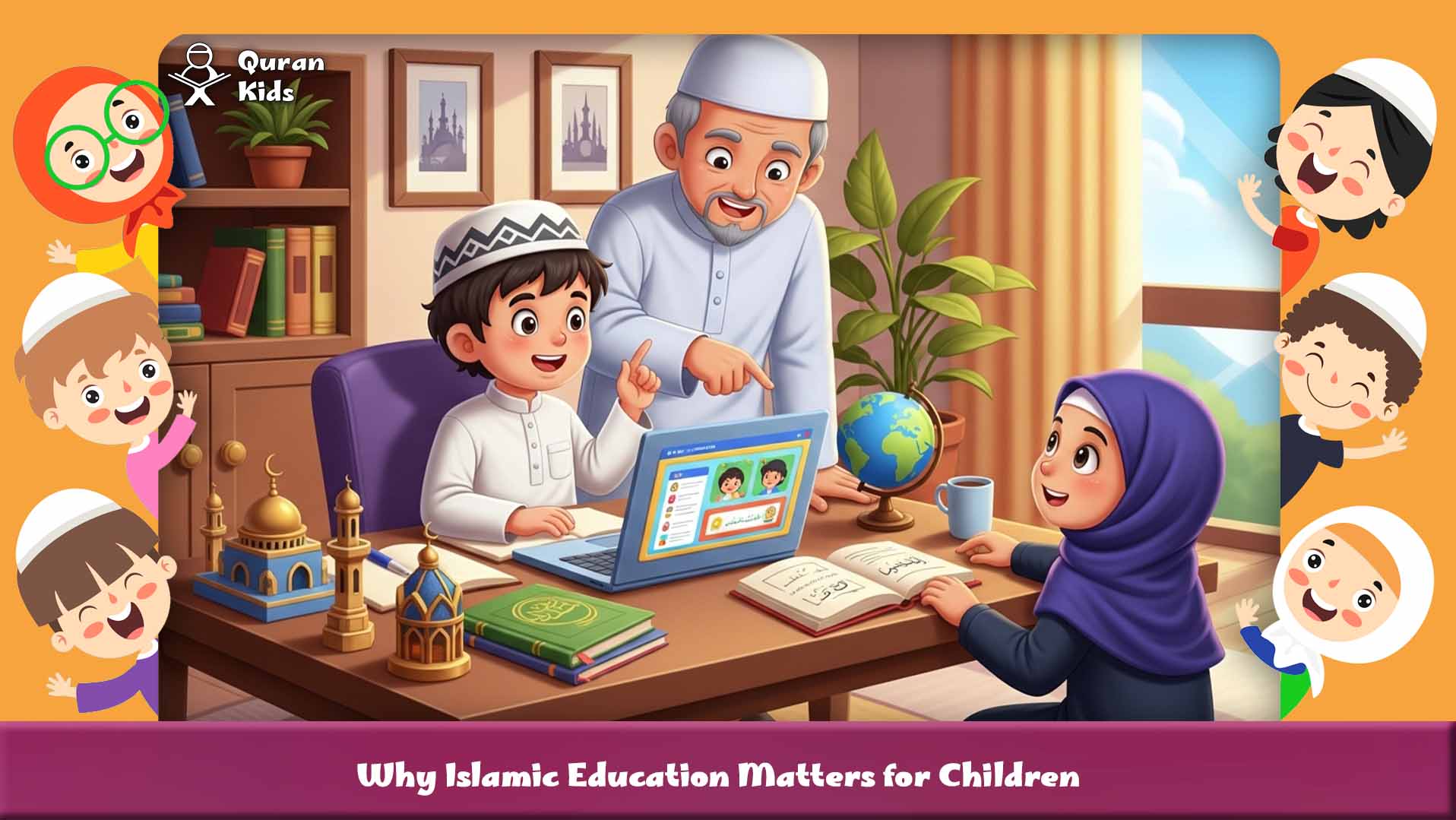
Islamic education is not simply about memorizing historical facts. Similarly, it is not just about performing rituals correctly. At its best, it profoundly shapes a child’s character. It also instills core moral values. Consequently, this education gives children a comprehensive framework for navigating every dimension of life. This includes personal ethics, family relationships, civic responsibility, and professional conduct.
In addition to this, early religious schooling nurtures the soul. It also encourages critical thinking from a faith-based perspective. Therefore, parents who prioritize Islamic education for kids are investing heavily in their child’s inner compass. They are protecting their spiritual well-being, rather than just increasing their academic religious knowledge.
Nurture Your Kids’ Faith with Expert Online Quran Tutoring
Are you on the lookout for a fun, interactive web-based Quran academy for your little ones? We provide a highly protective and motivating environment where kids blossom and achieve their ultimate spiritual capabilities.
We welcome you to join our worldwide family today and witness the impact of professional, student-centered instruction. Moreover, we offer highly convenient lesson times that align smoothly with your family commitments in Australia or Britain. Investing in our lessons means preparing your child for a life blessed by Quranic light.
Building a Strong Islamic Identity
Children who receive consistent Islamic education develop a clear, confident identity. They learn exactly who they are from a young age. As a matter of fact, this solid spiritual identity becomes an invaluable anchor during the turbulent adolescent years. This is a period when peer pressure and social media influences can easily challenge young people. Furthermore, cultural confusion often complicates their lives.
In today’s interconnected digital world, children are constantly exposed to conflicting worldviews. Therefore, a child who deeply understands their faith is far better equipped to face these modern challenges. Loving the Quran and practicing Islam consciously gives them great resilience. Consequently, they can navigate life with dignity and unwavering integrity.
Developing Character and Moral Values
The Prophet Muhammad (peace be upon him) explicitly declared that he was sent for the sole purpose of perfecting good character. Accordingly, authentic Islamic education teaches children essential qualities such as honesty, generosity, patience, compassion, and profound respect for others. Crucially, these are not taught as abstract concepts, but rather as lived practices rooted directly in Quranic guidance and the beautiful example of the Prophet.
By doing so, children learn how to apply faith to everyday interactions. As a result, youth who internalize these values carry them into every environment they enter, naturally becoming positive, impactful contributors to their families, schools, and global communities.
Establishing a Lifelong Spiritual Foundation
The spiritual habits formed in childhood tend to persist throughout life. A child who grows up praying, reciting Quran, and engaging with Islamic knowledge develops a relationship with Allah that sustains them through every stage of life through difficulty and prosperity, doubt and certainty, loss and joy. An online Islamic academy for kids plants these seeds early, when hearts are most receptive and habits are most easily formed.
Core Subjects Offered at an Online Islamic Academy
A comprehensive online Islamic academy for kids covers a range of interconnected subjects that together provide a complete Islamic education. Here is what your child will typically study:
Quran Recitation and Tajweed
The Quran sits at the heart of every serious online Islamic academy for kids. Tajweed the science of correct Quranic recitation is introduced systematically, beginning with the Arabic alphabet and progressing through the full set of pronunciation and elongation rules.
Certified teachers with Ijazah credentials ensure that every child learns to recite exactly as the Quran was revealed, preserving the sacred accuracy that has been maintained across fourteen centuries of Islamic scholarship.
Quran Memorization (Hifz)
For families with the aspiration of raising a Hafiz or Hafiza, the online format is remarkably well-suited. Daily one-on-one sessions allow the teacher to introduce new portions, review previously memorized sections, and maintain the relentless repetition that strong Hifz requires. Children who begin memorization between the ages of five and ten typically progress fastest, though motivated students at any age can achieve significant results with the right teacher and a consistent daily routine.
Arabic Language for Quranic Understanding
Understanding the language of the Quran transforms a child’s relationship with their faith. To achieve this, the best online Islamic academies for kids offer structured Arabic courses designed to build Quranic vocabulary and comprehension progressively.
Remarkably, even a working knowledge of the 300 most frequently occurring Quranic words allows a child to understand the meaning of over 70% of what they recite, thereby turning prayer from mechanical repetition into genuine, heartfelt communication with Allah.
Islamic Studies: Aqeedah, Fiqh, and Seerah
Beyond Quran and Arabic, a well-rounded online Islamic academy for kids integrates age-appropriate Islamic Studies covering the core pillars of Islamic belief (Aqeedah), the practical rulings of worship and daily life (Fiqh), the life and example of the Prophet Muhammad (Seerah), and the development of noble character and manners (Adab). These subjects give children the theological depth and practical knowledge to live Islam fully and consciously, not simply as a set of inherited customs but as a living, understood, and chosen way of life.
Benefits of an Online Islamic Academy for Kids
- An online Islamic academy for kids connects your child with Ijazah-certified scholars from Egypt, Saudi Arabia, Pakistan, and other major centers of Islamic learning teachers your local community simply may not have access to.
- First and foremost, children learn from home, in a comfortable and familiar environment, under parental supervision. In addition, reputable academies operate via secure video platforms and maintain full transparency with parents at every stage.
Furthermore, sessions are available seven days a week across multiple time zones, thereby allowing families to build a consistent learning routine around school, extracurriculars, and family life without compromise.
- Parents receive detailed updates on lesson completion, Tajweed accuracy, memorization milestones, and overall development keeping the entire family informed, involved, and motivated.
How to Choose the Right Online Islamic Academy
With hundreds of platforms now competing for your attention, choosing wisely requires moving beyond marketing claims and evaluating what genuinely matters. Here is a practical framework for making the right decision:
Verify Teacher Credentials and Ijazah Certification
The Ijazah is the gold standard of Quranic authenticity a formal chain of authorization linking a teacher’s recitation directly back to the Prophet Muhammad (peace be upon him) through an unbroken line of scholars.
Do not enroll your child with any teacher who cannot demonstrate a valid Ijazah. Ask the academy directly how they verify credentials, and do not be shy about requesting documentation. A reputable online Islamic academy for kids will welcome this question.
Always Book a Free Trial Lesson
A free trial class is non-negotiable before committing to any paid plan. Use the trial to observe how the teacher engages your child do they use visual aids, interactive tools, and storytelling? Do they explain concepts clearly and age-appropriately? Does your child seem engaged, comfortable, and genuinely interested by the end of the session? Trust what you observe, not what you read in marketing materials.
Assess the Curriculum Structure and Milestones
A trustworthy Islamic online quran academy for kids will have a clearly defined syllabus with measurable learning outcomes at each stage. You should be able to understand exactly what your child will have achieved after three months, six months, and one year of study. If an academy cannot articulate this clearly, treat it as a serious warning sign.
Request Female Teachers When Required
For families who prefer their daughters to learn from qualified female teachers, this should be a standard feature of any reputable online Islamic academy for kids not a premium add-on. The best academies actively recruit and certify qualified female scholars and can make a match quickly, without any compromise on instructional quality.
Supporting Your Child’s Islamic Learning at Home
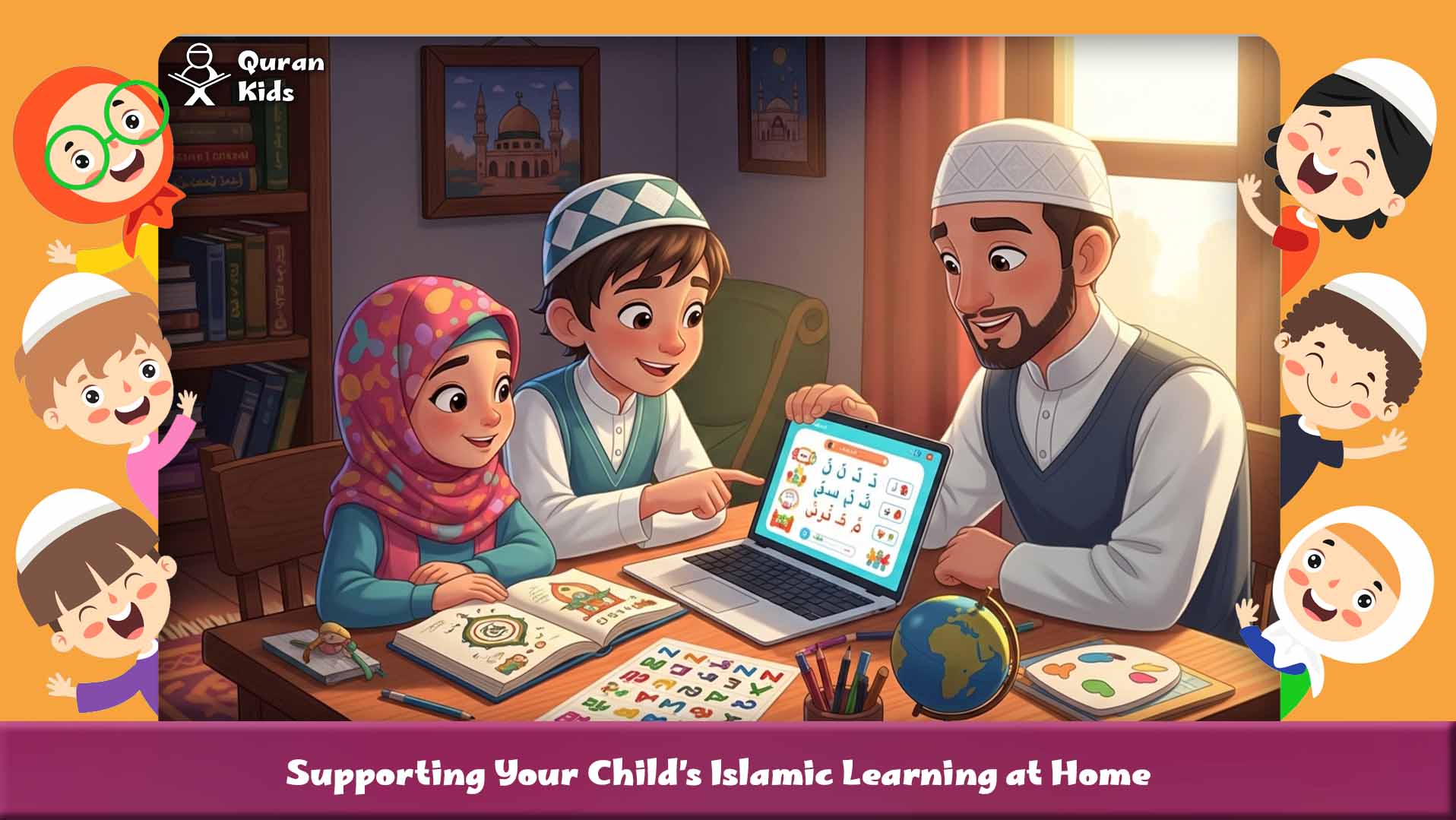
The teacher plants the seed but the home environment determines how well it grows. Here are the most effective ways to support your child’s progress between lessons and reinforce their Islamic education in daily family life.
- Play recitations by great Qaris such as Sheikh Mishary Al-Afasy or Sheikh Maher Al-Muaiqly during meals, car journeys, and bedtime. Passive listening trains the ear, reinforces correct pronunciation, and builds an emotional connection to the Quran that no lesson can fully replicate.
- Children who see their parents pray consistently, with focus and devotion, internalize salah as a natural and meaningful part of daily life. Invite your child to pray alongside you from an early age, making it an act of connection rather than obligation.
Ask your child to recite their lesson to you for ten to fifteen minutes each day. Keep in mind that you do not need to be a Quran expert to listen, as your attention and encouragement are what matter most. Ultimately, consistent daily review between lessons is the single most effective way to accelerate progress.
Frequently Asked Questions
To help you make the best decision for your family, we have gathered the most common questions parents ask. Therefore, the following answers will guide you through choosing the right educational journey for your children.
Q1: At what age should my child join an online Islamic academy?
Most online Islamic academies for kids welcome children from the age of four or five. At this stage, lessons are play-based, visually rich, and designed around the natural learning style of young children using games, songs, and colorful materials to introduce the Arabic alphabet and basic Islamic concepts in a way that feels exciting rather than academic. Islamic scholars and childhood educators widely agree that beginning Islamic education before the age of seven offers the greatest long-term advantage, particularly in pronunciation accuracy and memorization capacity. That said, children of any age can make meaningful and lasting progress with the right teacher and approach.
Q2: How many lessons per week does my child need?
For consistent and meaningful progress, most Islamic educators recommend a minimum of three lessons per week, with five being the ideal frequency for children working toward Hifz. Regularity matters more than session length for young learners three thirty-minute lessons per week will produce faster results than a single ninety-minute session. Most online Islamic academies for kids offer flexible packages ranging from two to seven sessions per week, making it possible to find a rhythm that fits your family’s schedule while maintaining the consistency that Islamic learning requires.
Q3: What technology does my child need for online Islamic classes?
The technical requirements are minimal and accessible for most families. Your child will need a device with a camera and microphone a laptop, tablet, or desktop computer all work well and a stable internet connection. Most online Islamic academies for kids conduct lessons via widely available platforms such as Zoom or Skype, or their own secure proprietary software. A good pair of headphones with a built-in microphone significantly improves audio clarity, which is especially important for learning Tajweed, where precise pronunciation is essential. No specialist equipment is required beyond these basics.
Conclusion: Begin Your Child’s Islamic Journey Today
Choosing the right online Islamic academy for kids is one of the most consequential decisions you will make in your child’s upbringing. The right academy with certified teachers, a structured curriculum, and genuine care for each child’s spiritual and academic development can set your child on a path of Quranic knowledge, Islamic understanding, and lifelong faith that no material gift could ever match.
The barriers that once made quality Islamic education inaccessible geography, limited local resources, rigid scheduling no longer exist. Today, a certified, experienced, and child-specialist Islamic teacher is available to your child wherever you live, at a time that fits your family, and at a price that makes consistent learning sustainable.
Use the guidance in this article to evaluate your options carefully, insist on a free trial class, and trust your instincts as a parent. When you find the right teacher and your child genuinely looks forward to their lessons, you will know you have made the right choice.