Best Online Islamic Classes for Kids
Online Islamic Classes for Kids have become an essential solution for Muslim families seeking quality Islamic education in a flexible and accessible way. Raising children with a strong Islamic foundation is one of the most meaningful responsibilities a Muslim parent carries. Yet for many families living in non-Muslim majority countries or in areas without access to quality Islamic schools, finding reliable, structured religious education can be a real challenge. That is exactly where online Islamic classes for kids have stepped in to fill the gap
In the past decade, digital Islamic education has transformed from a novelty into a trusted mainstream solution. Hundreds of thousands of Muslim families across the United States, United Kingdom, Canada, Australia, and beyond now rely on online platforms to teach their children the Quran, Arabic, and core Islamic values all from the comfort and safety of home.
This guide covers everything parents need to know: what online Islamic classes for kids actually include, the key benefits, how to choose the right academy, and practical advice for getting the most out of every lesson.
Why Online Islamic Education Is Growing Fast
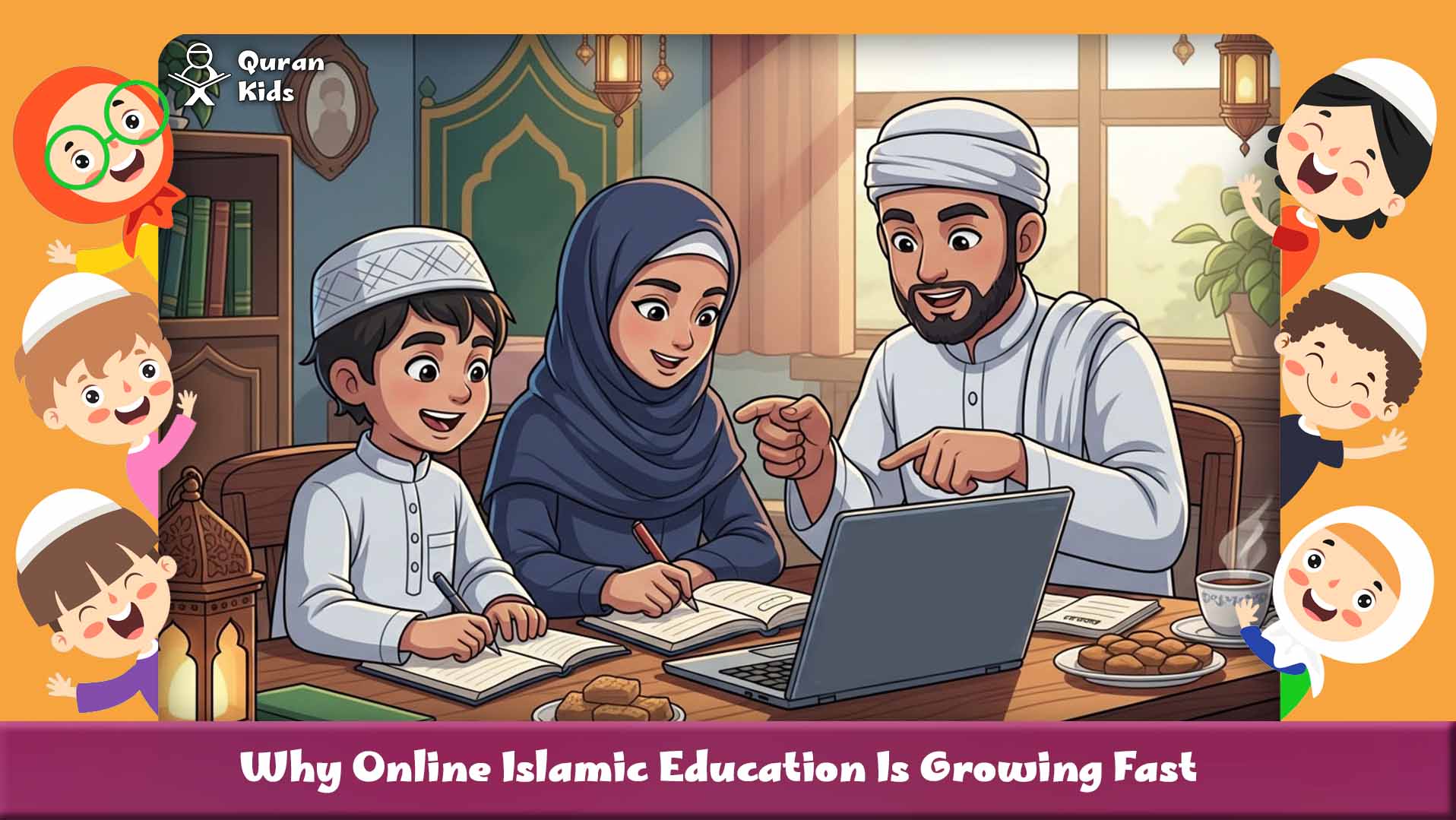
The rise of online Islamic classes for kids is not just a response to convenience it reflects a genuine shift in how Muslim families think about education. Traditional mosque classes, while valuable, are not always accessible, consistent, or tailored to each child’s individual pace and needs.
Online learning solves several problems at once. It removes the barrier of geography, connecting children with expert teachers based in Egypt, Saudi Arabia, Pakistan, and beyond. It eliminates the need for transportation, which is especially important for busy families juggling school, work, and extracurricular activities. And it provides one-on-one or small-group instruction that is simply not possible in a crowded community class.
The COVID-19 pandemic accelerated this shift dramatically, and what emerged was a thriving global industry of online Islamic education complete with certified teachers, structured curricula, progress tracking, and child-friendly digital tools. Today, the quality of online Islamic classes for kids rivals and often exceeds that of traditional in-person programs.
Unlock Your Child’s Potential with Quran Kids Academy Professional Support
Are you looking for an interactive and engaging Quran for kids online that inspires your little ones? Our academy offers a safe and encouraging environment where children can thrive and reach their full spiritual potential.
Therefore, we invite you to join our global family and experience the difference of professional, child-centered teaching today. Furthermore, we provide flexible scheduling that fits perfectly into your busy family routine in the UK or Australia. By choosing us, you are investing in a future where your child carries the light of the Quran.
What Subjects Are Covered in Online Islamic Classes?
A well-designed online Islamic curriculum covers far more than Quran recitation. Here are the core subjects your child will typically study:
Quran Reading and Tajweed
This is usually the core of any Islamic program for children. Students begin with Noorani Qaida a beginner’s primer that introduces the Arabic alphabet, vowel marks, and basic letter joining. Once they can read fluently, they advance to Tajweed: the science of reciting the Quran with correct pronunciation, rhythm, and melody, exactly as it was revealed. A child who learns Tajweed properly carries that skill for life.
Quran Memorization (Hifz)
For families who aspire to raise a Hafiz or Hafiza, online Hifz programs are highly effective. Daily one-on-one sessions allow teachers to introduce new portions of the Quran while consistently reviewing what has already been memorized. Children who begin young benefit from their naturally strong memories, and many complete significant portions of the Quran within a few years of consistent study.
Arabic Language for Kids
Learning Arabic enables children to understand the Quran directly a transformative experience that no translation can fully replicate. Online Arabic courses for children typically start with letter recognition, basic vocabulary, and simple sentence structure before progressing to Quranic Arabic. Children who learn Arabic alongside the Quran develop a much deeper and more lasting connection to their faith.
Islamic Studies and Character Building
Beyond the Quran and Arabic, comprehensive online Islamic classes for kids cover the five pillars of Islam, the life of the Prophet Muhammad (peace be upon him), Islamic manners (Adab), basic Aqeedah (creed), and age-appropriate Fiqh (Islamic rulings). These subjects build not just knowledge, but character helping children grow into young Muslims with strong values, compassion, and a clear Islamic identity.
Key Benefits of Online Islamic Classes for Kids
- Most online programs offer individual lessons, meaning the teacher focuses exclusively on your child correcting pronunciation instantly, adapting the pace, and providing personalized encouragement that a group class simply cannot match.
- Online platforms connect your child with Ijazah-certified teachers scholars whose chain of authorization traces directly back to the Prophet Muhammad (PBUH) regardless of where your family lives.
- Sessions can be arranged around school hours, weekend activities, and time zone differences making consistency far easier to maintain than with in-person classes.
- Children learn from home, under parental supervision, in a space where they feel comfortable and confident. This comfort translates directly into better focus and faster progress.
- Reputable academies provide regular reports, milestone tracking, and open communication with parents so you are never left wondering how your child is doing.
Together, these benefits make online Islamic classes for kids not just a convenient option, but often the most effective option available to Muslim families today.
How to Choose the Right Online Islamic Academy
With dozens of online Islamic academies available, choosing wisely requires looking beyond slick websites and marketing promises. Here are the most important criteria to evaluate:
Verify Teacher Qualifications
Always confirm that teachers hold a recognized tajweed Ijazah certificate and have specific experience teaching children. Teaching children requires patience, creativity, and an understanding of child psychology that not every qualified scholar possesses. Ask the academy directly about their teacher vetting process.
Take Advantage of Free Trial Classes
Most reputable academies offer one or two free trial sessions. Use this opportunity wisely. Observe how the teacher engages with your child, whether they explain concepts clearly, how they handle mistakes, and most importantly whether your child seems genuinely interested and at ease by the end of the session.
Female Teachers for Girls
For families who prefer their daughters to learn from a female teacher, look specifically for academies that recruit and certify qualified female Quran and Islamic studies teachers. Many leading platforms now actively prioritize this option and can match your daughter with a suitable teacher quickly.
Look for a Structured Curriculum
Avoid programs that simply let the teacher decide what to cover each session without a clear plan. A trustworthy academy will provide a structured syllabus with defined milestones, so both you and your child always know where they are in the learning journey and what comes next.
Tips for Parents to Support Islamic Learning at Home
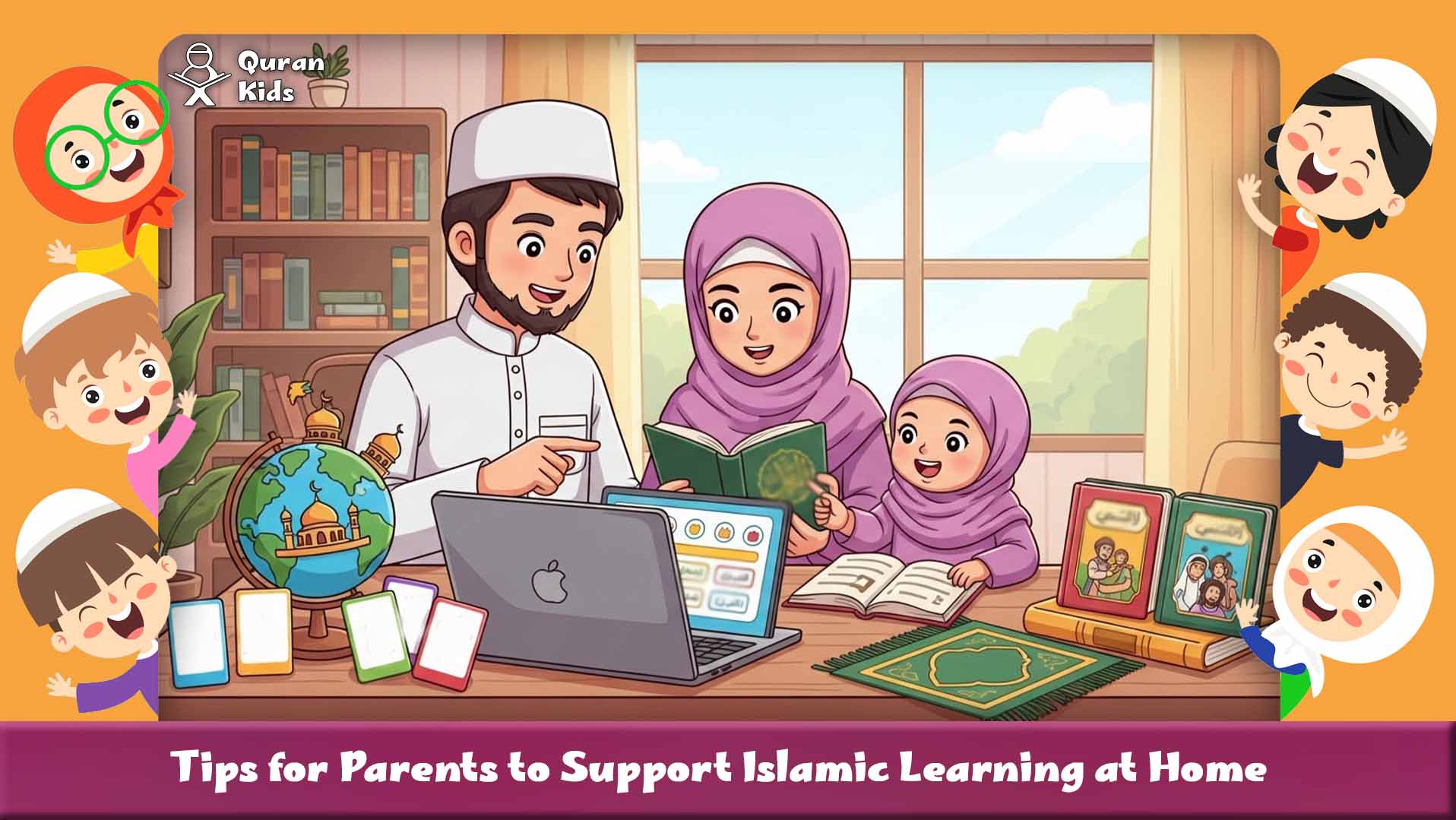
Enrolling your child in online Islamic classes is a wonderful start. But your involvement at home is what transforms good progress into exceptional progress. Here are practical steps every parent can take:
- Create a dedicated, distraction-free learning space with good lighting, a stable internet connection, and all necessary materials (Quran, notebook, headphones) ready before each session.
- Sit in on lessons occasionally not to interfere, but to stay connected to your child’s progress and show them that their Islamic education matters to you.
- Review daily with your child. Even a ten-minute revision session before dinner, where your child recites what they learned, dramatically improves retention.
- Play Quran recitations at home regularly. Listening to renowned Qaris trains the ear and reinforces correct pronunciation subconsciously making formal lessons more effective.
- Celebrate milestones enthusiastically. When your child completes Noorani Qaida, memorizes a new Surah, or receives a positive report, make it a family celebration. Positive reinforcement is one of the most powerful tools in sustaining long-term motivation.
Remember: the habits and love of Islam that you help build during these early years will stay with your child for the rest of their life. Your involvement is not optional it is essential.
Frequently Asked Questions
Got queries? We have got answers. Dive into our FAQ section below to discover everything you need to know about how we work, what we offer, and how to troubleshoot common issues.
Q1: What age is best to start online Islamic classes for kids?
Most online Islamic academies accept children from age 4 or 5. At this age, lessons are play-based and highly visual, focusing on letter recognition through songs, colors, and interactive games rather than formal instruction.
Islamic scholars and child education experts agree that beginning early even before formal schooling gives children a significant advantage in pronunciation accuracy and Quran memorization. However, it is never too late to start.
Q2: Are online Islamic classes as effective as in-person learning?
Yes and research and real-world results consistently show that for Quran and Islamic education specifically, online one-on-one classes often outperform traditional group settings. The reason is simple: a child in a one-on-one online session receives the teacher’s full and undivided attention for the entire lesson.
Every mispronunciation is corrected instantly, every question is answered immediately, and the curriculum is adapted in real time to the child’s pace and learning style. Many parents report that their children made more progress in six months of online classes than in years of attending a local mosque school.
Q3: How do I ensure my child stays motivated in online lessons?
Motivation in online learning is largely a product of three things: the right teacher, consistent routine, and active parental involvement. First, finding a teacher your child genuinely likes makes an enormous difference children who feel a connection with their teacher look forward to lessons rather than dreading them.
Second, treat Islamic class like any other important commitment: keep it scheduled, minimize cancellations, and build it into the family routine. Third, celebrate every milestone no matter how small. A child who feels seen, praised, and encouraged will stay motivated far longer than one who receives only neutral feedback.
Online Islamic classes for kids are one of the most powerful and accessible tools available to Muslim parents today. They bridge the gap between where you live and the quality Islamic education your child deserves, delivering certified teachers, structured curricula, and personalized attention all from the safety of home.
Whether your goal is for your child to read the Quran fluently, memorize chapters, understand Arabic, or simply grow up with a confident and grounded Islamic identity online Islamic education can make it happen. The tools exist, the teachers are ready, and the only thing remaining is for you to take the first step.
Sign up for a free trial class today, let your child meet a teacher, and begin a journey that will shape their character, their faith, and their future for the rest of their life.