Best Online Arabic and Quran Classes for Your Kids
Best Online Arabic and Quran Classes for kids, In today’s digital world, finding high-quality Islamic education for your children has never been easier or more important. Whether you live in a country with limited access to Islamic schools, or you simply want to give your child the gift of Quranic knowledge from the comfort of your home, online Arabic Quran classes for kids have become a trusted and effective solution for Muslim families around the globe.
This comprehensive guide will walk you through everything you need to know: why online Quran learning works for children, how to choose the right program, what subjects are taught, the benefits of learning Arabic alongside the Quran, and how to ensure your child gets the most out of every lesson. By the end of this article, you will be fully equipped to make the best decision for your child’s Islamic education.
Whether your child is a complete beginner or already has some foundational knowledge, this guide covers every stage of the journey. Let’s explore why online Arabic Quran classes for kids have become the modern parent’s top choice for raising a generation grounded in faith and knowledge.
Why Online Arabic Quran Classes for Kids Are Thriving
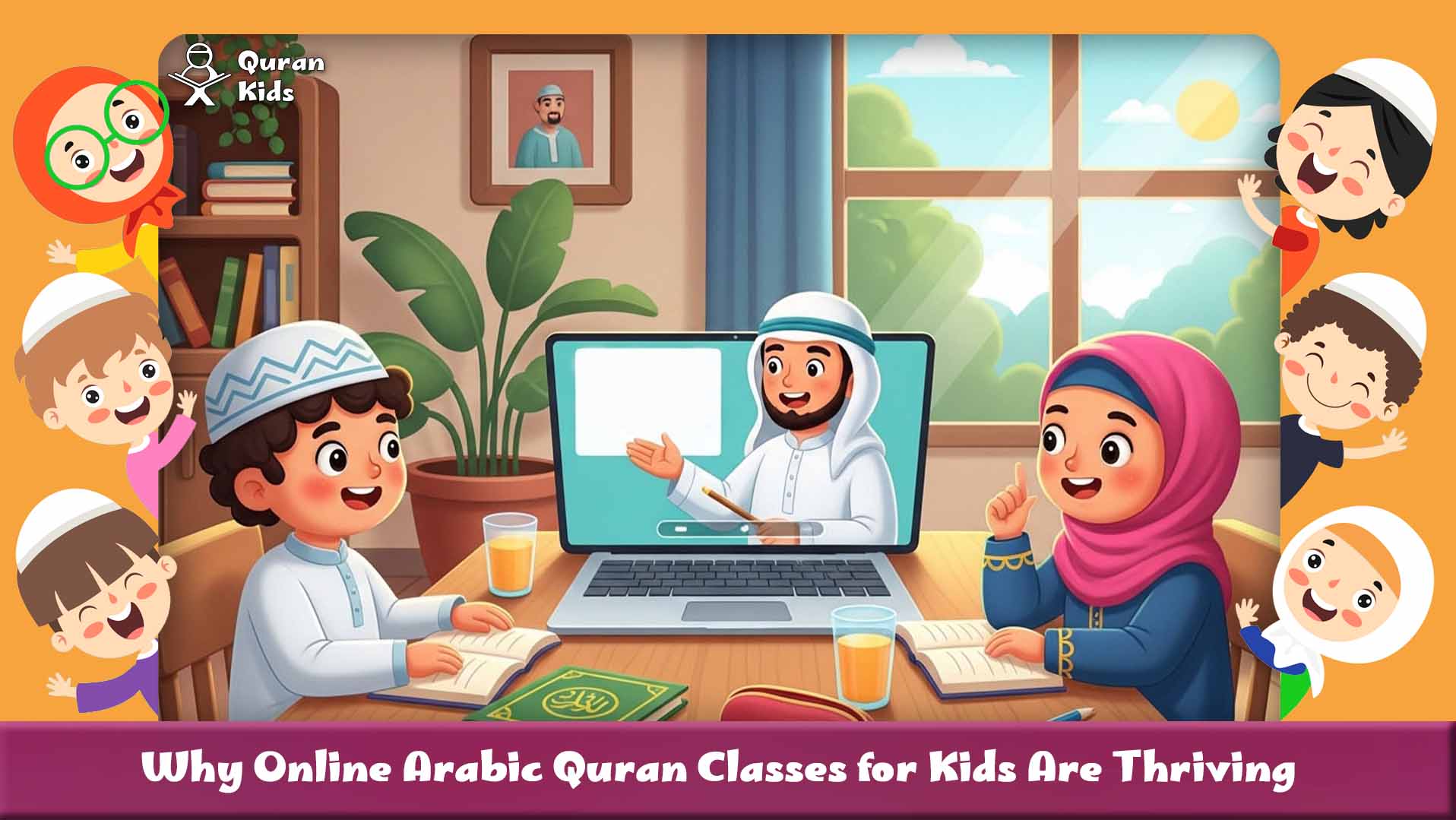
A decade ago, the idea of learning to read the Quran via a screen might have seemed unusual. Today, it is a mainstream and highly respected form of Islamic education. Millions of Muslim families across the United States, United Kingdom, Canada, Australia, and beyond rely on online platforms to give their children access to qualified Quran teachers.
The surge in popularity is not accidental. It is driven by powerful advantages that traditional, in-person classes often cannot match. First and foremost is accessibility. Families living in non-Muslim majority countries may not have a mosque or Islamic center nearby that offers structured Quran education for children. Online classes eliminate this barrier completely, connecting students with expert teachers regardless of geography.
Another key driver is flexibility. Parents today lead busy lives, and scheduling a fixed weekly trip to a Quran school can be challenging. Online Arabic Quran classes for kids can be scheduled around school hours, extracurricular activities, and family time. Many programs offer sessions in the morning, afternoon, or evening to accommodate different time zones and lifestyles.
Finally, quality has dramatically improved. Today’s online Quran platforms employ certified teachers many of whom are graduates of prestigious Islamic universities in Egypt, Saudi Arabia, and Pakistan who specialize in teaching children. They use modern interactive tools, digital whiteboards, and child-friendly curricula to make learning engaging and effective.
Inspire Deep Quranic Connections with Quran Kids Online
Do you want an innovative online Quran program designed specifically to motivate your children? Our virtual academy creates a secure, uplifting atmosphere where young learners develop confidence and maximize their spiritual goals.
Come and be a part of our international community to experience top-tier, child-focused education that delivers real results. Additionally, our customizable timetables match the fast-paced daily schedules of families residing in the UK and Australia. Selecting our courses ensures your child grows up guided by the wisdom of the Quran.
Key Benefits of Online Arabic Quran Classes for Kids
Before enrolling your child, it helps to understand exactly what they will gain from a structured online program. Here are the most significant benefits that make online Arabic Quran classes for kids an outstanding choice:
Personalized One-on-One Attention
Unlike a crowded classroom where a teacher must divide attention among twenty or more students, most online Quran platforms offer individual lessons. In a one-on-one session, the teacher can focus entirely on your child, adapt the pace to their learning speed, immediately correct mispronunciations, and provide personalized encouragement. This level of individual attention is often the fastest path to real progress.
Access to Native Arabic-Speaking Teachers
One of the most powerful aspects of online learning is that geography is no longer a limitation. Your child can learn from a teacher based in Cairo, Riyadh, or Islamabad without leaving home. Native Arabic-speaking teachers bring authentic pronunciation, deep cultural understanding, and classical Quranic knowledge that is hard to replicate with a non-native teacher.
Safe and Comfortable Learning Environment
Children learn best when they feel safe and at ease. Learning from home removes the anxiety that some children feel in unfamiliar environments. There are no social pressures, no long commutes, and no unfamiliar classrooms. Your child can sit in their favorite spot, wear comfortable clothing, and focus fully on the lesson all of which contribute to a more effective and enjoyable learning experience.
Consistent Schedule and Progress Tracking
Reputable online Quran academies provide regular progress reports, homework assignments, and milestone assessments. Parents receive updates on their child’s Tajweed accuracy, memorization progress, and Arabic reading fluency. This transparency keeps both parents and children motivated and ensures that no student falls behind without notice.
What Is Taught in Online Arabic Quran Classes for Kids?
A well-structured program covers far more than simply reciting verses. Here is a breakdown of the core subjects your child will typically study:
Noorani Qaida The Foundation of Quran Reading
For absolute beginners, Noorani Qaida is the essential starting point. This widely used beginner’s primer teaches children how to recognize and pronounce the Arabic alphabet, understand vowel marks (Harakat), and join letters to form words. Think of it as the phonics stage of Quran learning without mastering this foundation, a child cannot read the Quran fluently or correctly.
Tajweed The Art of Correct Recitation
Tajweed is the science of reciting the Quran with proper pronunciation, rhythm, and melody, exactly as it was revealed and taught by Prophet Muhammad (peace be upon him). Online Arabic Quran classes for kids introduce Tajweed rules gradually, starting with the most common rules like Noon Sakinah, Meem Sakinah, and Madd (elongation). Proper Tajweed ensures that the meaning of the Quran is preserved and that recitation is spiritually uplifting.
Hifz Quran Memorization for Children
Many parents aspire to raise a Hafiz or Hafiza a child who has memorized the entire Quran. Online Hifz programs are surprisingly effective because daily one-on-one sessions allow teachers to consistently review previous memorization (Sabaq Para), introduce new portions, and ensure strong retention. Children who begin Hifz at a young age benefit from their naturally sharp memories and tend to make faster progress.
Arabic Language for Kids
Beyond recitation and memorization, many families also enroll their children in Arabic language courses. Learning Arabic enables children to understand the Quran directly, without relying on translations. Online Arabic classes for kids typically start with conversational Arabic vocabulary, basic grammar, and Quranic Arabic terminology giving children a lifelong connection to the language of the Quran.
Islamic Studies Building a Complete Foundation
Some platforms bundle Quran learning with basic Islamic Studies, covering topics such as the five pillars of Islam, the life of the Prophet (Seerah), Islamic manners (Adab), and the names and attributes of Allah. This holistic approach ensures that children not only recite the Quran but understand and live its values.
How to Choose the Best Online Arabic Quran Classes for Kids
With hundreds of online Quran academies competing for your attention, choosing the right program requires careful consideration. Here are the most important factors to evaluate:
- Always verify that teachers hold recognized Ijazah certificates a chain of authorization that traces back to the Prophet Muhammad (PBUH). Certified teachers guarantee authentic and accurate instruction.
- The best platforms offer one or more free trial classes. Use this opportunity to assess the teacher’s communication style, patience with children, and ability to explain concepts clearly.
- For families who prefer that their daughters learn from a female teacher, look for academies that specifically recruit and certify female Quran teachers.
- Choose a platform that can accommodate your family’s schedule, including time zone differences, school hours, and weekend availability.
- Look for academies that provide regular progress reports and maintain open communication with parents. Transparency is a sign of a trustworthy institution.
- Compare pricing across multiple platforms. The most expensive option is not always the best. Look for programs that offer clear pricing, no hidden fees, and money-back guarantees.
Take your time during the selection process. The right teacher can make an enormous difference to your child’s motivation, retention, and love of the Quran. Many parents report that their child’s enthusiasm for learning dramatically increased once they found a teacher who genuinely connected with them.
The Powerful Connection Between Arabic Language and Quran Learning
Many parents focus exclusively on Quran recitation and Hifz, but overlook the transformative power of combining Arabic language learning with Quran study. The Quran was revealed in classical Arabic, and understanding its language opens a completely new dimension of connection to the text.
When a child recites a verse and understands its meaning directly from the Arabic without relying on an English translation they experience a profound spiritual connection. Words like ‘Rahma’ (mercy), ‘Sabr’ (patience), and ‘Taqwa’ (God-consciousness) become living concepts rather than abstract terms read in a footnote.
Online Arabic Quran classes for kids that integrate Arabic language instruction are therefore far more valuable in the long term. Children who learn Arabic alongside the Quran develop stronger retention of memorized verses, better Tajweed instincts, and a lifelong ability to engage with Islamic scholarship directly in its original language.
Many leading online academies now offer combined packages that include both Quran recitation and conversational or Quranic Arabic as a single bundled curriculum. If your academy offers this option, it is almost always worth the investment.
Practical Tips for Parents: How to Support Your Child’s Online Quran Learning
Enrolling your child in online Arabic Quran classes is only the first step. Your involvement as a parent plays a crucial role in your child’s success. Here are proven strategies to help your child thrive:
Create a Dedicated Learning Space
Set up a clean, quiet, and distraction-free space for your child’s Quran lessons. This could be a desk in their bedroom or a dedicated corner of the living room. Having a consistent space signals to your child that Quran learning time is special and deserves focused attention.
Review Daily with Your Child
Even if you are not a Quran expert yourself, you can still sit with your child for ten to fifteen minutes each day to review what they have learned. Asking your child to recite for you reinforces the lesson and shows them that you value and prioritize their Quranic education.
Use Positive Reinforcement
Celebrate milestones enthusiastically. When your child completes Noorani Qaida, finishes their first Juz, or receives a good report from their teacher, make it a family celebration. Small rewards, praise, and recognition go a long way in maintaining a child’s motivation over the long term.
Listen to Quran Regularly at Home
One of the most effective ways to accelerate your child’s Quran learning is to fill your home with the sounds of the Quran. Play recitations by renowned Qaris such as Sheikh Abdul Rahman Al-Sudais or Sheikh Mishary Al-Afasy during meals, car rides, or bedtime. Constant listening trains the ear and subconsciously reinforces correct pronunciation and melody.
Communicate Regularly with the Teacher
Do not be a passive observer. Reach out to your child’s teacher regularly to discuss progress, challenges, and goals. A good teacher will welcome parental involvement and may offer homework exercises, revision techniques, or specific tips tailored to your child’s learning style.
Common Concerns About Online Arabic Quran Classes for Kids Answered
It is natural to have questions and concerns before committing to an online Quran program. Here are the most frequently asked questions from parents, along with straightforward answers:
Is Online Quran Learning as Effective as In-Person Classes?
Yes and in many cases, it is even more effective. The one-on-one format of most online Quran classes means that children receive more focused correction and personal feedback than they would in a group class. The convenience also ensures that lessons happen consistently without being disrupted by bad weather, transportation issues, or schedule conflicts.
What Age Can Children Start Online Quran Classes?
Most academies accept children from age 4 or 5. At this age, children are introduced to the Arabic alphabet through games, songs, and colorful visuals rather than formal instruction. Many educators agree that beginning Quran education early even before formal schooling gives children a significant advantage in pronunciation and memorization.
How Long Should Each Online Lesson Be?
For younger children aged 4 to 7, sessions of 20 to 30 minutes are usually optimal, as young children have shorter attention spans. Older children aged 8 and above can typically handle sessions of 30 to 45 minutes. Most platforms allow you to choose your preferred session length, and a good teacher will naturally adjust the pace to keep your child engaged throughout.
Is It Safe for My Child to Have Online Lessons?
Safety is a top priority for reputable online Quran academies. Lessons take place via secure video platforms such as Zoom or Skype, and parents are encouraged to sit in on sessions, especially for younger children. Academies typically conduct background checks on their teachers and maintain transparent communication with parents. Always choose a platform that operates with full parental visibility.
Technology Tools That Enhance Online Quran Learning for Kids
Modern online Quran platforms leverage a range of digital tools to make lessons more engaging and effective for children. Here are some of the technologies commonly used:
- Teachers use virtual whiteboards to write Arabic letters, demonstrate Tajweed rules, and annotate Quran verses in real time, making complex concepts visually clear.
- Teachers can display digital copies of the Quran or Noorani Qaida on screen, allowing students to follow along and point to specific words or letters.
- Many platforms allow parents to record sessions so children can review lessons at their own pace. Reviewing recorded lessons is one of the fastest ways to improve pronunciation.
- Some academies supplement live classes with gamified Arabic and Quran apps that children can use between sessions to reinforce vocabulary and letter recognition through play.
- Parent portals allow mothers and fathers to track their child’s progress, attendance, completed lessons, and upcoming milestones all in one convenient place.
These tools transform what could be a dry recitation exercise into a dynamic, interactive, and genuinely enjoyable experience for children. The best online Arabic Quran classes for kids leverage technology not as a gimmick, but as a genuine pedagogical tool.
The Islamic Perspective: Why Teaching Children the Quran Is a Sacred Priority
From an Islamic perspective, teaching children the Quran is not simply a cultural tradition it is a profound religious obligation and one of the greatest gifts a parent can give their child. The Prophet Muhammad (peace be upon him) said:
- Scholars of Islam have long emphasized that children possess a unique capacity for memorization and learning that diminishes as they grow older. Beginning Quranic education in early childhood harnesses this natural window of cognitive development to establish a lifelong foundation of faith.
- Moreover, a child who grows up with the Quran as a constant companion develops strong moral character, emotional resilience, and a deep sense of identity. In a world that increasingly challenges Muslim identity, giving your child the Quran is giving them an unshakeable anchor.
- Online Arabic Quran classes for kids make this sacred goal more achievable than ever before, removing barriers of geography, cost, and time that once prevented many families from accessing quality Islamic education.
What to Expect in the First Month of Online Quran Classes
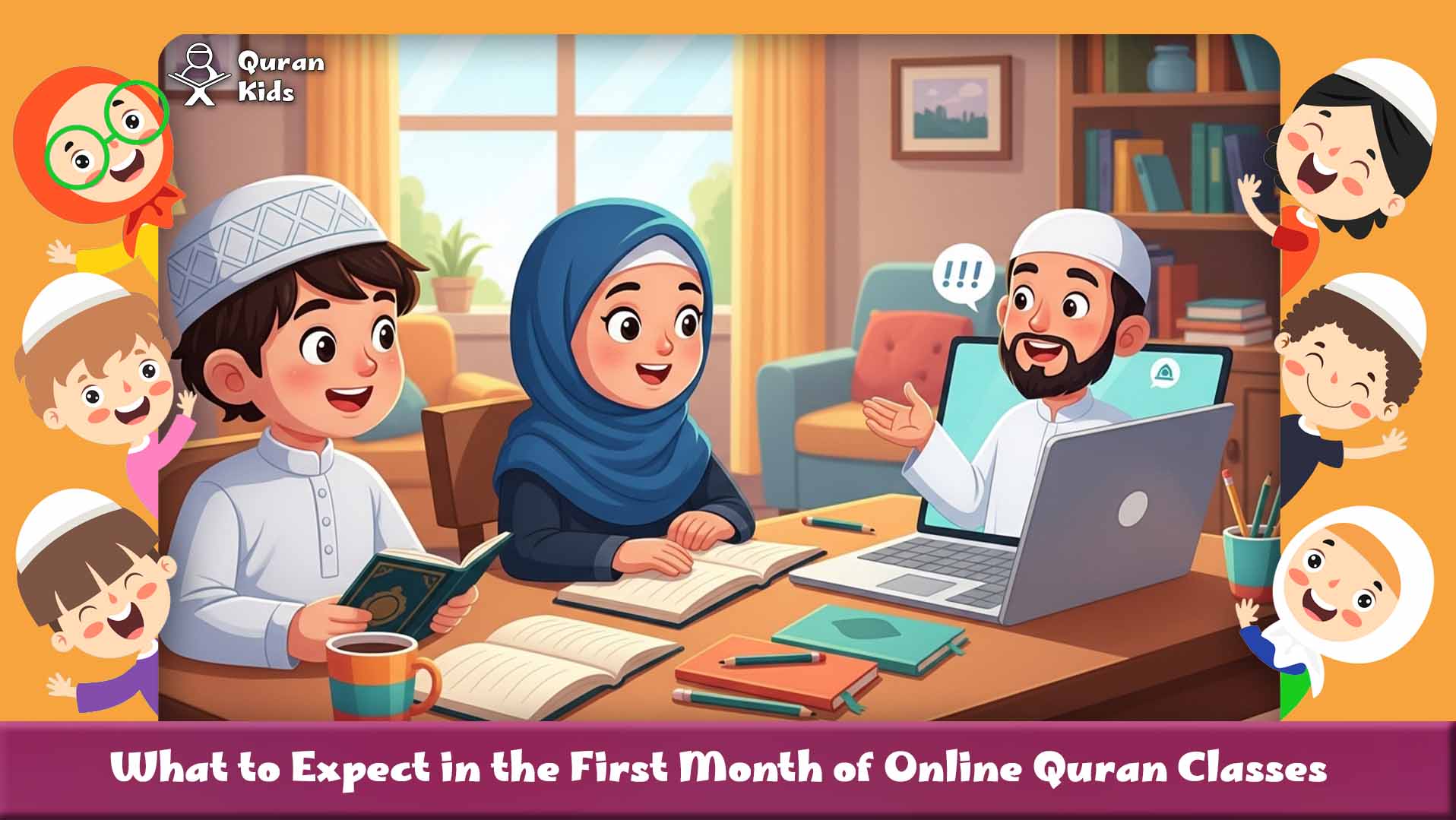
Starting a new learning journey can feel uncertain for both parent and child. Here is a realistic picture of what to expect during your child’s first month of online Arabic Quran classes:
- Week 1 Assessment and Introduction: Most teachers begin with an assessment to understand the child’s current level. Beginners will start with the Arabic alphabet, while more advanced students may jump straight into a Surah or Tajweed rules. The first week is also about building rapport a child who likes their teacher will be far more engaged.
- Week 2 to 3 Building Routine: As the newness wears off, some children may initially resist the structure of regular classes. This is completely normal. Maintain the schedule consistently, and the resistance will pass. Children thrive on routine, and Quran learning will soon become a natural and even anticipated part of their day.
- Week 4 First Milestones: By the end of the first month, most children will have made meaningful progress whether that is recognizing all 28 Arabic letters, completing the first few pages of Noorani Qaida, or memorizing a short Surah. Celebrate these milestones warmly to reinforce the habit.
Be patient, be consistent, and trust the process. Quran learning is a journey of months and years not weeks. The habits and love of the Quran that you build in the early months will sustain your child for a lifetime.
Frequently Asked Questions (FAQs):
We want to make sure you have all the facts. Check out our compiled list of common questions below for quick explanations, detailed guides, and helpful tips from our support team.
Are these classes suitable for beginners?
Yes! The classes are designed for all levels, starting from basic Arabic letters to mastering recitation and memorization using engaging, simple methods.
What is the best age to start online classes?
Kids can start as early as 4 to 5 years old. Our expert tutors use visual aids and educational games to keep them engaged and make learning easy.
How can I track my child’s learning progress?
Parents receive regular progress reports detailing their child’s reading and memorization improvements, along with the ability to communicate directly with the tutors.
Conclusion: Invest in Your Child’s Eternal Future with Online Arabic Quran Classes
Online Arabic Quran classes for kids represent one of the most important investments a Muslim parent can make in their child’s future both in this world and the next. In a matter of years, a child who begins this journey today can develop the ability to recite the Quran with beautiful Tajweed, memorize large portions of the sacred text, understand the Arabic language of Allah’s final revelation, and carry an unshakeable foundation of faith into adulthood.
The convenience, quality, and accessibility of today’s online Quran platforms make this journey easier than at any point in history. Whether you are based in New York, London, Sydney, or anywhere in between, your child can access a qualified, certified, and passionate Quran teacher today from the comfort and safety of your own home.
Do not wait for the perfect moment. The best time to start your child’s Quran journey is now. Sign up for a free trial class, meet a teacher, and watch your child take their first steps toward a lifelong relationship with the Book of Allah.