Online Arabic Academy for Kids: Learn and Grow
Online Arabic Academy for Kids In today’s interconnected world, giving children the gift of a second language is one of the most powerful investments a parent can make. Arabic, spoken by over 400 million people and recognized as one of the six official languages of the United Nations, stands out as a particularly valuable language to master. For many families living outside Arabic-speaking countries, finding quality instruction was once a major challenge.
Today, flexible and engaging online learning has transformed how the next generation connects with the Arabic language and culture, making high-quality education more accessible and effective than ever before. Whether your child is a complete beginner or already has some familiarity with the language, an online Arabic academy designed specifically for kids offers structured curricula, qualified native tutors, and interactive tools that make the journey both enjoyable and lasting.
Why Learning Arabic Matters for Kids
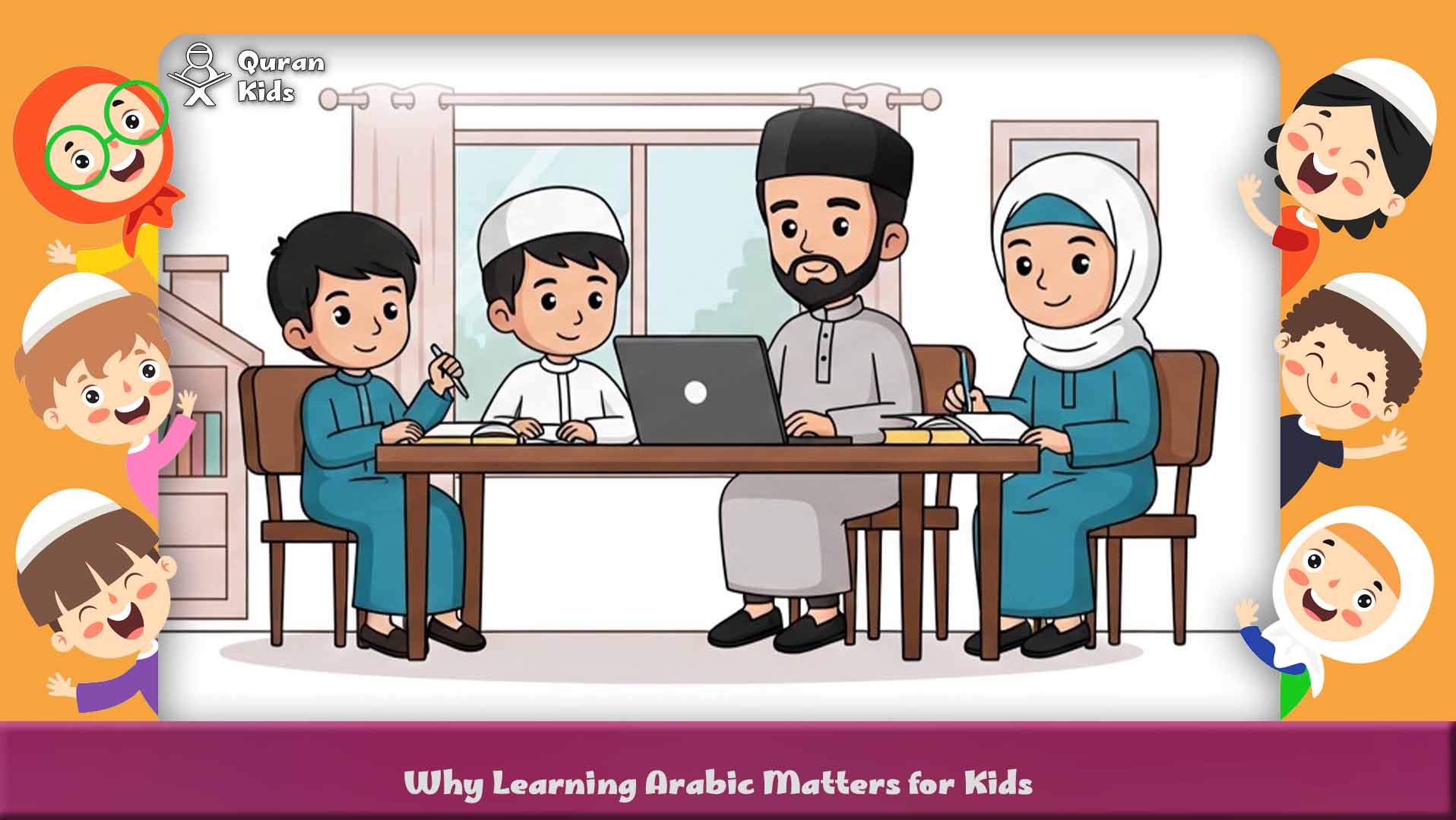
Before exploring what makes an online Arabic academy for kids effective, it is worth understanding why Arabic itself is such a meaningful choice for young learners.
Cultural and Family Connection
For many families, Arabic is the language of grandparents, extended relatives, and ancestral homelands. Children who learn Arabic are able to communicate authentically with family members, participate in cultural traditions, and develop a deep sense of identity and belonging. Language is one of the most direct bridges to heritage, and mastering Arabic gives children access to a rich world of stories, poetry, music, and values that have shaped civilization for centuries.
Cognitive and Academic Benefits
Research consistently shows that bilingual and multilingual children outperform their monolingual peers in areas such as problem-solving, multitasking, creativity, and executive function. Arabic, with its unique root-based morphological system and right-to-left script, challenges the brain in distinctive ways that strengthen cognitive flexibility. Children who learn Arabic also tend to develop stronger analytical skills and a heightened awareness of linguistic structures, which benefits their learning of other subjects.
Economic and Career Advantages
The Arab world encompasses some of the fastest-growing economies on the planet, particularly in sectors like energy, finance, technology, and trade. Children who grow up fluent in Arabic will have a significant advantage in a global job market that increasingly values professionals who can bridge the gap between Western institutions and Arab-speaking counterparts. Starting this journey in childhood when language acquisition is most natural and efficient dramatically increases the likelihood of achieving genuine fluency.
Religious and Spiritual Significance
For Muslim families around the world, Arabic holds a sacred dimension as the language of the Quran. Learning Quranic Arabic allows children to engage with their faith on a deeper level, understand prayers and religious texts in their original form, and participate meaningfully in worship and religious life.
Achieve Quranic Excellence with Quran Kids Academy Support
Looking for an engaging online Quran course that keeps your children inspired and focused? Our dedicated academy provides a protective, encouraging setting where students excel and reach their highest spiritual milestones.
We warmly invite you to join our global educational network and discover the value of professional, child-first teaching methods. Our flexible timing options are structured to accommodate busy household routines throughout the UK and Australia perfectly. When you choose us, you guide your child toward a future brightened by the Quran.
What Makes an Online Arabic Academy for Kids Different
Not every language program is built with children in mind, and the distinction matters enormously. A high-quality online Arabic academy for kids is specifically designed around how children learn which is fundamentally different from how adults acquire new languages.
Age-Appropriate Content and Pacing
Children learn through stories, games, songs, movement, and repetition. A dedicated kids’ Arabic academy builds its curriculum around these natural learning modalities rather than forcing children through adult-style grammar drills and vocabulary lists. Lessons are shorter, more interactive, and carefully paced to match the attention spans and developmental stages of young learners.
Qualified and Child-Friendly Tutors
The quality of instruction makes or breaks a language program. The best online Arabic academies for kids employ tutors who are not only native Arabic speakers with strong linguistic credentials, but also experienced in teaching children. These educators understand how to maintain engagement, manage energy levels, celebrate small wins, and gently correct mistakes in ways that build confidence rather than discourage effort.
Interactive Technology and Multimedia
Online learning platforms have evolved dramatically, and top-tier Arabic academies for kids take full advantage of modern educational technology. Interactive whiteboards, animated characters, storytelling videos, pronunciation games, and real-time feedback tools create an immersive learning environment that children genuinely look forward to. These digital tools also allow for a level of personalization tracking individual progress and adjusting lesson content accordingly that traditional classroom settings simply cannot match.
Flexible Scheduling
One of the most practical advantages of an online Arabic academy for kids is the flexibility it offers busy families. Sessions can be booked around school schedules, extracurricular activities, and family commitments. Whether a child learns best in the early morning, after school, or on weekends, online platforms make it possible to find a consistent routine that works without the logistical challenges of commuting to a physical location.
Key Features to Look for in an Online Arabic Academy for Kids
With a growing number of options available, it is important for parents to know what to look for when selecting the right program for their child.
Structured Curriculum with Clear Milestones
A well-designed online Arabic academy for kids should have a clearly articulated curriculum with defined learning outcomes at each stage. Parents should be able to understand what their child will be able to do after completing each level whether that means recognizing the Arabic alphabet, holding a simple conversation, reading short paragraphs, or understanding basic Quranic vocabulary. Transparency in curriculum design signals a professional and accountable program.
One-on-One vs. Group Classes
Different children thrive in different environments. Some benefit from the focused attention of one-on-one tutoring, where lessons can be fully tailored to their individual strengths, weaknesses, and interests. Others flourish in small group settings where they can learn alongside peers, practice conversational Arabic in a social context, and develop the confidence that comes from shared achievement. The best online Arabic academies for kids typically offer both formats, allowing families to choose what suits their child best.
Native Arabic-Speaking Instructors
Language acquisition is most effective when learners are exposed to authentic pronunciation, natural speech rhythms, and genuine cultural context. Native Arabic-speaking tutors provide all of this from the very first lesson, giving children the best possible foundation for developing a natural accent and a true feel for the language.
Progress Tracking and Parental Involvement
Parents play a crucial role in a child’s language learning journey, even when they are not Arabic speakers themselves. A good online Arabic academy for kids should offer regular progress reports, accessible performance dashboards, and opportunities for parents to stay informed and involved in their child’s development.
How to Support Your Child’s Arabic Learning at Home
Enrolling in an online Arabic academy for kids is a strong first step, but language learning accelerates dramatically when it extends beyond the virtual classroom and into daily life. Here are some practical strategies parents can use to reinforce their child’s Arabic education at home.
- Surround your child with Arabic as much as possible. Label common household items with their Arabic names, play Arabic songs and nursery rhymes during car rides, and introduce Arabic cartoons and children’s shows into your family’s media diet.
- Language learning is a long journey, and children need encouragement at every stage. Celebrate their milestones the first time they write the alphabet correctly, the first sentence they say without prompting, the first book they read independently.
- Personalize the learning experience by connecting Arabic to your child’s existing passions. A child who loves football might enjoy learning the Arabic words for sports and athletes. These personal connections make vocabulary stick in ways that rote memorization never can.
- Consistency matters more than intensity in language learning. Fifteen minutes of Arabic practice every day will produce far better results than a two-hour session once a week. Work with your child to establish a daily Arabic habit even something as simple as reviewing flashcards or listening to an Arabic story before bed.
The Long-Term Impact of Arabic Fluency
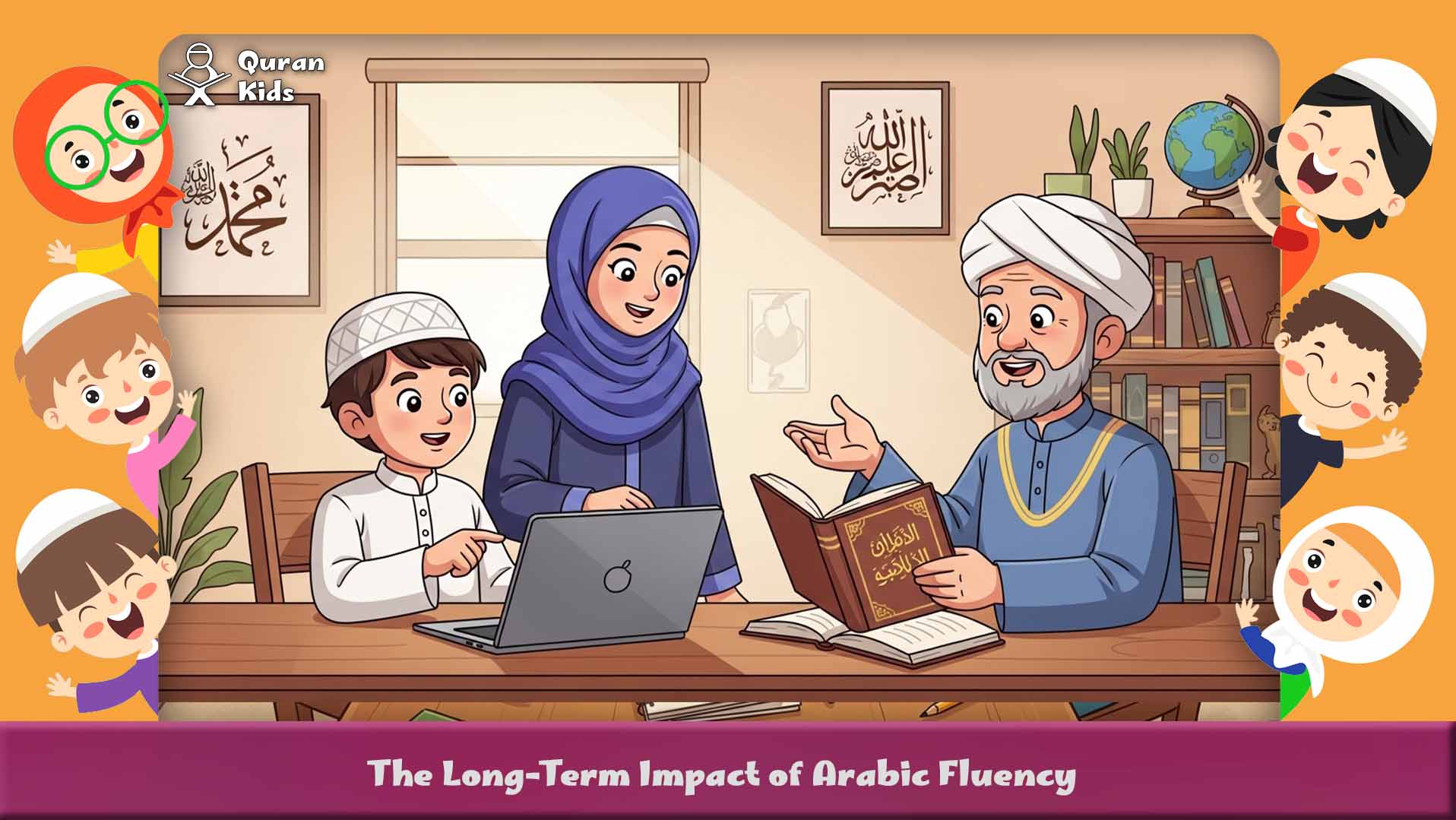
Children who complete a structured program at an online Arabic academy for kids and maintain the language through adolescence and adulthood gain far more than just a linguistic skill.
They gain a perspective an ability to see the world through the lens of one of humanity’s oldest and richest literary traditions. They gain relationships the ability to connect authentically with hundreds of millions of people across the Arab world and beyond. And they gain opportunities professional, academic, cultural, and personal that simply would not be available to them otherwise.
Arabic fluency also tends to deepen over time rather than fade, particularly when it is anchored in meaningful cultural and emotional connections. A child who learns Arabic because it connects them to their family, their faith, or a deep personal interest will carry that language with them for life.
Frequently Asked Questions
Choosing the right educational platform for your children can often bring up many important questions. Therefore, we have compiled the most frequent inquiries from parents to assist you. Read through the following details to confidently start your child’s learning journey.
Q1: At what age should my child start learning Arabic at an online academy?
Children can begin learning Arabic as early as three or four years old through play-based approaches that focus on sounds, songs, and simple vocabulary. Most online Arabic academies for kids offer programs starting from age five or six, with structured reading and writing introduced progressively. The earlier a child starts, the more naturally they acquire pronunciation and linguistic intuition but meaningful progress is absolutely possible at any age, including for older children and teenagers.
Q2: How many sessions per week does a child need to make progress?
Most online Arabic academies for kids recommend two to three sessions per week as an effective starting point. This frequency allows children to build on each lesson while allowing enough time between sessions for the material to consolidate in memory.
Q3: What form of Arabic is taught in online academies for kids?
This depends on the goals of the family. Most reputable online Arabic academies for kids offer Modern Standard Arabic (MSA), which is the formal written form used in education, media, and official contexts across the entire Arab world. Many also offer Quranic Arabic for families with a religious learning goal, and some offer specific colloquial dialects such as Egyptian, Levantine, or Gulf Arabic for families focused on conversational fluency within a particular cultural context.
Choosing the right online Arabic academy for kids is one of the most consequential decisions you will make in your child’s education. The right academy with qualified teachers, a structured curriculum, and genuine care for each child’s progress can set your child on a path of Arabic knowledge, cultural depth, and lifelong linguistic confidence that no other resource could match.
The barriers that once made quality Arabic education inaccessible geography, limited local resources, rigid scheduling no longer exist. Today, a qualified, experienced, and child-specialist Arabic online teacher is available to your child wherever you live, at a time that fits your family, and at a price that makes consistent learning sustainable.
Use the guidance in this article to evaluate your options carefully, insist on a free trial class, and trust your instincts as a parent. When you find the right teacher and your child genuinely looks forward to their lessons, you will know you have made the right choice.