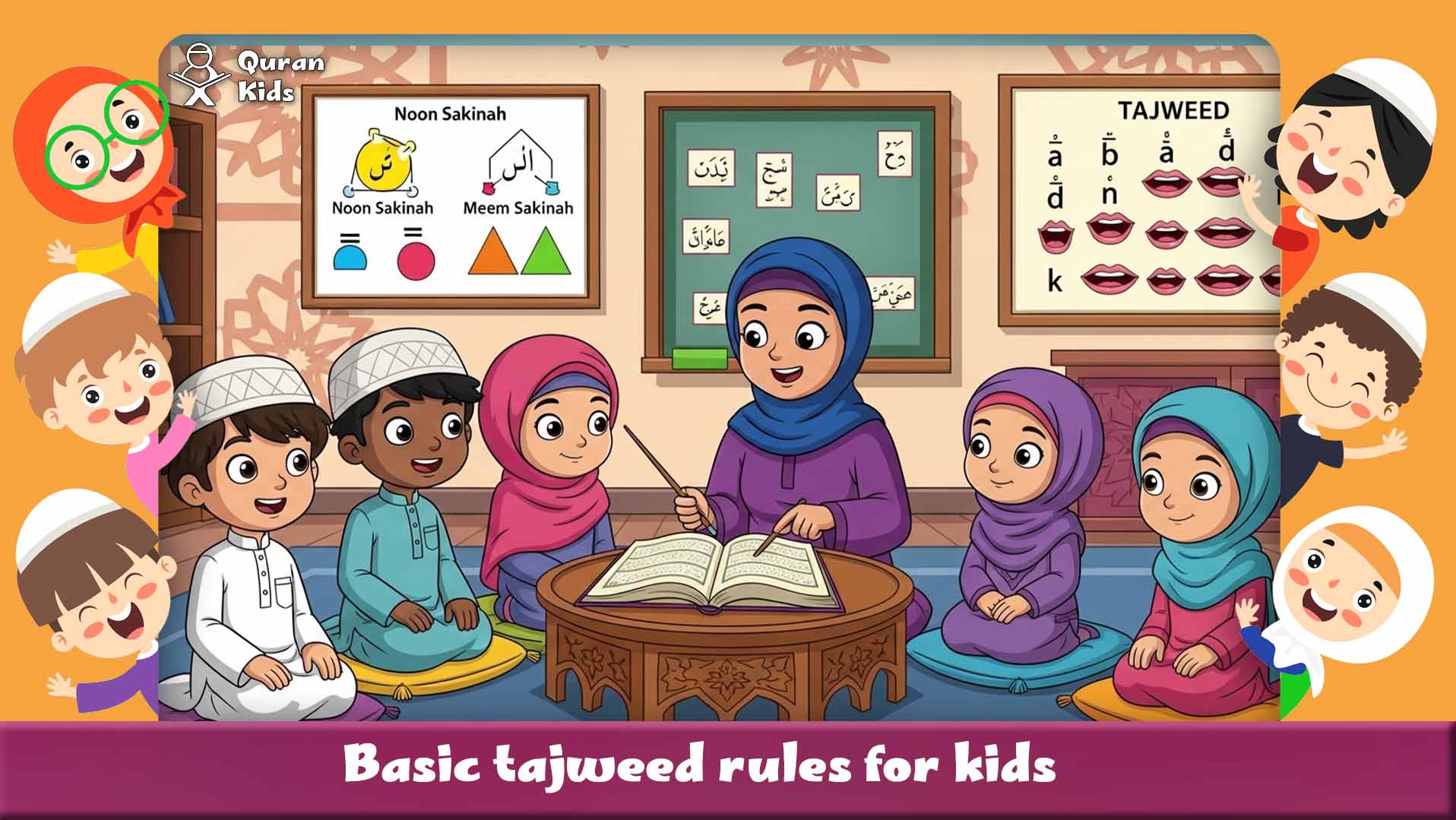
Basic tajweed rules for kids | learn proper pronunciation
Teaching children to recite the Holy Book requires a solid foundation. At online quran academy quran kids, we believe early childhood is ideal for linguistic growth. When children internalize basic tajweed rules for kids, they develop natural fluency. This connects closely with learn quran online from home, which explores the topic further.
Starting early ensures vocal muscles adapt to Arabic exits correctly. Our academy provides a structured path for young learners at home. By focusing on rhythm, we turn every lesson into a rewarding experience.
”The heart of a child is like fertile soil; whatever is planted in it will surely grow.”
Mastering the Echo: The Rule of Qalqalah
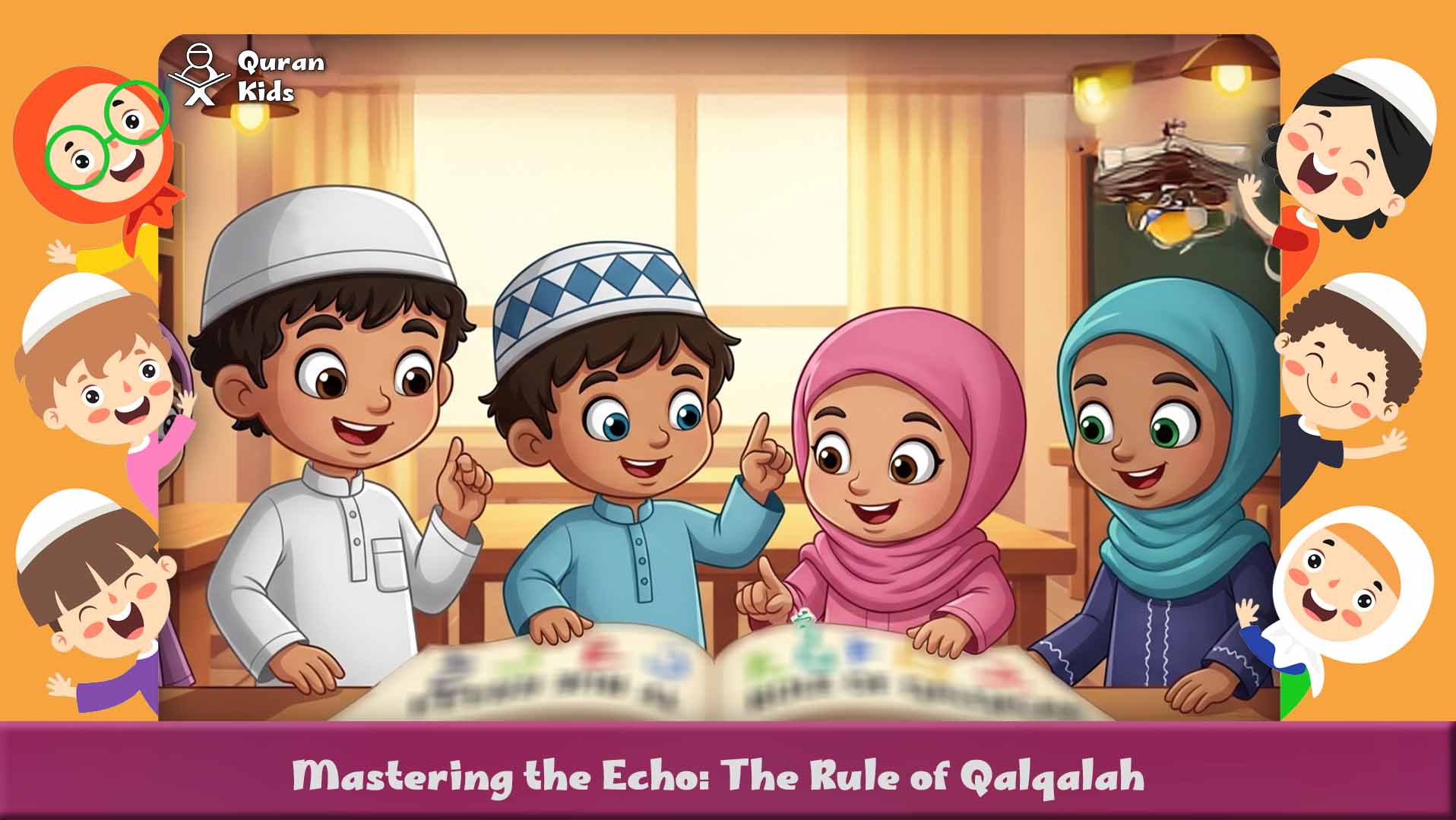
- Qalqalah refers to a unique bouncing sound produced by five specific letters.
- Letters include Qaf, Ta, Ba, Jeem, and Dal, remembered by a simple phrase.
- Heavy Qalqalah occurs with a Shaddah, requiring a very strong and clear echo.
- Medium Qalqalah applies when a letter appears at the end during a pause.
- Light Qalqalah happens in the middle, producing a subtle and soft vibration.
Understanding Nun Sakinah and Tanween
One frequent tajweed rules involves the silent letter Nun. These rules dictate pronouncing double vowels or Nun based on the next letter. Students learn four categories: concealment, merging, changing, and clear pronunciation.
For example, Izhar requires clear pronunciation without any nasal sound. Conversely, Idgham involves merging the letter into the following one seamlessly. Mastery ensures a smooth and melodic flow of recitation.
Read more: basic tajweed rules
Join Online Quran Academy Quran Kids Today!
Is your child ready to master the art of beautiful Quranic recitation? Quran kids offers specialized Tajweed courses designed specifically for young learners in the UK.
Our expert tutors provide the live corrections and support needed for perfect pronunciation. Don’t miss the opportunity to give your child a head start in their religious education.
Sign up for a free evaluation and consultation session right now! Experience the difference that professional, one-on-one guidance can make in your child’s journey.

The Secrets of Mim Sakinah and Nasal Sounds
- Izhar Shafawi ensures a clear “m” sound when ending a word before most letters.
- Idgham Shafawi occurs when “m” merges perfectly with another following “m” letter.
- Ikhfa Shafawi involves soft concealment of “m” when followed by the letter Ba.
- Ghunnah adds a beautiful nasal quality to specific letters to enhance melodic flow.
- Noon and Meem Mushaddad require prolonged nasal sounds whenever they carry a Shaddah.
Distinguishing Between Heavy and Light Letters
Arabic letters are categorized by how they fill the mouth with sound. Heavy letters, or Tafkhim, require the tongue to rise toward the soft palate.
This creates a resonant sound that adds gravity to Quranic verses. Conversely, light letters involve thinning the sound with no noticeable echo.
We teach kids these seven heavy letters to respect every sound’s nature. This distinction is crucial for achieving an authentic level of recitation.
Students can learn the Arabic alphabet through simple, step-by-step lessons that build a strong foundation for reading and writing Arabic. They can also learn Quran online with Microsoft Teams global classes, enjoying live interactive sessions, flexible scheduling, and personalized guidance from qualified Quran teachers, making it easier to study from anywhere in the world.
The Art of Elongation and Proper Pausing
Vowel extension, or Madd, allows rhythmic prolonging of sounds under specific conditions. This rule gives Quranic recitation its unique and captivating musical quality.
Additionally, students must learn Waqf and Ibtida, guiding them on where to pause. Pausing at right moments ensures verse meanings remain clear and accurate.
Proper starts help the reader maintain flow without interrupting the divine message. Together, these rules create harmonious engagement with Allah’s words.
Essential Foundations of Tajweed for New Learners
Tajweed means “to improve” through precise pronunciation. At online quran academy quran kids, we simplify rules for beginners. Learning tajweed for kids preserves the divine message’s meaning. For example, mispronouncing a letter can change “heart” into “dog.”
Therefore, we provide a step-by-step path for all students. This structured approach ensures every child builds an accurate foundation.
”Tajweed is the science that preserves the integrity and beauty of the Quranic message.”
Why Correct Recitation Matters for Every Muslim
- Precise phonetics prevent accidental changes in sacred verse meanings.
- Learning basic rules is a recommended act of worship for everyone.
- Beautiful recitation follows the Sunnah of the Prophet Muhammad.
- Correct pronunciation enhances spiritual connection during daily prayers.
- Mastering these rules builds immense confidence in young students early.
Understanding Articulation and Letter Characteristics
The foundations of Tajweed are Makharij and Sifaat. Master the 17 articulation points for authentic letter sounds. Beginners focus on where the tongue and throat meet. Additionally, understanding heavy or light letters changes their resonance.
This guide helps kids distinguish similar sounds through daily drills. By mastering foundations, students avoid common mistakes. We focus on core principles to ensure long-term success.
Core Rules Checklist for Quick Progress
- Master the 17 Makharij for correct origin and clear sound.
- Learn the four Noon Sakinah rules: Izhar, Idgham, Iqlab, and Ikhfa.
- Understand Meem Sakinah rules for smooth word transitions.
- Practice Madd Asli for natural two-count vowel elongation.
- Identify the five Qalqalah letters for the unique echo sound.
- Distinguish between Tafkhim and Tarqeeq for heavy and light tones.
Realistic Timelines and Effective Strategies
Beginners master these essentials within three to six months. We recommend 20 minutes of daily practice with teacher guidance. Consistency is more important than long study sessions.
Start with Makharij before moving to complex Noon rules. Online quran academy quran kids uses engaging methods for focus. Furthermore, qualified teachers provide live corrections for perfect mastery. Using these strategies, children achieve professional levels quickly.
Building a Lasting Spiritual Legacy
Historically, these rules preserved the Prophet’s original pronunciation methods. These have been passed down through an unbroken chain of teachers.
By learning tajweed rules , you join this tradition. Our academy uses technology to bring traditional knowledge home. We help every child recite with the accuracy of early scholars. This commitment ensures the Quran remains in its purest form.
Mastering the Sound of Noon Sakinah and Tanween
The “nnn” sound is a frequent feature in Quranic recitation for young learners. At Quran kids, we simplify how to handle the letter Noon when it carries a sukoon.
This also applies to Tanween, which are double vowels adding an “n” sound to words. Understanding these tajweed is essential for rhythmic fluency.
We teach children to recognize these markers to ensure a smooth transition between verses. This foundational step builds the confidence needed for more advanced phonetic rules.
”Correct pronunciation of the silent Noon is the secret to a melodic and authentic recitation.”
The Rule of Idhar: Keeping the Sound Clear
- Idhar means to make the sound clear without any nasal elongation.
- This rule applies when a Noon Sakinah is followed by six specific throat letters.
- The throat letters are Hamzah, Ha, ‘Ain, Ha, Ghayn, and Kha.
- Students must pronounce the Noon normally and move quickly to the next letter.
- We use visual charts to help kids memorize these six essential characters easily.
Understanding Idghaam: The Art of Merging Sounds
Idghaam involves merging the Noon sound into the following letter for a seamless flow. There are two primary forms of this rule: one with Ghunnah and one without.
When merging with Ghunnah, the reciter applies a nasal sound to the following letter. This occurs with the letters Ya, Nun, Meem, and Waw. Conversely, merging without Ghunnah is used for the letters Ra and Lam.
Quran kids focuses on these transitions to improve the student’s overall reading pace.
Practical Tips for Identifying Tanween
- Look for double symbols on top of or below the final letter of a word.
- Listen for the hidden “nnn” sound that follows the main vowel.
- Identify the letter immediately following the Tanween to determine the rule.
- Practice the “ban,” “bin,” and “boon” sounds to master the basic endings.
- Use a color-coded Quran to distinguish between clear and merged sounds quickly.
Why Ghunnah is Like Tasty Food
Ghunnah is a nasal sound often compared to the “Mmmm” sound made when seeing tasty food. It adds a beautiful, lingering quality to the recitation that captures the heart.
Children find this analogy helpful for remembering to hold specific letters longer. Mastering the length of the Ghunnah is a key part of tajweed
Our tutors provide live demonstrations to ensure the nasal vibration is perfectly balanced. This technique turns technical rules into an enjoyable and sensory learning experience.
The Path to Excellence in Quranic Recitation
Mastering the basic tajweed rules for kids is a rewarding journey that shapes a child’s spiritual identity. At Online quran academy, we simplify complex phonetics into engaging, bite-sized lessons.
By starting early, children develop the muscle memory needed for perfect Arabic articulation. These rules preserve the divine message and ensure a beautiful, rhythmic connection with the Holy Book.
Our structured approach empowers every young learner to recite with confidence and precision. Investing in this knowledge today creates a lasting legacy of faith for future generations.
Frequently Asked Questions
Embarking on a journey to master the Quran often brings many practical questions for parents. At online quran academy quran kids, we believe that clarity is the first step toward a successful education.
1- Why is it important for children to learn Tajweed rules early?
Early learning allows children’s vocal muscles to adapt to unique Arabic sounds more naturally. It prevents the formation of incorrect pronunciation habits that can be difficult to correct later.
2- How long does it take for a beginner to master basic rules?
Most students can master the essential foundations within three to six months of consistent study. We recommend short, daily practice sessions of 20 minutes to maintain focus and retention.
3- Can online classes be as effective as traditional mosque lessons?
Yes, online sessions offer one-on-one attention that is often unavailable in large group settings. Digital tools and interactive materials make the learning process highly engaging for modern children.
Read also: learn quran and tajweed
In conclusion, Technology has bridged the gap between traditional Islamic sciences and modern convenience. Through online quran academy quran kids, your family can access world-class Egyptian tutors from home.
We are committed to providing an educational environment that is both professional and nurturing. By focusing on tajweed for kids, we ensure the Quran is recited as it was revealed. Start this noble journey today and watch your child excel in their spiritual and linguistic growth.
see more: learn the quran basics
Teaching These Rules to Young Children Without Overwhelming Them
The full list of Tajweed rules can look intimidating even to adults, so we never hand a child a checklist and expect them to memorize it abstractly. Instead, each rule gets introduced only when it naturally shows up in a verse the child is already reading, connected to something concrete rather than presented as disconnected theory. A child learns ikhfa by hearing it, practicing it on a real word, and repeating that word until it feels natural, not by memorizing a definition.
Why Repetition Matters More Than Explanation
You can explain a rule perfectly and a child still won’t apply it correctly the first, second, or even tenth time. That’s normal. Tajweed is a physical skill as much as a knowledge based one, closer to learning an instrument than memorizing facts, and physical skills need repeated practice before they become automatic. Patient teachers expect this and don’t treat early mistakes as failure.
Simple Ways to Reinforce Rules at Home
- Listening to a child recite a familiar short surah and gently noting anything that sounds off, without turning it into a stressful correction session.
- Playing short recitation recordings by qualified reciters so a child hears the rules applied correctly and consistently.
- Celebrating small wins, like a child correctly applying a rule they’d been struggling with, rather than only focusing on what still needs work.
Get in touch with our team and we’ll help your child build these skills step by step, at a pace that fits their age and personality.
These small daily habits, kept up patiently over months, are really what turns correct Tajweed into second nature for a child rather than something they have to think hard about every time.
Related: Learn Tajweed for Kids.
Related: Learn quran online with.
Related: Tajweed Classes Online for.