
Is Quran Kids Academy Legit? What Parents Need to Know
Is Quran Kids Academy Legit? This is an important question for parents who are considering online Quran lessons for their children. Choosing an online learning program involves more than checking whether classes are available or whether the website looks professional. Parents also need to consider teacher qualifications, child safety, lesson quality, communication, scheduling, progress tracking, and the overall learning experience.
For families looking for Quran education online, Quran Kids Academy can be evaluated through the same practical standards used to assess any children’s educational program. Instead of relying only on advertising claims or a quick impression, parents should look at how the academy presents its teachers, curriculum, communication process, trial lessons, and approach to children’s learning.
Moreover, legitimacy does not simply mean that an academy exists online. A trustworthy learning provider should offer enough information for parents to make an informed decision. Therefore, this guide explains the most important factors to examine before enrolling a child and shows how parents can approach their decision carefully.
Is Quran Kids Academy Legit? Start With the Basics
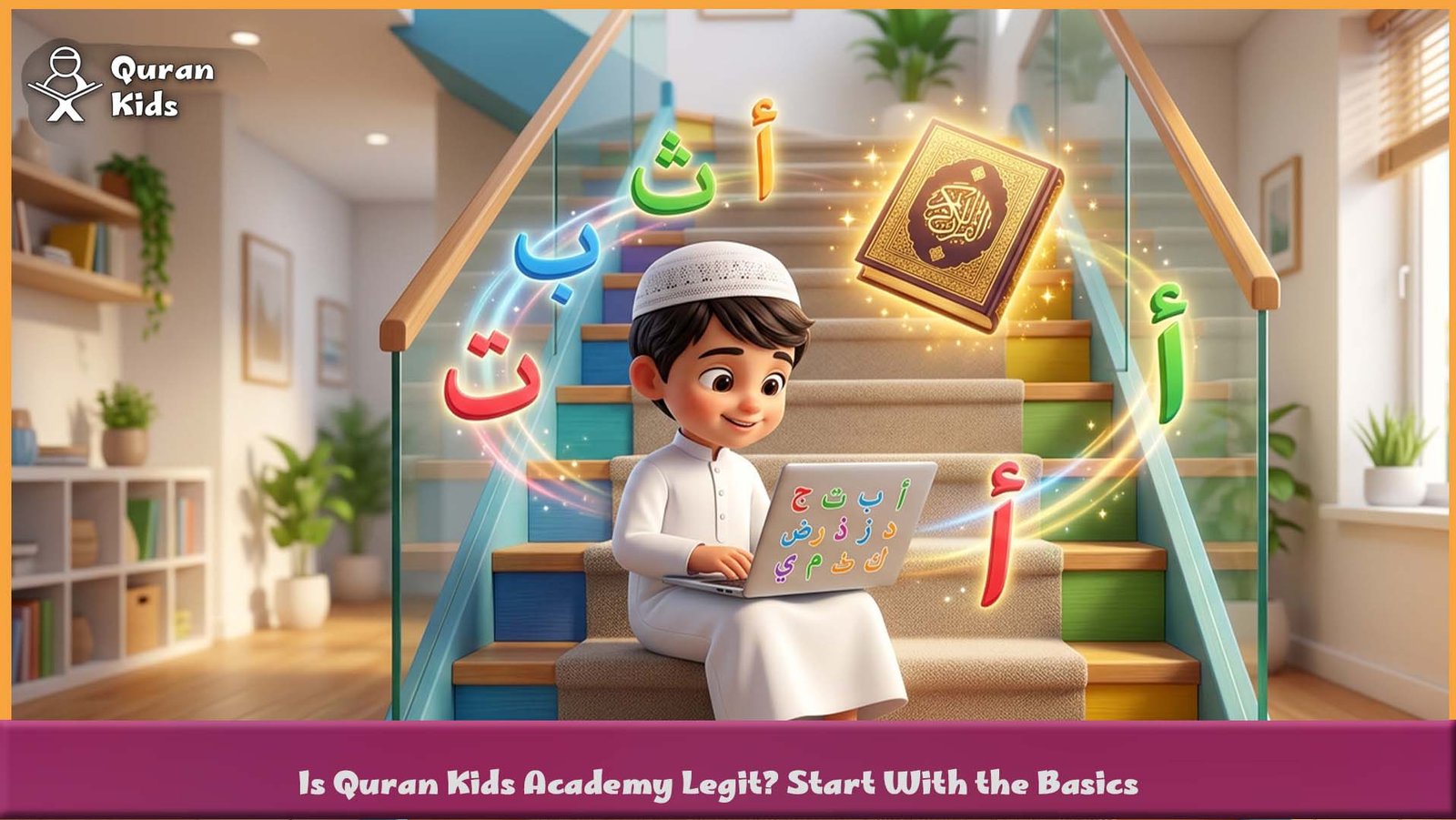
When parents ask, Is Quran Kids Academy Legit?, they are usually asking several questions at the same time. They want to know whether the academy is genuine, whether the teachers can teach children properly, whether the classes are safe, and whether the service provides meaningful educational value.
A good evaluation should therefore go beyond one review or one feature. Instead, consider the complete experience a child is likely to receive.
Before making a decision, parents can examine:
- Whether the academy clearly explains its educational services.
- How teachers are selected and presented.
- Whether lessons are appropriate for children.
- How parents communicate with the academy.
- Whether the learning process includes measurable goals.
- How trial lessons are handled.
- Whether scheduling works for the family’s routine.
- How the academy responds to questions and concerns.
This approach gives parents a much clearer picture than relying on a single positive or negative comment.
Start Learning Tafsir Classes Online Today
If you want to understand the Quran deeply with clear explanations and guided learning, now is the right time to begin your journey. Tafsir Classes Online at Quran Kids Academy provide structured lessons that simplify Quran meanings while helping students apply Islamic teachings in daily life.
In addition, experienced teachers support learners step by step to improve understanding, build confidence, and strengthen spiritual connection with the Quran. Users can also explore more related options.
Therefore, joining today can help you or your children gain authentic knowledge in a flexible and comfortable learning environment. Take the first step now and start building a stronger relationship with the Quran through guided tafsir education.

What Makes Quran Kids Academy Look Trustworthy?
A legitimate children’s Quran program should make it reasonably easy for parents to understand what they are signing up for. Clear information is particularly important because children cannot always evaluate educational services for themselves.
For example, parents should be able to understand what subjects are taught, what age groups are accepted, how lessons are delivered, and what type of teacher support is available. If important information is difficult to find, parents should ask direct questions before paying for a long-term program.
Furthermore, professional communication matters. A trustworthy academy should be willing to explain its learning process rather than simply encouraging parents to enrol immediately.
Parents should look for:
- A clearly explained learning program.
- Transparent communication.
- Specific information about classes.
- A clear process for contacting support.
- Reasonable answers to questions about children’s education.
- An opportunity to understand the teaching approach before making a long-term commitment.
These details do not prove educational quality by themselves. However, together they can help parents distinguish between a structured educational service and an unclear online offering.
Quran Kids Academy and Teacher Qualifications
The teacher is arguably the most important part of an online Quran lesson. Even an attractive platform cannot compensate for a teacher who cannot communicate effectively with children or correct Quran recitation appropriately.
When evaluating Quran Kids Academy, parents should ask what qualifications and experience its teachers have. Quran education requires more than simply being able to read Arabic. A teacher working with children should also understand how to explain concepts at an appropriate level.
For Quran reading and recitation, parents may want to ask about experience with:
- Quran pronunciation.
- Arabic letters and sounds.
- Makharij.
- Tajweed.
- Quran memorization.
- Children’s learning needs.
- Corrective feedback.
- Age-appropriate instruction.
In addition, teaching children requires patience. A young learner may lose concentration, make the same mistake repeatedly, or need a concept explained in several different ways. Consequently, the teacher’s communication style can have a major influence on whether the child develops confidence or begins to associate Quran lessons with pressure.
Is Quran Kids Academy Legit for Different Ages?
Children do not learn in exactly the same way at every age. A four-year-old needs a different lesson structure from a twelve-year-old, even when both are studying the Quran.
Therefore, parents should consider whether Quran Kids Academy can provide an approach suitable for their child’s developmental stage rather than expecting every student to follow exactly the same routine.
Quran Learning for Ages 4–6
Younger children generally benefit from short, engaging lessons. At this stage, the objective should be to establish a positive relationship with Quran learning rather than pushing the child through a large amount of material.
Lessons may focus on:
- Recognizing Arabic letters.
- Learning basic sounds.
- Beginning Quran reading.
- Practicing short surahs.
- Listening and repeating.
- Developing respectful Quran-learning habits.
Most importantly, the teacher should be patient and encouraging. If a young child becomes tired after a relatively short period, extending the lesson simply to cover more material may be counterproductive.
Quran Kids Academy for Ages 7–9
Children in this age range can usually handle a more structured learning routine. They may begin developing stronger reading fluency, learning basic Tajweed concepts, and memorizing selected surahs.
At this stage, parents can ask how the academy measures progress. Instead of simply attending lessons every week, the child should have understandable learning objectives.
For example, progress might involve:
- Completing sections of an Arabic reading method.
- Improving pronunciation.
- Reading short surahs independently.
- Memorizing selected passages.
- Applying basic Tajweed rules.
- Reviewing previously memorized material.
A structured approach can help both the child and parent understand whether lessons are actually producing progress.
Quran Kids Academy for Ages 10–13
Older children can usually manage more detailed instruction. They may also be ready for more consistent Hifz or Tajweed study.
At this age, motivation becomes especially important. A teacher who only focuses on correcting mistakes may eventually make lessons feel repetitive. Instead, students can benefit from understanding why a particular rule matters and how their skills are developing.
Parents should therefore ask whether lessons can be adapted as the child’s abilities change.
Quran Learning for Teenagers
Teenagers may require an approach that gives them more independence. They can often understand more advanced Tajweed concepts, take greater responsibility for revision, and discuss the meaning of what they are studying.
A good teacher should be able to maintain respect while still providing clear academic guidance. Furthermore, teenagers often respond better when the lesson feels meaningful rather than purely mechanical.
Is Quran Kids Academy Safe for Children?
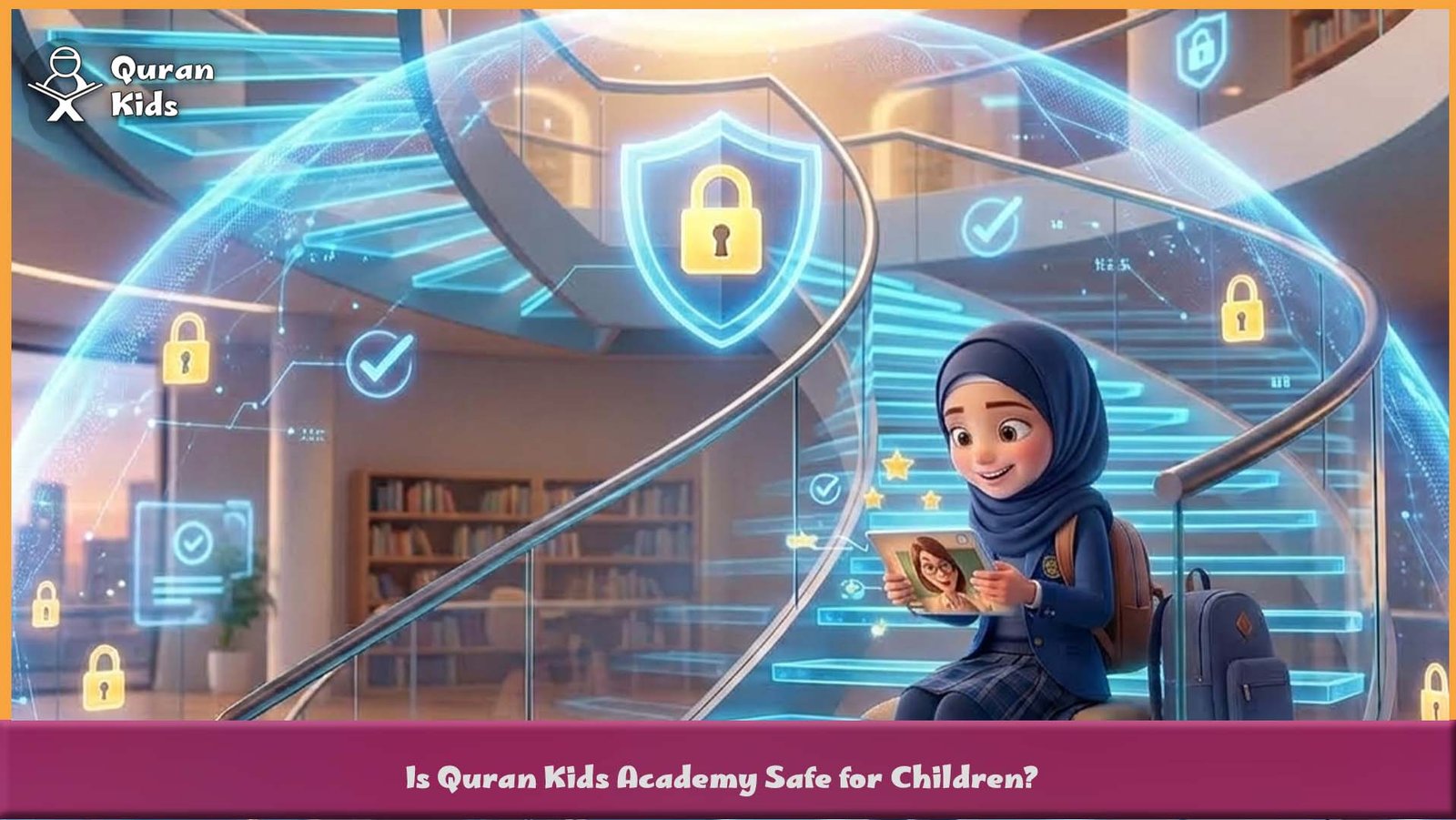
Safety should be one of the first subjects parents discuss when evaluating any online children’s program. Because lessons take place through digital communication, parents need to understand how interactions are managed.
When considering Is Quran Kids Academy Legit?, safety questions deserve the same attention as curriculum questions.
Parents can ask:
- Who supervises communication between teachers and students?
- What channels are used for contacting teachers?
- Can parents participate in or observe lessons?
- What information does the academy collect from children?
- How are concerns or complaints handled?
- What happens if a child feels uncomfortable during a lesson?
The goal is not to assume that an academy is unsafe because information is not immediately visible. Rather, parents should ask for clarification.
A transparent response is valuable because it allows families to understand exactly how the learning relationship is managed.
Parent Access and Communication Matter
Online education works best when parents know what their children are learning. This does not mean that a parent has to sit beside the child during every lesson. However, there should be an effective way to receive updates and communicate with the academy.
For Quran Kids Academy, parents may want to establish expectations about communication before enrollment.
Useful questions include:
- How often will parents receive progress updates?
- Who should parents contact when they have a concern?
- How are missed lessons handled?
- How quickly does the academy normally respond to messages?
- Can parents discuss a child’s learning difficulties with the teacher?
- Is there a process for changing teachers if the match is unsuitable?
These questions become particularly important when a child is young or is just beginning Quran education.
How Quran Kids Academy Should Approach Progress
Attendance alone is not a sufficient measure of learning. A child may attend lessons for months without making the progress the family expected if the teaching plan is not appropriate.
Parents should therefore look for clear learning outcomes. Depending on the child’s level, these could involve reading ability, pronunciation, Tajweed application, memorization, or revision.
A useful progress system should answer three basic questions:
- Where is the child now?
The teacher should understand the child’s starting level rather than assuming every student begins with the same abilities. - What should the child learn next?
Lessons should have a logical progression. - How will improvement be recognised?
Parents should receive enough information to understand whether the child is moving forward.
This is also why a trial lesson can be valuable. It allows the teacher to assess the child’s level while allowing the family to see whether the teaching style suits the child.
Is Quran Kids Academy a Good Fit for Your Child?
Even a legitimate academy may not be the perfect fit for every child. Educational success depends partly on the relationship between the student, teacher, lesson structure, and family routine.
For instance, one child may enjoy an energetic teacher who uses frequent interaction. Another may prefer a calm instructor who provides more time to repeat difficult material.
Therefore, parents should pay attention to the child’s reaction after a lesson.
Positive signs can include:
- The child understands what was taught.
- The child feels comfortable asking questions.
- Mistakes are corrected without unnecessary embarrassment.
- The lesson maintains the child’s attention.
- The child can explain what they practiced.
- The child shows willingness to attend the next lesson.
On the other hand, persistent anxiety, confusion, boredom, or resistance should not automatically be dismissed as laziness. Sometimes these reactions indicate that the lesson format or teacher-child relationship needs to be reconsidered.
Scheduling Quran Kids Academy Around Family Life
A strong learning plan must be realistic. Children already have school, homework, family activities, sleep schedules, and other responsibilities. Consequently, Quran lessons should fit naturally into the family’s week.
Parents should think about frequency as well as lesson duration. Several manageable sessions can be easier for a child to maintain than an occasional long session.
Before enrolling, discuss:
- Preferred lesson days.
- Available time slots.
- Lesson duration.
- Holiday arrangements.
- School-exam flexibility.
- Missed lesson policies.
- Rescheduling procedures.
A predictable routine can make Quran learning easier to maintain. For example, choosing a consistent time after school or another established family routine may reduce the number of decisions parents have to make each week.
What Keeps Children Interested in Quran Learning?
Children are more likely to continue learning when they feel that their effort is producing something meaningful. Therefore, parents should not judge a program only by how much material is covered during each lesson.
A teacher can maintain engagement by using age-appropriate explanations, encouraging questions, celebrating improvement, and connecting Quran learning with understanding.
Small achievements can be meaningful, such as:
- Reading a difficult passage correctly.
- Memorizing a new surah.
- Improving a particular pronunciation.
- Applying a Tajweed rule independently.
- Completing a learning stage.
- Reciting previously memorized material with greater confidence.
Moreover, encouragement should not depend solely on perfect performance. Children need to know that mistakes are part of learning.
Quran Kids Academy Lessons: What Should Parents Observe?
A trial lesson should be more than a sales presentation. It is an opportunity to evaluate whether the program is appropriate for the child.
During a trial with Quran Kids Academy, parents should observe several things.
Does the teacher communicate at the child’s level?
A teacher may have strong Quran knowledge but still struggle to explain concepts to young students. Watch whether instructions are understandable and whether the teacher adjusts explanations when the child becomes confused.
How are mistakes corrected?
Correction is essential in Quran education. However, the method matters. Effective correction should identify the problem clearly and give the child a practical opportunity to repeat the correct pronunciation.
Does the child participate?
A lesson should not become a long monologue from the teacher. Children need opportunities to read, repeat, answer questions, and demonstrate what they understand.
Is the lesson organized?
A well-structured session usually has a clear purpose. The teacher should know what the child is practicing and should avoid spending the entire lesson moving randomly between unrelated activities.
Questions to Ask Quran Kids Academy Before Enrollment
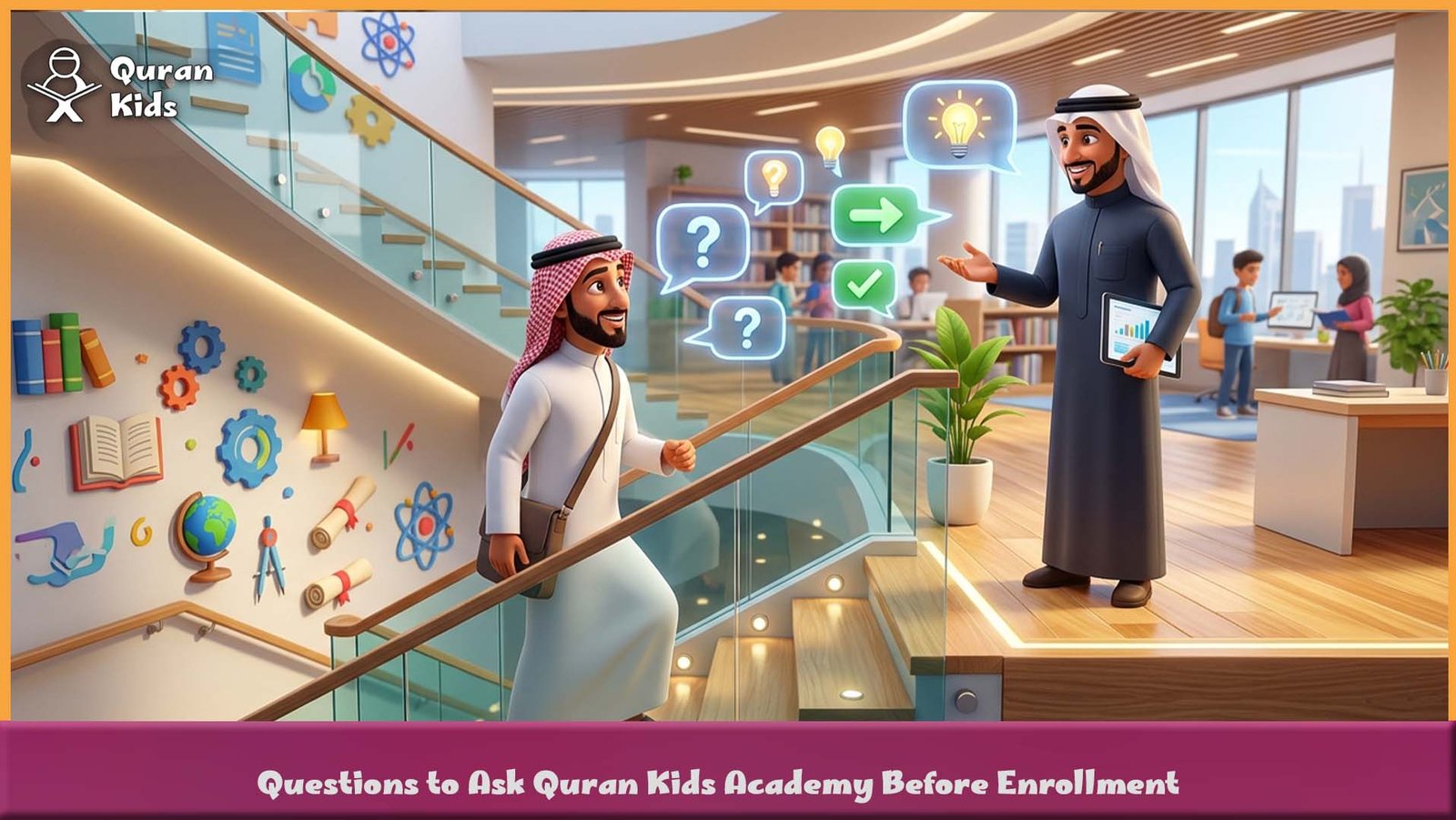
Parents can save themselves considerable uncertainty by asking questions before purchasing a long-term package. If your child needs a female instructor, you can also review the available female quran tutor options and consider whether the teaching style suits your child’s needs.
Consider asking:
- What level do you recommend for my child?
- How do you assess a new student’s Quran reading ability?
- What does a typical lesson include?
- How do teachers handle repeated mistakes?
- How is memorization reviewed?
- How are Tajweed skills introduced?
- How do parents receive progress updates?
- What happens when a child misses a lesson?
- Can the schedule be adjusted during school holidays?
- What should parents do if the teacher-child match does not work?
The quality of the answers matters. A clear and specific response is generally more useful than a vague promise that the child will “learn quickly.”
Red Flags Parents Should Not Ignore
When deciding whether Quran Kids Academy is legit, parents should also know what warning signs deserve further investigation.
No single issue automatically proves that an online academy is illegitimate. However, several warning signs together should make a parent slow down before making a payment.
Be cautious if:
- Important information about the program remains unclear.
- Questions about teachers receive vague answers.
- Parents cannot understand what their child will actually study.
- The academy pressures families to purchase immediately.
- Communication becomes difficult after payment.
- There is no understandable approach to progress.
- The child consistently feels uncomfortable with the teaching environment.
- Policies concerning cancellations or missed lessons are unclear.
- Parents are discouraged from asking reasonable questions.
Transparency is especially important when children are involved. Parents should never feel that asking basic questions about education or safety is unreasonable.
Is Quran Kids Academy Worth Trying?
The answer depends on what your child needs and what you discover during your evaluation. Rather than deciding based solely on the academy’s name, parents should compare the program with their child’s goals.
For example, a family looking for beginner Quran reading may prioritize a patient teacher and a strong foundation. Another family may be more interested in Hifz, while a third may need focused Tajweed instruction. Families seeking broader religious education can also consider an Islamic studies for kids course if that matches their child’s learning objectives.
Before deciding, write down your child’s main objective.
It could be:
- Learning Arabic letters.
- Improving Quran reading.
- Correcting pronunciation.
- Learning Tajweed.
- Memorizing short surahs.
- Building a consistent Hifz routine.
- Improving confidence in recitation.
- Developing a stronger daily Quran habit.
Once the objective is clear, it becomes much easier to determine whether the lessons are suitable.
How Parents Can Make a Better Enrollment Decision
A careful decision does not have to be complicated. Parents can use a simple process before committing to a long-term program.
- Step 1: Identify your child’s current level.
Determine whether your child is a complete beginner, an independent reader, or already studying Tajweed or Hifz. For children who are still developing their Arabic reading foundation, noorani qaida classes may be worth considering. - Step 2: Define the goal.
Decide what you want the child to accomplish during the next few months. - Step 3: Ask practical questions.
Discuss teachers, lesson structure, communication, scheduling, and progress tracking. - Step 4: Use the trial lesson wisely.
Observe the teacher rather than focusing only on promotional information. - Step 5: Ask your child for feedback.
Children can often identify problems that parents do not notice during a short observation. - Step 6: Review the arrangement after enrollment.
Do not assume that the first plan must remain unchanged. If the child needs a different pace or approach, discuss it with the academy.
Cost can also influence the decision, so parents may want to review How Much Do Online Quran Classes for Kids Cost? before choosing a long-term arrangement.
This process puts the child’s actual learning needs at the center of the decision.
Why Does Parent Involvement Still Matter With Online Lessons?
Online Quran classes can give families flexibility, but parental involvement remains valuable. Parents do not need to become the child’s teacher. Instead, they can support consistency and create a positive learning environment.
A parent can help by:
- Providing a quiet lesson space.
- Ensuring the child arrives on time.
- Encouraging short periods of practice.
- Asking what the child learned.
- Celebrating genuine improvement.
- Communicating difficulties to the teacher.
- Maintaining a routine.
At the same time, avoid turning every home practice session into an examination. The purpose is to reinforce learning, not create unnecessary pressure.
A child who feels supported is more likely to develop a sustainable relationship with Quran study. Parents can also compare the program’s structure with other options using Quran Kids Academy vs Other Online Quran Academies: How to Choose before making a final decision.
Is Quran Kids Academy Legit? The Final Checklist

If you are still asking Is Quran Kids Academy Legit?, use a practical checklist rather than relying on a single factor.
Before enrollment, make sure you understand:
- The teachers: Who will teach your child, and what experience do they have?
- The curriculum: What will your child actually learn?
- The teaching style: Is it appropriate for the child’s age and level?
- Safety: How are teacher-student interactions managed?
- Communication: How can parents raise questions or concerns?
- Progress: How will improvement be monitored?
- Scheduling: Does the timetable fit your family’s routine?
- Trial experience: Did your child feel comfortable and engaged?
- Policies: Are payment, cancellation, absence, and rescheduling terms clear?
- Long-term fit: Does the program match the child’s actual Quran learning goal?
This checklist helps transform a general question about legitimacy into a much more useful evaluation.
Frequently Asked Questions: Is Quran Kids Academy Legit?
Explore the most common questions parents ask about Is Quran Kids Academy Legit? and what to consider before enrolling their children.
Can parents change the teacher if the child does not feel comfortable?
Parents should ask about the academy’s teacher-change policy before enrollment. A flexible process can be especially useful when a child’s learning style does not match the initial teacher.
How can parents tell whether a child is genuinely improving?
Look for changes that can be observed during recitation, such as fewer repeated pronunciation errors, greater reading confidence, better application of learned rules, or stronger recall during revision.
Should a child study Quran every day?
Daily exposure can be helpful, but the ideal routine depends on age, school commitments, attention span, and the child’s current learning goal. Short, consistent practice is often easier to maintain than an exhausting schedule.
What should parents do if a child suddenly loses interest?
First, try to understand the reason rather than immediately increasing pressure. The issue could involve lesson length, difficulty level, teacher compatibility, fatigue, or a lack of variety. Discussing the change with the teacher can help identify a more suitable approach.
In conclusion, so, is Quran Kids Academy Legit? Parents should not treat legitimacy as a simple yes-or-no question based only on a website, advertisement, or isolated review. A more useful approach is to examine the academy’s transparency, teaching approach, communication, child-safety practices, curriculum, and suitability for the individual learner.
Quran Kids Academy should be evaluated according to the same standards that parents would apply to any online educational service for children. Look for clear information, ask direct questions, observe the trial experience, and pay attention to how the child responds to the teacher.
Ultimately, the right Quran program should help a child develop accurate recitation while maintaining confidence, motivation, and respect for the Quran. A parent who takes time to investigate these factors before enrolling is in a much stronger position to make a responsible choice.
The most important question is therefore not simply whether an academy appears legitimate online. Instead, ask whether its teaching process, communication, safety approach, and educational goals provide the kind of learning environment your child actually needs.