Noorani Qaida Classes: Learn Quran Reading Step by Step
Noorani Qaida classes provide children with a structured starting point for learning how to read the Quran correctly. Instead of asking a young learner to begin directly with complete Quranic verses, the Noorani Qaida introduces Arabic letters, sounds, combinations, vowel marks, and essential pronunciation skills in a gradual order. This makes the learning process easier to understand and more comfortable for children.
For many parents, the first challenge is not finding a Quran learning program but choosing a method that matches a child’s age, attention span, pronunciation needs, and daily routine. A good program should make learning clear without turning every lesson into a stressful task.
provides an online learning approach designed around children’s needs. Through guided lessons, repetition, individual correction, and age-appropriate activities, children can develop the basic skills they need before moving toward fluent Quran recitation.
The goal of Noorani Qaida classes is not simply to make children memorize Arabic letters. The deeper purpose is to help them recognize letters, produce their sounds correctly, understand how letters change when connected, and gradually read Quranic words with greater confidence.
Why Noorani Qaida Classes Matter for Young Quran Learners?
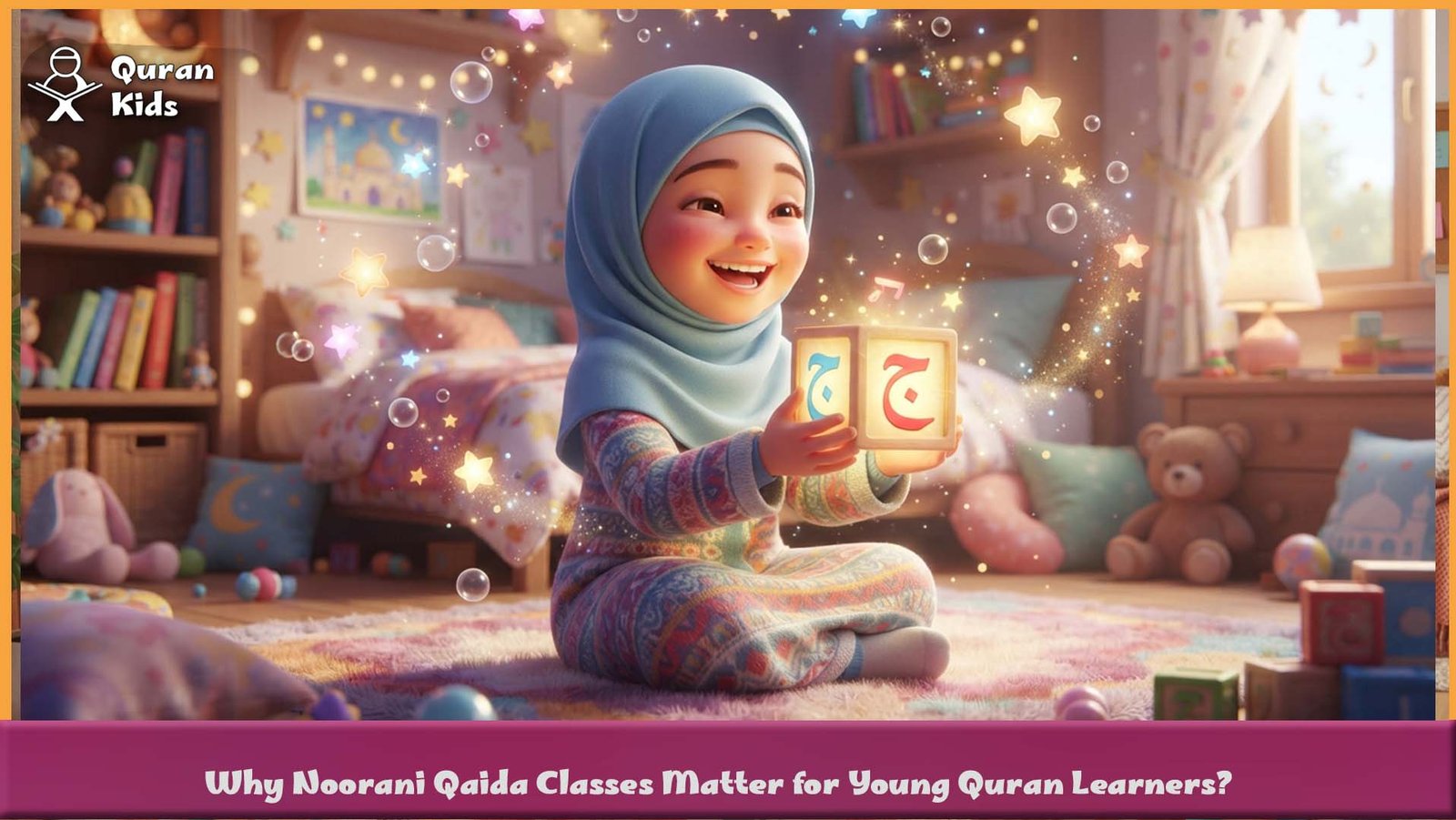
Learning to read the Quran is a gradual process. A child may recognize Arabic letters but still struggle to pronounce them correctly or connect them when they appear together in a word. This is where a structured Qaida curriculum becomes valuable.
Noorani Qaida classes break the learning process into manageable stages. Children can first become familiar with individual letters before moving toward vowel signs, combinations, words, and more advanced reading patterns.
This progression gives young learners time to develop their skills instead of expecting them to understand everything at once.
A strong foundation can also prevent common reading problems later. When children receive correction from the beginning, they are less likely to develop pronunciation habits that become difficult to change.
For parents, this means that the early stage of Quran education deserves careful attention. A child who develops accurate reading habits early can approach later Tajweed and Quran recitation lessons with greater confidence.
Start Learning Tafsir Classes Online Today
If you want to understand the Quran deeply with clear explanations and guided learning, now is the right time to begin your journey. Tafsir Classes Online at Quran Kids Academy provide structured lessons that simplify Quran meanings while helping students apply Islamic teachings in daily life.
In addition, experienced teachers support learners step by step to improve understanding, build confidence, and strengthen spiritual connection with the Quran. Users can also explore more related options.
Therefore, joining today can help you or your children gain authentic knowledge in a flexible and comfortable learning environment. Take the first step now and start building a stronger relationship with the Quran through guided tafsir education.

What Are Noorani Qaida Classes?
Noorani Qaida classes are lessons based on the Noorani Qaida, a traditional introductory method used to teach learners how to read Arabic and prepare for Quran recitation.
The lessons generally move from simple concepts to more complex ones. Depending on the curriculum and the child’s level, students may learn:
- Arabic letters and their shapes
- Letter sounds
- Basic vowel signs
- Sukoon
- Shaddah
- Tanween
- Madd and elongation
- Connected letters
- Simple combinations
- Quranic words
- Basic pronunciation rules
- Selected Tajweed concepts
The teacher’s role is especially important because reading the Quran is not only a visual skill. A child must also learn how each letter should sound and where that sound comes from.
For this reason, children benefit from hearing correct pronunciation, repeating it, and receiving immediate correction.
Noorani Qaida Classes for Kids: What Makes Them Different?
Children do not learn in the same way adults do. A young learner may understand a concept quickly one day and need additional repetition the next. Attention can also change depending on the time of day, lesson length, and teaching style. Effective Noorani Qaida classes therefore need to be flexible while remaining structured.
A child-friendly lesson can include short explanations, repetition, visual examples, oral practice, and positive encouragement. The teacher can also divide difficult material into smaller sections.
Rather than spending a long period on one activity, the lesson can move between reading, listening, repeating, and reviewing. This variety helps prevent unnecessary boredom.
Quran Kids Academy can use this child-focused approach to make online Quran lessons for kids learning more accessible for families who want their children to build their reading skills from home.
The Main Skills Children Learn Through Noorani Qaida
A well-planned curriculum does more than teach children to identify Arabic letters. It develops several related skills that eventually work together during Quran recitation.
Recognizing Arabic Letters
The first step is becoming familiar with the Arabic alphabet. Children need to recognize each letter visually and distinguish letters that may look or sound similar.
For example, some Arabic letters differ by dots or by subtle changes in shape. Young learners need repeated exposure before recognition becomes automatic.
A teacher can show the letter, pronounce it, ask the child to repeat it, and then revisit it later. This repetition gradually improves recognition.
Learning Correct Letter Sounds
Knowing the name of a letter does not necessarily mean that a child can pronounce its sound correctly.
Noorani Qaida classes give children an opportunity to hear each sound and practice it under supervision. This is particularly important for letters that may be difficult for beginners.
A teacher can listen carefully and correct the child before an inaccurate pronunciation becomes a habit.
Understanding Harakat
Arabic vowel marks play an important role in Quran reading. Children gradually learn the quran basics and how marks such as Fathah, Kasrah, and Dammah affect pronunciation.
At first, these symbols may seem unfamiliar. With repeated examples, however, children begin to associate each mark with its corresponding sound.
Connecting Letters
Reading individual letters is only the beginning. Children eventually need to recognize letters when they appear together.
The Qaida provides a gradual transition from isolated letters to connected forms. This prepares students to read actual Quranic words more comfortably.
Developing Fluency
Fluency comes with practice. A child should not be rushed into reading quickly before accuracy is established.
The better approach is to build accuracy first and allow speed to develop naturally through repeated reading.
How Do Noorani Qaida Classes Build Better Pronunciation?
Pronunciation is one of the most important parts of Quran reading. Arabic contains sounds that may not exist in a child’s first language, especially for learners growing up outside Arabic-speaking communities. Noorani qaida classes can address this challenge through repeated listening and guided practice.
The teacher can demonstrate a sound and then ask the student to reproduce it. If the pronunciation is incorrect, the teacher can explain the difference and provide another example.
This process is particularly useful for learning the basic concept of Makharij, or the articulation points of Arabic letters.
Children do not need to master every advanced Tajweed detail immediately. Instead, they can build a foundation gradually and become familiar with accurate pronunciation from the beginning.
Makharij and Early Quran Reading
Makharij refers to the places from which Arabic letters are articulated. Understanding this concept helps students recognize why certain letters sound different even when they appear visually similar. For young learners, the explanation should remain simple.
Instead of giving a long theoretical lesson, the teacher can demonstrate a letter, pronounce it clearly, and let the child repeat it. Visual and auditory reinforcement can make the concept easier to remember.
As the learner develops, these early pronunciation skills become useful when studying Tajweed in greater depth.
Making Noorani Qaida Classes Enjoyable for Children
A successful lesson does not have to feel like a game all the time, but it should be engaging enough to keep a young learner involved.
Children often respond well to:
- Short learning activities
- Encouraging feedback
- Visual examples
- Repetition with variation
- Simple questions
- Recognition of progress
- Age-appropriate rewards
- Friendly teacher interaction
The teacher can also celebrate small achievements. For example, successfully reading a difficult group of letters can be recognized as meaningful progress.
This type of encouragement can help children associate quran for Kids Academy Online learning with achievement rather than fear.
Visual Learning in Noorani Qaida Classes
Visual materials can be especially helpful for children who are still developing their reading skills.
Large Arabic letters, clear examples, digital whiteboards, and simple color-based activities can help children focus on the lesson.
However, visual tools should support the lesson rather than replace actual reading practice. A child ultimately needs to look at the Qaida and read the material independently. A balanced lesson can therefore combine visual explanation with direct reading.
Interactive Activities for Young Learners
Interactive teaching can make online learning more effective. For example, a teacher may display several Arabic letters and ask the child to identify a particular one. Another activity could involve reading a short sequence and asking the learner to identify a sound or vowel.
Simple activities can also be used during revision. The purpose is not to make the class unnecessarily complicated. Instead, interaction gives children more opportunities to participate actively.
This is one reason Noorani Qaida classes can work well online when the teacher uses the digital environment intentionally rather than treating it like a passive video lesson.
Technology and Online Noorani Qaida Learning
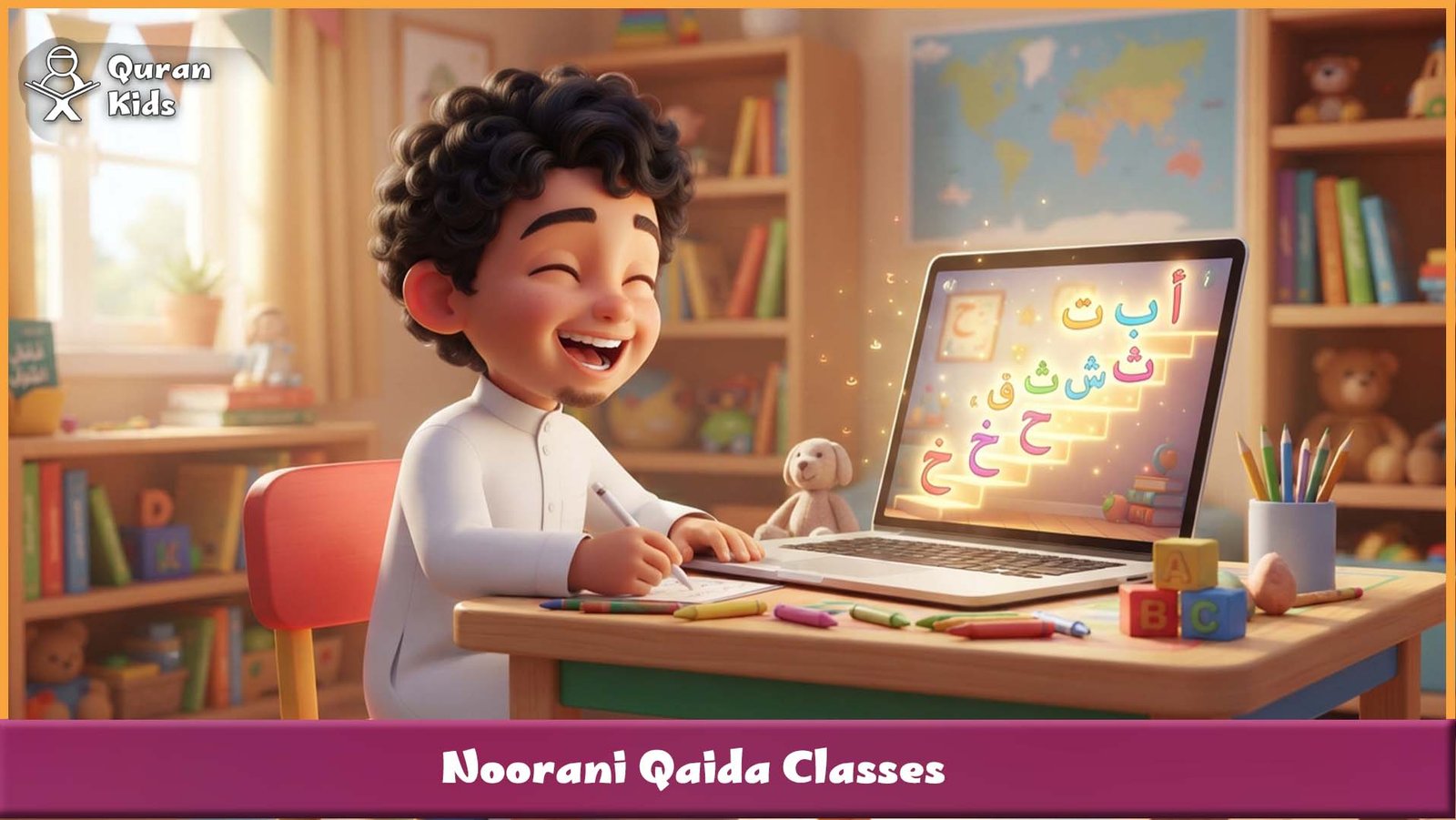
Online education has changed how families access Quran lessons. A child can now attend a live lesson from home using a computer, tablet, or another suitable device.
Online noorani qaida classes can offer several practical advantages. Parents do not need to spend time traveling to a learning center. The child can study in a familiar environment, and families can often choose lesson times that fit around school and other responsibilities.
Live instruction also allows the teacher to hear the child’s recitation and provide corrections during the lesson. This is an important distinction between a live online class and simply watching recorded videos.
How Can Quran Kids Academy Support Early Quran Learning?
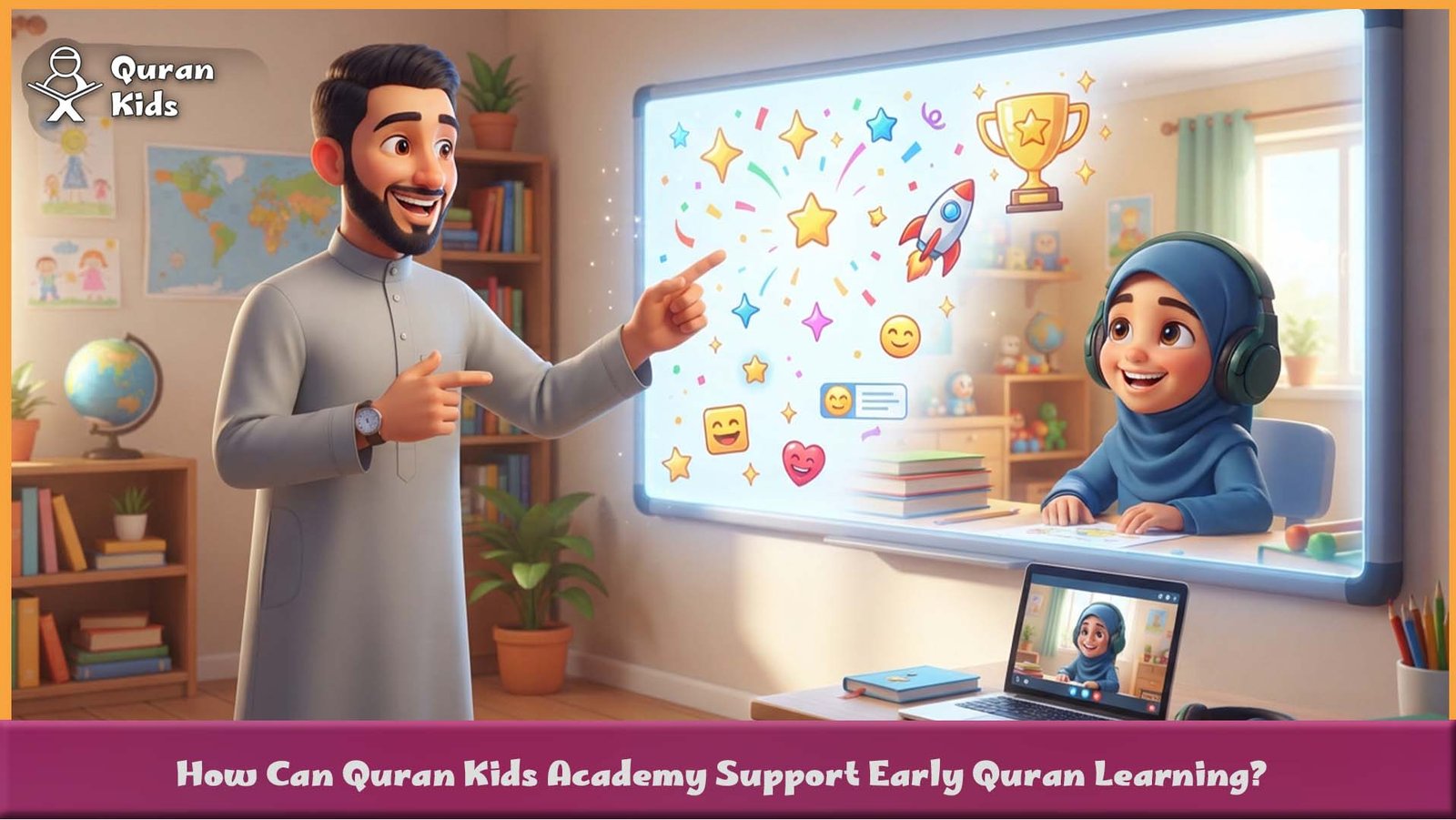
Quran Kids Academy can provide a structured environment where children learn Arabic alphabets according to their individual levels rather than following a single pace for everyone.
A beginner may need more time with Arabic letters, while another child may already recognize the alphabet and be ready to work on connected forms and vowel marks.
Personalized instruction can help teachers identify these differences.
The objective is to keep the child challenged without making the material unnecessarily difficult.
With consistent lessons and regular revision, Quran Kids Academy can help families establish a practical routine for Quran reading at home.
A Step-by-Step Noorani Qaida Learning Path
Children often progress more confidently when they know what comes next. A structured learning path can include several stages.
Stage One: Arabic Letter Recognition
The child learns to recognize the Arabic alphabet and distinguish between letters with similar shapes.
Stage Two: Letter Pronunciation
The student practices the individual sounds and receives correction from the teacher.
Stage Three: Basic Vowels
The child learns how short vowel marks affect the pronunciation of letters.
Stage Four: Letter Combinations
The learner begins reading groups of letters and recognizing connected forms.
Stage Five: Advanced Qaida Patterns
The child practices Sukoon, Shaddah, Tanween, Madd, and other patterns according to the curriculum.
Stage Six: Quranic Reading
Once the learner has developed sufficient confidence, they can begin applying these skills to Quranic verses.
The exact timeline differs from one child to another. Some children progress quickly, while others need more repetition. A good program measures progress by understanding and accuracy rather than speed alone.
How Long Do Noorani Qaida Classes Take to Complete?
There is no universal completion time for Noorani Qaida classes. A child’s age, previous Arabic exposure, lesson frequency, attention span, pronunciation difficulties, and home practice can all affect the pace.
One child might complete the basic material within a few months, while another may need considerably longer. Neither situation necessarily indicates failure.
The important question is whether the child is developing reliable skills. Parents should avoid comparing one child with another. Instead, they can monitor improvements such as:
- Better letter recognition
- More accurate pronunciation
- Greater reading confidence
- Fewer repeated mistakes
- Improved ability to read connected forms
- More independent reading
These indicators provide a more useful picture of progress.
How Often Should a Child Attend Noorani Qaida Classes?
Regularity is usually more valuable than occasional long lessons. A child who studies consistently can revisit concepts before they are forgotten. Short, frequent practice can also be easier for young learners than infrequent sessions that require them to remember a large amount of material.
Parents can discuss the appropriate lesson schedule with the teacher based on the child’s age and level. In addition to live lessons, a few minutes of supervised revision at home can reinforce what the child learned.
The Role of Parents in Noorani Qaida Learning
Parents do not need to become Quran teachers to support their child’s progress. Their most important responsibilities are creating a suitable routine and encouraging the child.A parent can:
- Keep the lesson schedule consistent
- Prepare a quiet learning space
- Encourage the child after difficult lessons
- Ask the child to review previously learned material
- Communicate concerns with the teacher
- Avoid using pressure or negative comparisons
Positive support can make a significant difference. When parents treat Quran learning as a valuable and enjoyable part of the child’s routine, children are more likely to develop a positive attitude toward their lessons.
Creating a Good Home Learning Environment
Online lessons work best when children have a dedicated space for learning. The area does not need to be large. It should simply be reasonably quiet, comfortable, and free from unnecessary distractions.
Before the lesson begins, parents can make sure that the child’s device is ready and that the child has the Qaida available.
This prevents technical interruptions from taking valuable lesson time. A predictable routine also helps the child understand that Quran learning is a regular part of the day.
Common Mistakes Parents Should Avoid
Some well-intentioned approaches can make learning harder. One common mistake is rushing the child through the Qaida because the parent wants to see fast results. Reading quickly without accuracy can create pronunciation problems.
Another mistake is correcting every small issue in an impatient way. Young learners need correction, but they also need encouragement.
Parents should also avoid comparing children with siblings or classmates. Each learner has a different pace.
Finally, it is better to maintain a realistic schedule than to create an ambitious routine that the family cannot sustain.
Noorani Qaida Classes and Tajweed
The Noorani Qaida and Tajweed are closely connected, but they are not identical.The Qaida helps beginners develop foundational reading and pronunciation skills. Tajweed provides a broader system of rules for reciting the Quran correctly. A child does not necessarily need to study every Tajweed rule in depth at the beginning.
Instead, foundational pronunciation can be introduced gradually. Once the child has stronger reading skills, the teacher can build on that foundation with more detailed Tajweed instruction. This progression helps prevent young learners from feeling overwhelmed.
Moving From Noorani Qaida to Quran Reading
The transition to the Quran should happen when the child has developed sufficient foundational skills. A teacher may begin with short and familiar Surahs or selected verses. The focus should remain on accuracy rather than finishing pages quickly.
At this stage, the learner begins to see the practical purpose of everything studied in the Qaida. Arabic letters, vowel marks, connected forms, pronunciation, and reading patterns now come together during actual Quran recitation.
That transition can be very motivating for children because they can see their progress in a meaningful context.
Why Individual Attention Matters?
Children often make different types of mistakes. One learner may confuse similar letters, while another may understand the letters but struggle with pronunciation.
A teacher who listens carefully can identify these patterns and adapt the lesson. Individual attention is particularly valuable in online learning because the teacher can focus directly on the child’s recitation instead of dividing attention among many students.
Quran Kids Academy can use individualized instruction to help children work on their specific areas of difficulty.
Building Confidence Through Small Achievements
Confidence develops when children experience manageable success. A teacher might set a small goal for one lesson, such as reading a particular group of letters correctly. Once the child achieves it, the next goal can be introduced.
This approach makes progress visible. Instead of telling a child that they still have a lot to learn, it is often more motivating to show them what they can already do.
Over time, these small achievements can create stronger confidence and a more positive attitude toward Quran study.
What Parents Should Look for in Online Noorani Qaida Classes?

Choosing a program requires more than looking at price or lesson duration. Parents should consider:
Qualified Teachers
The teacher should understand Arabic pronunciation and Quran recitation with tajweed and know how to communicate with young children.
Child-Friendly Teaching
A teacher who is knowledgeable but cannot engage young learners may not provide the best experience.
Structured Curriculum
Lessons should follow a clear progression rather than moving randomly between topics.
Regular Feedback
Parents should understand how their child is progressing and which areas require additional practice.
Flexible Scheduling
Online learning is most useful when the schedule can fit realistically into the family’s routine.
Safe Learning Environment
Children should learn through a reliable platform and appropriate communication channels. These factors can help parents make a more informed decision.
What Makes Effective Noorani Qaida Classes Successful?
The quality of a lesson depends on several elements working together. A strong program combines a clear curriculum, qualified instruction, repetition, individual correction, appropriate lesson length, and parental support.
No single educational tool can replace these fundamentals. Flashcards can help. Digital activities can help. Visual materials can help. However, the child still needs a teacher who listens, corrects, explains, and encourages.
The most effective approach is therefore balanced rather than dependent on one teaching technique.
How to Keep Children Motivated?
Motivation can naturally rise and fall. Parents should expect this rather than interpreting every difficult day as a lack of interest.
Teachers can maintain motivation by varying activities and recognizing improvement. Parents can also connect learning with positive routines. For example, a child may have a quiet review period after school or before another favorite activity.
The aim is to establish consistency without turning Quran learning into a source of conflict. A supportive attitude can help children remain engaged over the long term.
Noorani Qaida Classes for Beginners With No Arabic Background
Children who do not speak Arabic at home can still learn to read the Quran. They may initially require more time to understand unfamiliar sounds and letter patterns. This is normal.A patient teacher can break pronunciation into small steps and provide plenty of repetition.
Parents should not assume that a lack of Arabic language experience prevents successful Quran learning. With appropriate instruction and regular practice, children can gradually develop the necessary reading skills.
Can Younger Children Learn Noorani Qaida Online?
Young children can participate in online lessons when the program and teaching approach are appropriate for their age.
The lesson should not be treated like an adult academic class. Young learners usually benefit from shorter activities, direct interaction, visual support, repetition, and encouragement.
The teacher should also be comfortable working with children and adapting explanations when the child becomes distracted or confused.
For families seeking home-based Quran education, Quran Kids Academy can provide a convenient environment for introducing children to structured Quran reading.
How to Know When Your Child Is Making Progress?
Progress is not measured only by how many pages a child completes. Look for practical changes.
Can the child recognize letters more quickly? Are pronunciation mistakes becoming less frequent? Can the child read combinations with less assistance? Does the child remember previously studied material?
These are meaningful signs. Parents can also ask the teacher for periodic feedback. A simple progress review can identify strengths and areas that need additional practice.
How to Practice Noorani Qaida at Home?
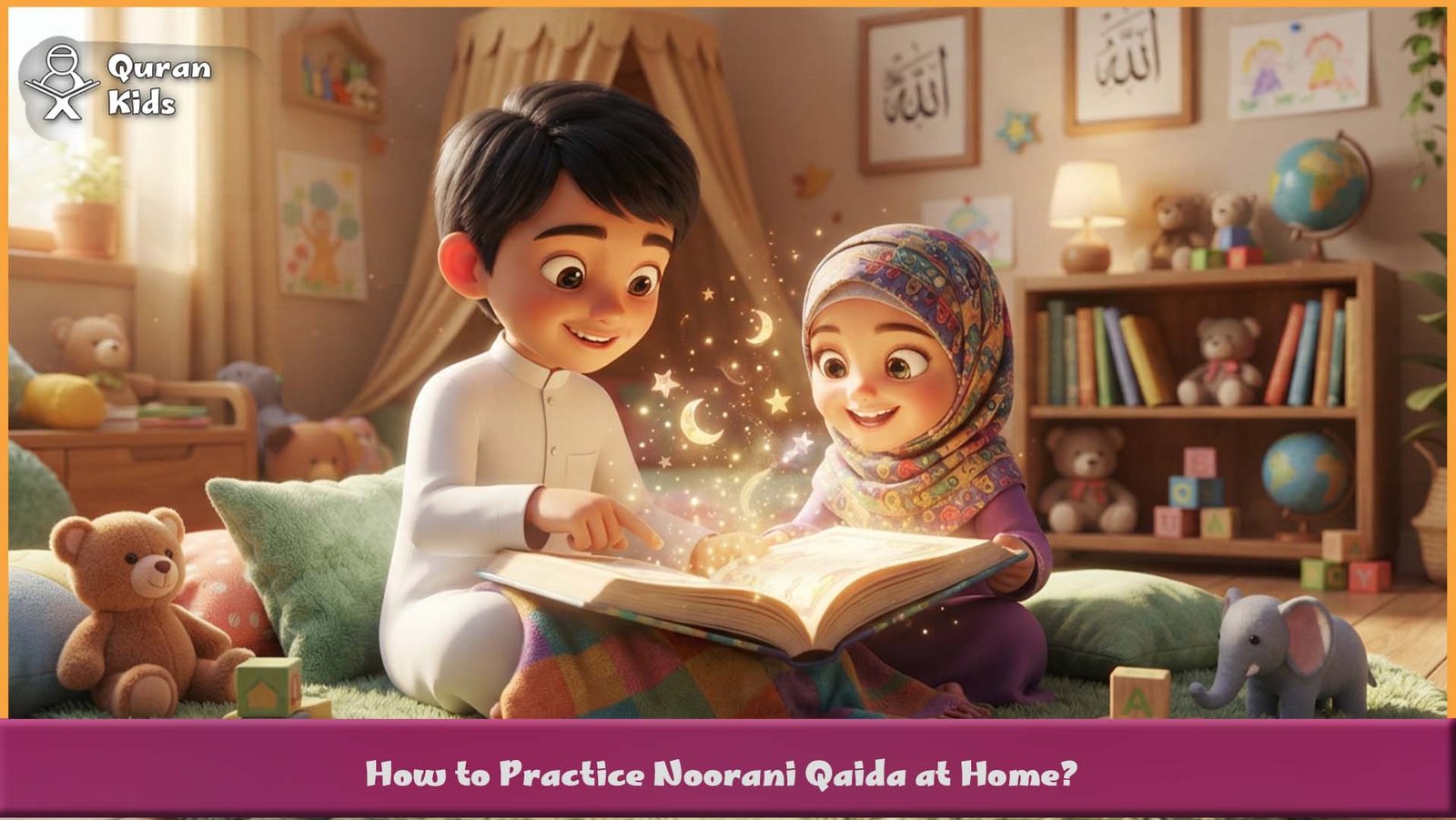
After each Noorani Qaida class, short and consistent practice at home can help children remember what they have learned and strengthen their reading skills.
Home practice does not need to be long or stressful. A few focused minutes can be enough to review Arabic letters, repeat previously learned patterns, or read a short section from the Qaida.
Parents can encourage children to practice the examples introduced during the lesson rather than adding new material independently. This keeps home practice aligned with the teacher’s instructions and reduces the risk of developing incorrect pronunciation.
Regular practice also helps children retain new concepts, improve reading accuracy, and approach each Noorani Qaida class with greater confidence.
Frequently Asked Questions About Noorani Qaida Classes
1. Can a child start Noorani Qaida if they do not know Arabic?
Yes. Noorani Qaida is designed to build foundational reading skills, so children can begin with little or no previous Arabic reading experience.
2. What should parents do if their child loses interest during lessons?
Parents can discuss the issue with the teacher and consider shorter activities, more varied practice, or a different lesson time. A consistent but supportive routine is usually more helpful than forcing the child to continue while frustrated.
3. Should children memorize the Qaida?
The main purpose is to learn how to read and pronounce Arabic patterns correctly. Memorization of the pages themselves is not the primary objective.
4. When should a child start reading the Quran?
The teacher can determine readiness based on the child’s ability to recognize letters, read connected forms, apply basic vowel patterns, and pronounce words with reasonable accuracy.
5. Can parents track progress in online lessons?
Yes. Parents can request regular feedback about reading accuracy, pronunciation, lesson participation, and the areas that require additional practice.
In conclusion, Noorani Qaida classes can give children an important foundation for Quran reading when lessons are taught gradually and consistently. The process begins with simple skills but eventually supports more confident Quran recitation and future Tajweed study.
Children need more than a textbook. They need patient instruction, regular correction, repetition, encouragement, and an environment where mistakes are treated as part of learning.
Online education can make this process more accessible to families by bringing live instruction into the home. With the right teacher and a realistic routine, children can learn at a comfortable pace without unnecessary pressure.
Quran Kids Academy can support this journey through a child-focused learning structure that recognizes the differences between young learners and adapts instruction to their needs.
The most important goal is not to finish the Qaida as quickly as possible. It is to help the child develop accurate, confident, and lasting Quran reading skills. When learning is built on patience and consistency, the foundation created during these early lessons can continue to benefit the child throughout their Quran journey.
A strong beginning can make later Quran reading easier. For that reason, choosing an appropriate learning method and giving children enough time to build their skills can be one of the most valuable steps parents take in their Quran education.