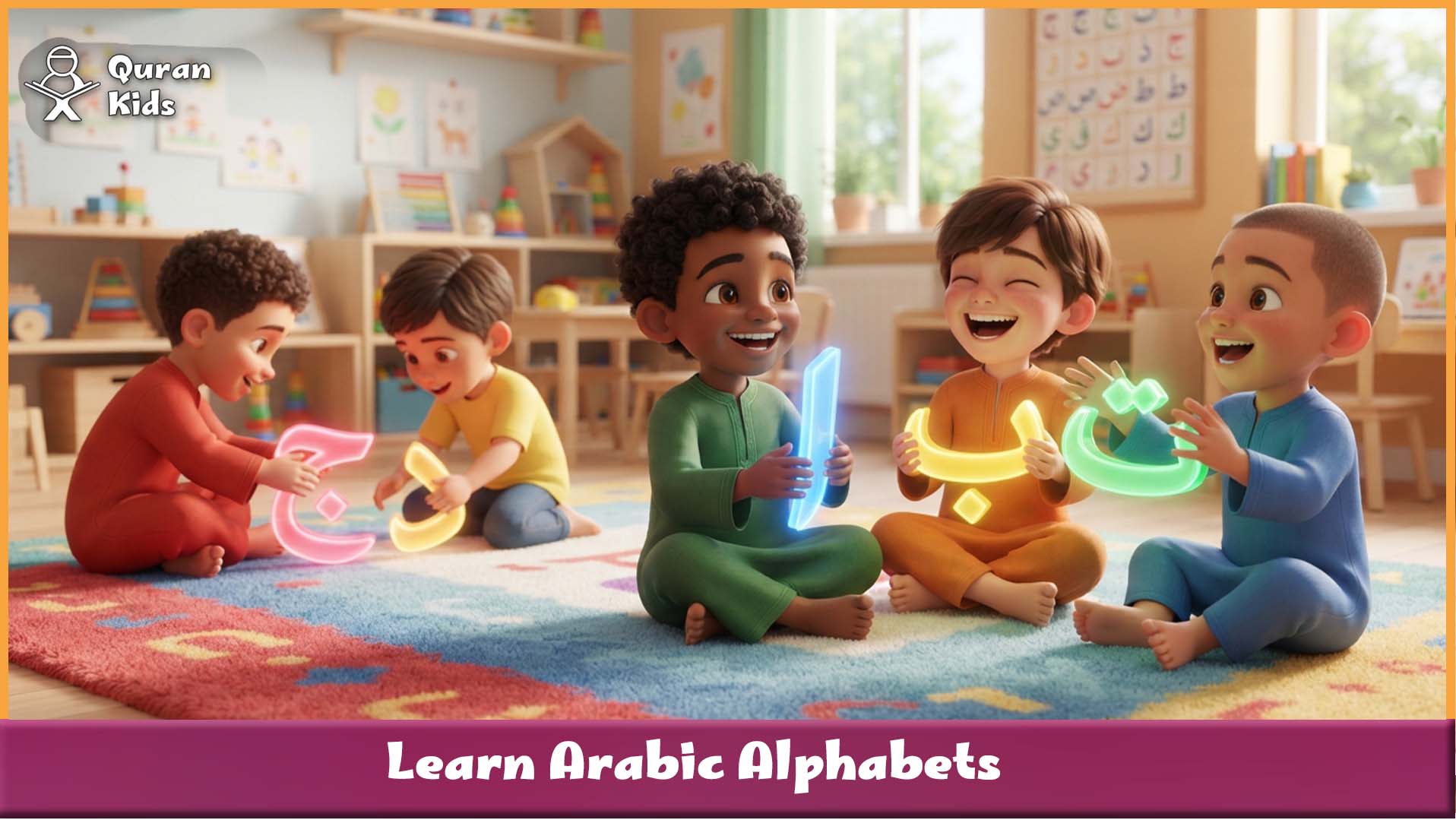
Learn Arabic Alphabets: A Beginner’s Step-by-Step Guide
learn arabic alphabets is the essential first step for anyone who wants to read, write, or understand Arabic. Whether your goal is everyday communication, studying Islamic texts, or reading the Quran with confidence, learning the Arabic letters builds a strong foundation for future progress. Before moving into full recitation, our noorani qaida course gives children a solid foundation in the letters and their correct pronunciation.
Although the script may seem unfamiliar at first, a clear learning method makes it easier to recognize letter shapes, understand their sounds, and read simple words. With regular practice, learners quickly gain confidence and improve their reading skills. This connects closely with kids quran learning, which explores the topic further.
For children, interactive lessons and step-by-step guidance make the process more enjoyable and effective. Quran Kids Academy supports beginners with experienced teachers, engaging activities, and a structured curriculum that helps students master the Arabic alphabet at a comfortable pace. For more on this, take a look at online quran study.
Why Learning the Arabic Alphabet Matters?
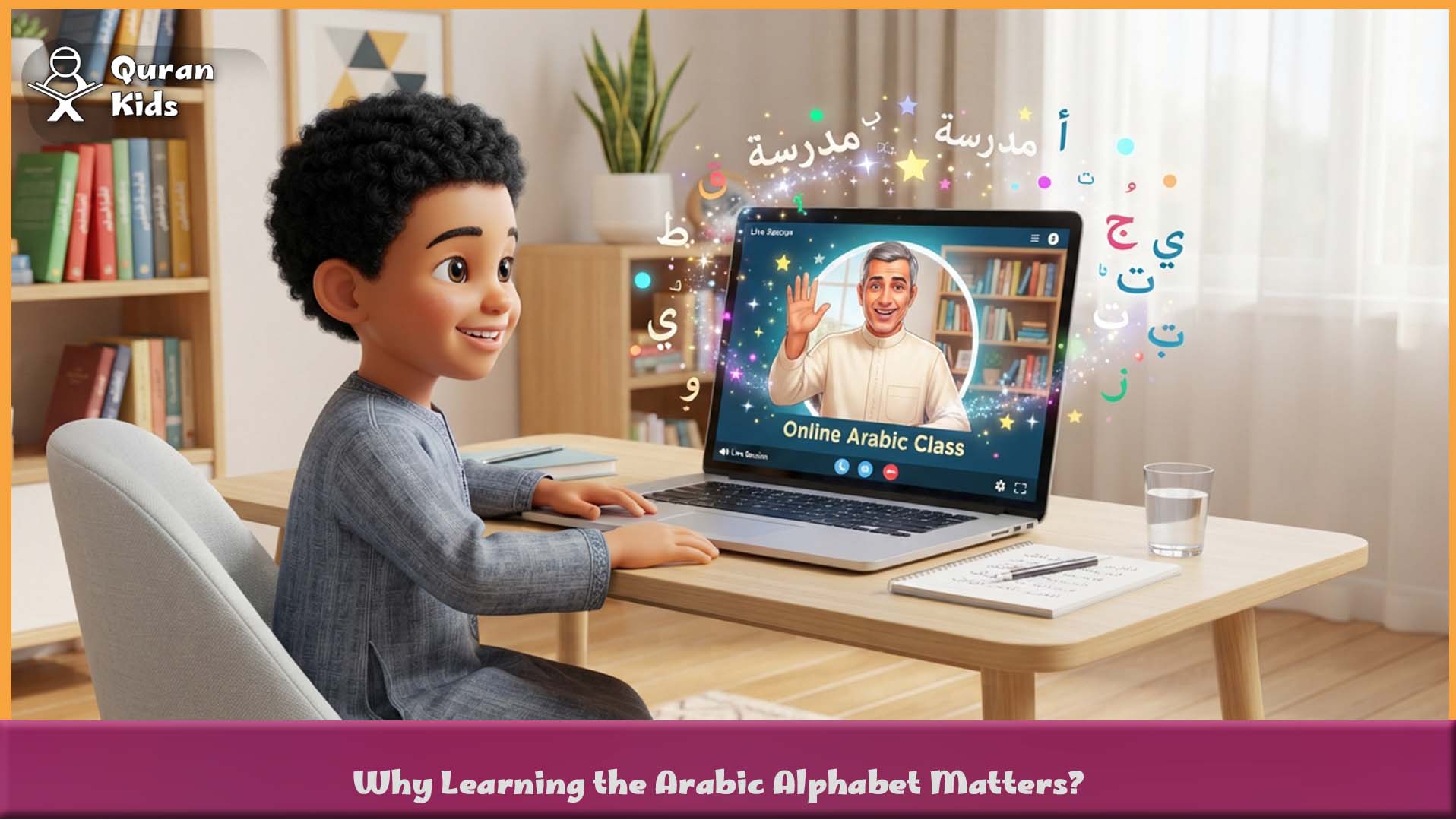
Every language begins with its alphabet, and Arabic is no exception. Before students can improve their vocabulary, grammar, or reading comprehension, they must first recognize each letter and understand its sound. This foundation allows learners to pronounce words accurately and avoid mistakes that become difficult to correct later. We go into more detail on this in kids arabic class.
The Arabic alphabet is especially important for Muslims who wish to read the Quran correctly. Although translations help readers understand meanings, they cannot replace the beauty and precision of the original Arabic text. Learning the letters enables students to recite verses with greater confidence and gradually improve their pronunciation. You’ll find more background on this in how to learn quran.
Even for non-native speakers with no religious goals, understanding Arabic letters opens the door to exploring one of the world’s most widely spoken languages. Arabic is used across more than twenty countries and is spoken by hundreds of millions of people, making it an excellent language for education, travel, business, and cultural exchange. This connects closely with arabic lessons near me, which explores the topic further.
Build Your Child’s Future with Quran Academy for Children
Quran Kids Academy offers engaging and reliable online Quran lessons for children designed to fit busy family schedules. Our academy provides high-quality and affordable Quran education for students worldwide in a safe and supportive environment. You’ll find more background on this in clear quran for kids.
We invite you to enroll your children in interactive classes taught by qualified Quran teachers using modern learning tools to make lessons enjoyable and effective. For more on this, take a look at how to learn the quran for beginners.
By choosing Quran Kids Academy, you support your child’s spiritual and educational growth through structured learning. Book a free trial session today and start your child’s Quran journey. We go into more detail on this in quran competition.

How Many Letters Are in the Arabic Alphabet?
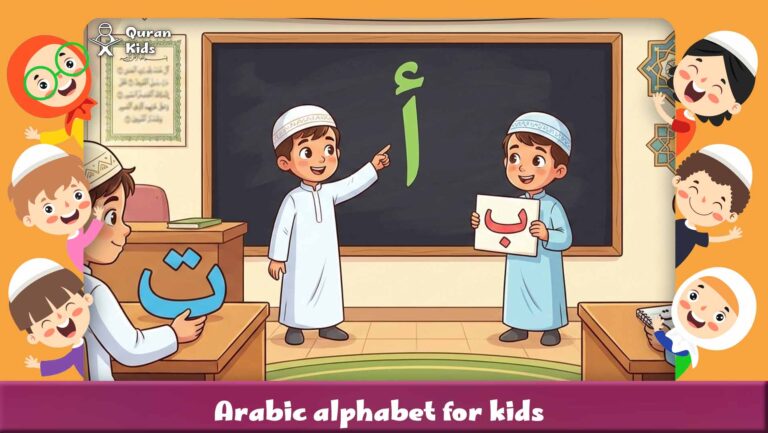
The Arabic alphabet consists of 28 primary letters. Unlike English, these letters are primarily consonants, while vowel sounds are represented through special marks called Harakat or by certain letters acting as long vowels.
Some learners hear that Arabic contains thirty letters. This confusion usually comes from counting additional writing forms such as Hamza (ء) and Taa Marbuta (ة). Although both are essential in Arabic writing, they are generally treated separately from the twenty-eight main letters.
Each letter has its own pronunciation, and many sounds are unique to Arabic. Some resemble English sounds, while others require learners to practice specific tongue and throat positions. Consistent listening and repetition are the most effective ways to master these pronunciations.
The 28 Learn Arabic Alphabets Letters
Below are the Arabic letters in their traditional order:
| Arabic Letter | Name | Approximate Sound |
|---|---|---|
| ا | Alif | A |
| ب | Ba | B |
| ت | Ta | T |
| ث | Tha | Th |
| ج | Jeem | J |
| ح | Haa | Strong H |
| خ | Khaa | Kh |
| د | Dal | D |
| ذ | Dhal | Th (this) |
| ر | Ra | R |
| ز | Zay | Z |
| س | Seen | S |
| ش | Sheen | Sh |
| ص | Sad | Heavy S |
| ض | Dad | Heavy D |
| ط | Taa | Heavy T |
| ظ | Zaa | Heavy Z |
| ع | Ain | Deep throat sound |
| غ | Ghain | Gh |
| ف | Fa | F |
| ق | Qaf | Q |
| ك | Kaf | K |
| ل | Lam | L |
| م | Meem | M |
| ن | Noon | N |
| هـ | Haa | H |
| و | Waw | W / Long Oo |
| ي | Ya | Y / Long Ee |
Rather than trying to memorize all twenty-eight letters in one sitting, learners achieve better results by studying a few letters each day. Reviewing previously learned letters before introducing new ones helps strengthen long-term memory and improves recognition speed.
Learn Arabic Alphabets: Understanding Letter Shapes
One feature that surprises beginners is that arabic classes for kids near me letters change their appearance depending on where they occur in a word. Every letter can appear in one of four positions:
- Isolated
- Initial (beginning)
- Medial (middle)
- Final (end)
Although the shapes vary, the identity of each letter remains the same. After a short period of practice, learners naturally recognize these different forms without consciously thinking about them.
For example, the letter ب changes its shape slightly as it connects to neighboring letters, yet the distinguishing dot below the letter always remains. Similar patterns appear throughout the Arabic writing system, making recognition much easier than many beginners expect.
Learn Arabic Alphabets: Letters That Do Not Connect
Most Arabic letters connect to the letters before and after them, creating the flowing appearance of Arabic handwriting. However, six letters only connect to the letter before them and never to the following letter. These letters are:
- ا (Alif)
- د (Dal)
- ذ (Dhal)
- ر (Ra)
- ز (Zay)
- و (Waw)
Understanding these letters early makes reading easier because learners begin recognizing where words naturally separate while reading.
How to Read and Learn Arabic Alphabets?
Arabic is written from right to left, unlike English and many European languages. At first, this may seem unusual, but learners quickly adapt through consistent reading practice.
Another unique feature you will discover in any Online Arabic lesson is that Arabic uses connected handwriting even in most printed text.
Rather than appearing as separate characters, the letters usually join together to form complete words. This flowing writing style gives Arabic its distinctive, elegant, and easily recognizable appearance while helping learners understand how letters connect naturally in everyday reading.
As students continue to learn arabic alphabets, they gradually stop focusing on individual letters and begin recognizing complete words as visual patterns. This transition significantly improves reading speed and comprehension.
Long Vowels in Arabic
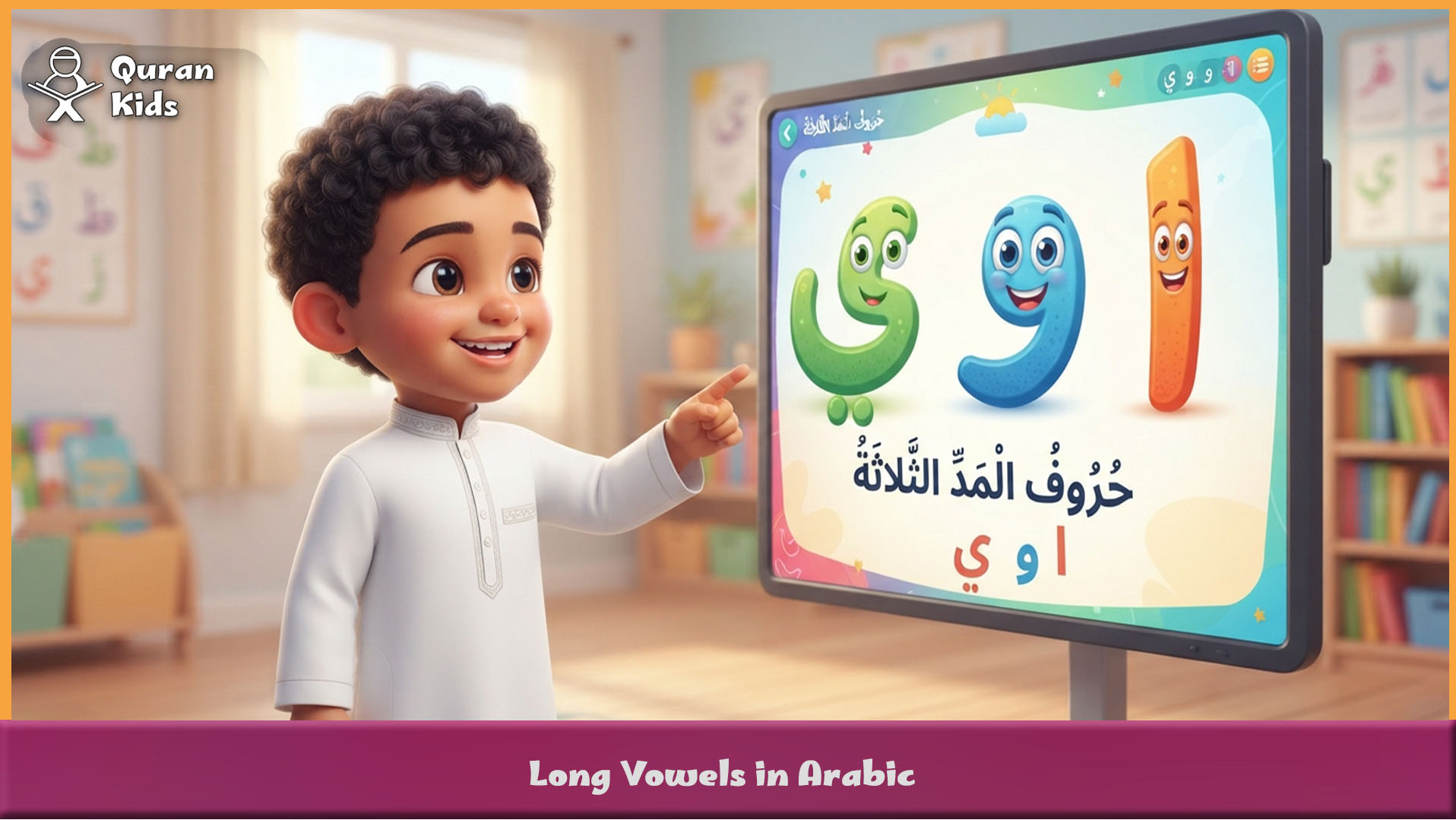
In addition to the short vowels, Arabic includes three long vowels that are written using letters from the alphabet itself. These are:
- Alif (ا) for the long aa sound.
- Waw (و) for the long oo sound.
- Ya (ي) for the long ee sound.
Interestingly, these same letters can also function as consonants depending on their position within a word. Understanding the difference becomes easier with regular reading practice and listening exercises.
As students continue to learn arabic alphabets, recognizing these patterns becomes increasingly natural, allowing them to read more smoothly without analyzing every individual letter.
Learn Arabic Alphabets Through Correct Pronunciation
Recognizing letters is only part of the learning process. Accurate pronunciation is equally important because many Arabic letters represent sounds that do not exist in English.
For example, letters such as ح, خ, ع, and ق require practice with experienced guidance. Listening carefully to native speakers and repeating the sounds consistently helps learners develop proper pronunciation habits from the beginning.
At Quran Kids Academy, pronunciation training forms an essential part of every beginner lesson. Students receive immediate feedback, allowing them to correct mistakes before they become permanent habits. This gradual approach builds confidence while improving both reading accuracy and speaking ability.
Learn Arabic Alphabets with Harakat
After learners recognize the learn arabic online UK, the next step is understanding Harakat, the short vowel marks that determine how each letter is pronounced. These symbols play a crucial role in helping beginners read Arabic accurately before they become familiar with complete words.
Unlike English, Arabic often omits short vowels in everyday writing. Native speakers can usually identify the correct pronunciation from context, but beginners rely on Harakat to read with confidence. For this reason, educational books for children and Quran learning materials usually include these marks.The three primary short vowels are:
- Fatha (َ) produces a short a sound.
- Kasra (ِ) produces a short i sound.
- Damma (ُ) produces a short u sound.
Additional pronunciation marks include:
- Sukun (ْ), which indicates that a letter has no vowel after it.
- Shaddah (ّ), which doubles the pronunciation of a consonant.
- Tanween (ً ٍ ٌ), which adds an n sound at the end of certain words.
Learning these symbols early helps students read unfamiliar words correctly and prepares them for fluent Quran recitation as well as everyday Arabic reading.
Common Challenges When You Learn Arabic Alphabets
Every language presents unique challenges, and Arabic is no exception. Fortunately, most difficulties disappear with consistent practice and proper instruction.
Similar Letter Shapes in Learn Arabic Alphabets
Many Arabic letters share nearly identical shapes and differ only in the placement or number of dots.For example:
- ب
- ت
- ث
Likewise, practicing a little every day improves letter recognition, strengthens pronunciation, builds reading confidence, and helps learners remember Arabic letters more effectively.
- ج
- ح
- خ
Instead of memorizing them randomly, learners should study these letters together. Comparing similar shapes helps the brain recognize small visual differences much more effectively.
Learn Arabic Alphabets with Correct Pronunciation
Arabic includes several sounds that are unfamiliar to English speakers. Letters such as ع, ح, غ, and ق often require extra listening practice before learners can pronounce them comfortably.
Rather than trying to perfect every sound immediately, students should focus on gradual improvement. Regular repetition with qualified teachers produces steady progress over time.
Reading Connected Words in Arabic Alphabets
Because Online Arabic lessons connect, complete words can initially appear difficult to recognize. However, once learners understand how letters change shape according to their position, reading becomes much easier.
Most students notice significant improvement after only a few weeks of consistent reading practice.
Effective Ways to Memorize Arabic Letters
Successful learners rarely depend on memorization alone. Instead, they combine several learning techniques that reinforce one another.
Listen Before Speaking
Listening to native speakers is one of the fastest ways to improve your pronunciation and speaking skills. First, pay close attention to how each letter and word is pronounced. Then, repeat what you hear several times until the sounds become familiar.
In addition, listening regularly helps learners recognize similar sounds and speak with greater confidence. As you continue to learn arabic alphabets, this daily practice will make reading and pronunciation much more natural.
Use Flashcards
Flashcards are a simple but highly effective way to memorize Arabic letters. For example, write the Arabic letter on one side and its name and pronunciation on the other.
Next, review the cards for a few minutes each day instead of studying for long periods. As a result, learners improve their memory and recognize letters more quickly. Flashcards are especially useful for beginners who want to learn arabic alphabets in a structured and enjoyable way.
Read Simple Words
After learning individual letters, start reading short and simple Arabic words. This is because connecting letters into complete words helps learners understand how the alphabet works in real reading situations.
Moreover, reading familiar words repeatedly improves fluency and strengthens letter recognition. Over time, students become more confident and ready to read longer texts. This practical approach is one of the best ways to learn the Arabic alphabet while building strong reading skills.
Learning Arabic Online
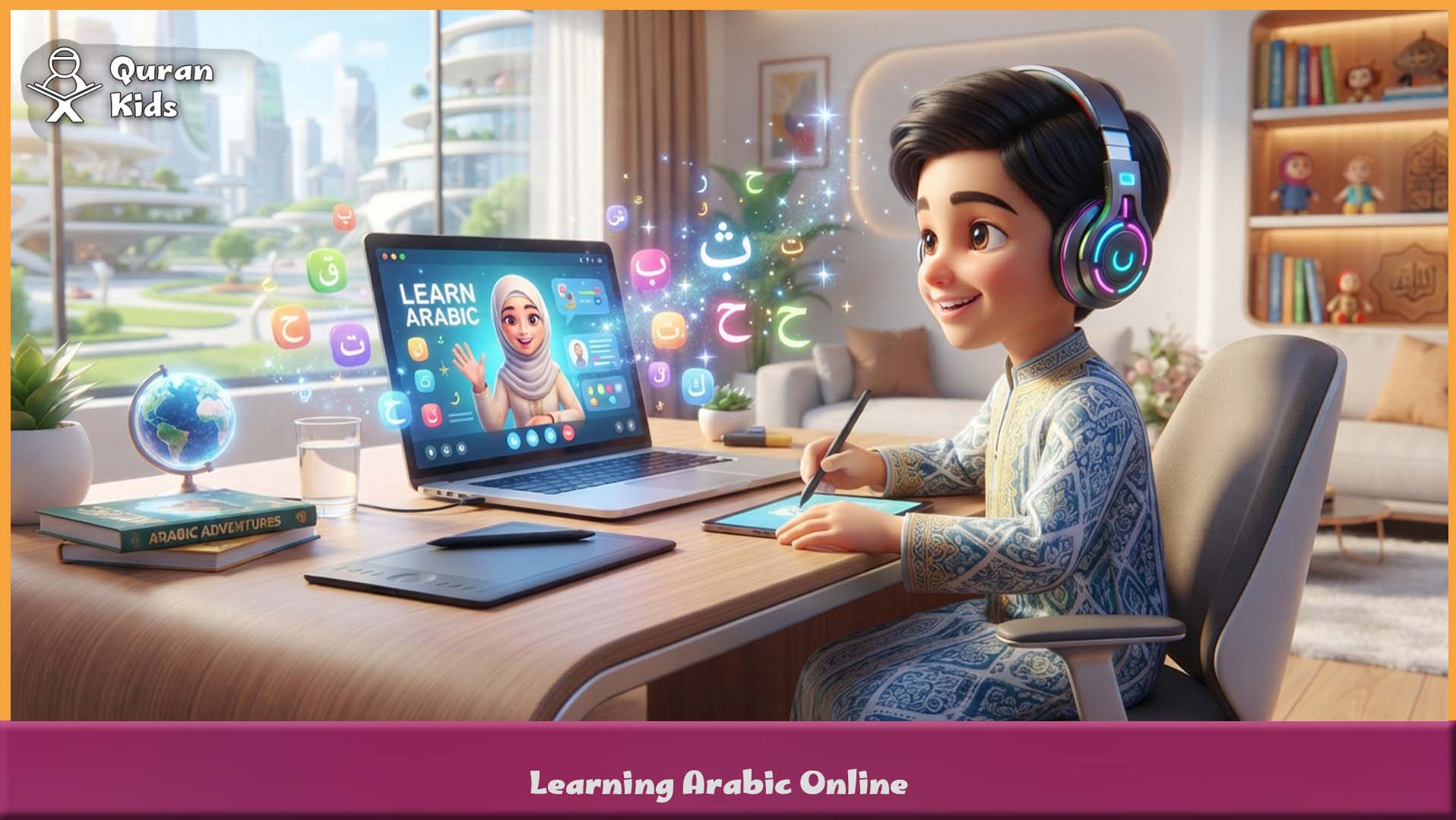
Modern technology has made Arabic education more accessible than ever. Students no longer need to attend traditional classrooms to receive quality instruction.
Interactive online lessons provide flexibility, allowing learners to study from home while following a structured curriculum. Video classes, pronunciation practice, digital whiteboards, and one-on-one instruction all contribute to faster progress.
Families especially appreciate the convenience of online learning because children can maintain consistent lessons regardless of location or schedule.
At Quran Kids Academy, students benefit from personalized instruction designed specifically for beginners. Experienced teachers introduce Arabic letters gradually, ensuring every learner understands each lesson before moving forward. This supportive environment encourages confidence while helping students develop strong reading skills.
Arabic Numbers
Many learners are surprised to discover that Arabic-speaking countries often use Eastern Arabic numerals rather than the Western numerals commonly used worldwide.
| Western | Eastern Arabic |
|---|---|
| 0 | ٠ |
| 1 | ١ |
| 2 | ٢ |
| 3 | ٣ |
| 4 | ٤ |
| 5 | ٥ |
| 6 | ٦ |
| 7 | ٧ |
| 8 | ٨ |
| 9 | ٩ |
Although the symbols look different, they follow the same mathematical principles. Learning these numerals becomes much easier after students become familiar with the Arabic writing system.
Tips for Parents Teaching Children Arabic
Children often learn languages faster when lessons are enjoyable and interactive. Parents can support their progress by creating a positive learning environment at home.
Some practical strategies include:
- Setting aside a consistent study time each day.
- Celebrating small achievements.
- Reading simple Arabic storybooks together.
- Using educational games to reinforce letter recognition.
- Practicing pronunciation through songs and repetition.
- Encouraging children to review previously learned letters before introducing new ones.
Consistency matters far more than lengthy study sessions. Even fifteen minutes of focused practice every day produces stronger long-term results than occasional hours of study.
Parents who choose Quran Kids Academy also benefit from structured lesson plans that help children progress step by step without becoming overwhelmed. Regular teacher feedback ensures students remain motivated while steadily improving their Arabic reading skills.
A Step-by-Step Plan to Master the Arabic Alphabet
Learning Arabic becomes much easier when you follow a clear and organized plan. Instead of trying to memorize everything in a short time, focus on making steady progress.
In fact, small daily improvements often lead to better long-term results than long study sessions completed only once in a while. A practical learning plan includes the following steps:
- Learn three or four new letters each week.
- Review previously learned letters before starting a new lesson.
- Practice writing every letter in its different forms.
- Read simple words using Harakat.
- Listen carefully to native pronunciation and repeat each sound.
- Complete short reading exercises every day.
By following these steps consistently, learners improve their letter recognition, pronunciation, and reading skills at the same time. As a result, they gain confidence with every lesson and build a strong foundation for future learning.
In addition, reading familiar words repeatedly is more effective than constantly searching for new vocabulary. This repeated exposure helps the brain recognize common letter patterns automatically. Therefore, reading becomes faster, smoother, and more natural over time.
Common Mistakes to Avoid
Most beginners face similar challenges when learning Arabic. However, avoiding a few common mistakes can make the learning process much easier.
One frequent mistake is memorizing the names of the letters without practicing their pronunciation. Although recognizing the letters is important, saying their sounds correctly is equally essential for developing strong reading skills.
Another common mistake is skipping handwriting practice. In fact, writing each letter helps strengthen visual memory and makes it easier to understand how letters connect within words.
Some learners also become discouraged when they hear unfamiliar Arabic sounds. However, accurate pronunciation develops gradually through regular listening, repetition, and guided practice. For this reason, patience is just as important as consistency.
Finally, many beginners try to study too many letters in one session. Instead, learning at a comfortable pace and reviewing regularly leads to better understanding and longer-lasting results.
Building Confidence Through Regular Practice
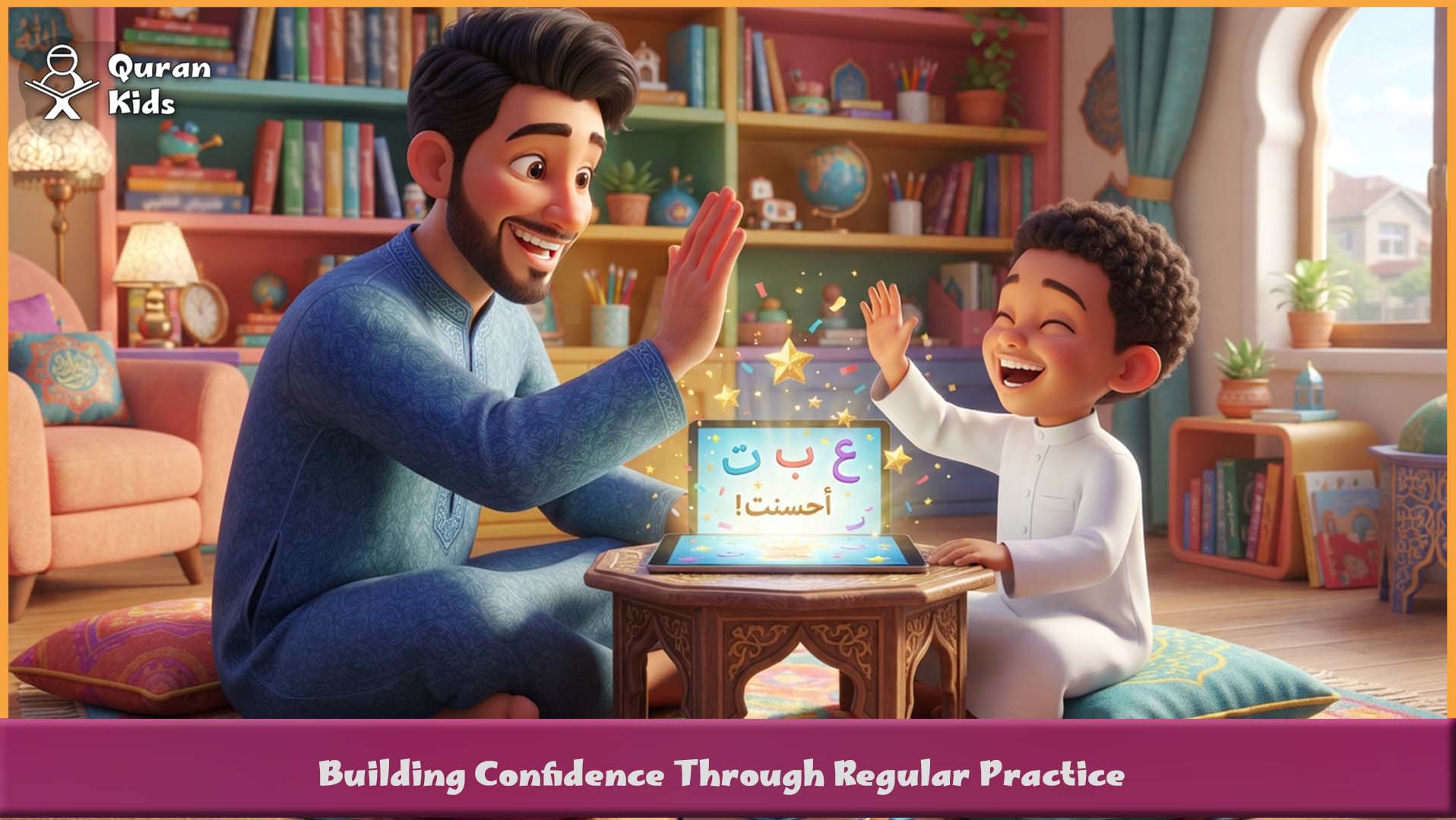
Learning a new writing system takes time, and Arabic is no exception. Fortunately, steady practice produces noticeable improvement, even if each study session is short. For example, spending just fifteen to twenty minutes each day can lead to significant progress after only a few weeks.
As learners continue to learn arabic alphabets, they begin recognizing letters more quickly and reading simple words with greater confidence. At the same time, their pronunciation improves, making it easier to continue learning grammar, vocabulary, and sentence structure.
Moreover, every reading exercise reinforces previously learned skills. As a result, learners become more comfortable with the Arabic script and start reading naturally instead of focusing on individual letters.
Whether your goal is reading Arabic books, communicating with native speakers, or reciting the Quran accurately, mastering the alphabet is the essential first step. Once this foundation is established, every new lesson becomes easier to understand.
Frequently Asked Questions (FAQs)
Before you begin learning Arabic, explore these frequently asked questions for clear answers to common concerns about the Arabic alphabet and the best way to master it.
How long does it take to master the Arabic alphabet?
The learning timeline varies from one person to another. However, with consistent daily practice, most beginners can recognize all twenty-eight letters within a few weeks. After that, regular reading and revision help improve speed, accuracy, and confidence.
Should beginners practice handwriting as well as reading?
Yes. In addition to improving letter recognition, handwriting strengthens memory and helps learners understand how letters change shape in different positions. As a result, reading becomes easier and more natural over time.
What is the best way to stay motivated while learning Arabic?
The best approach is to set small, achievable goals and practice regularly. For example, learning a few letters each week and reviewing them every day helps maintain steady progress. Most importantly, celebrating small achievements keeps learners motivated and encourages them to continue improving.
In conclusion, choosing to learn arabic alphabets is the beginning of a rewarding journey toward understanding the Arabic language. Although the script may seem unfamiliar at first, its structure becomes much clearer with regular practice and proper guidance.
By learning the twenty-eight letters, understanding their different forms, mastering Harakat, and practicing pronunciation consistently, students develop the skills needed for fluent reading. Furthermore, every lesson builds on previous knowledge, allowing learners to make steady and meaningful progress.
At Quran Kids Academy, beginners receive structured lessons designed to make learning simple and enjoyable. In addition, experienced teachers provide continuous support and personalized guidance, helping students build confidence from their very first lesson. With patience, consistent practice, and the right instruction, anyone can master the Arabic alphabet and continue their journey toward reading and understanding Arabic with confidence.
Related: Arabic Classes for Kids.
Related: How Can We Learn.
Related: Best Online Arabic classes.
Related: Arabic Classes for Kids.
Related: Arabic Language for Kids:.
Related: Online Arabic courses Sydney:.