How to Know If an Online Quran Teacher Is Qualified :Parent Guide
How to Know If an Online Quran Teacher Is Qualified is a common question for parents who want their children to learn the Quran correctly, confidently, and safely from home. Choosing an online tutor involves more than checking availability or reading a short introduction on an academy’s website. Parents need to understand the teacher’s qualifications, recitation skills, teaching experience, and ability to guide children through different stages of Quran learning.
Although online Quran classes offer flexibility, evaluating an instructor remotely can feel challenging. You may not know which certificates to request, how to assess Tajweed, or whether a teacher’s experience matches your child’s needs. Fortunately, several practical checks can help you make a more informed decision before enrolling.
This guide explains how to verify an online Quran teacher’s qualifications, recognize trustworthy answers, evaluate a trial lesson, and identify warning signs. It also explains how Quran Kids Academy can be assessed during the selection process, helping parents understand which questions to ask before committing.
Why Does Knowing If an Online Quran Teacher Is Qualified Matter?
A Quran teacher helps students develop habits that can influence their recitation for years. Children who learn Arabic letters, pronunciation, and Tajweed need accurate guidance from the beginning. Therefore, checking an instructor’s qualifications is an important part of choosing an appropriate learning environment.
An instructor may have strong Quran memorisation skills but limited experience teaching young children. Another teacher may explain lessons patiently but need additional training in advanced recitation. These differences matter because students have different goals, learning speeds, and levels of familiarity with the Quran. Before selecting an online tutor, consider the following benefits of proper verification:
- Accurate recitation: Qualified instruction helps students recognise pronunciation mistakes and practice appropriate corrections.
- Structured learning: An experienced teacher can organise lessons according to the student’s current ability.
- Suitable teaching methods: Children often need shorter activities, repetition, encouragement, and clear explanations.
- Measurable progress: A well-organised learning process makes it easier to identify improvements and remaining difficulties.
- Greater confidence: Parents can make decisions based on evidence rather than relying entirely on promotional claims.
Moreover, checking credentials before enrollment allows you to discuss expectations. You can ask what the teacher will cover, how progress will be assessed, and which skills your child should develop first.
Start Learning Tafsir Classes Online Today
If you want to understand the Quran deeply with clear explanations and guided learning, now is the right time to begin your journey. Tafsir Classes Online at Quran Kids Academy provide structured lessons that simplify Quran meanings while helping students apply Islamic teachings in daily life.
In addition, experienced teachers support learners step by step to improve understanding, build confidence, and strengthen spiritual connection with the Quran. Users can also explore more related options.
Therefore, joining today can help you or your children gain authentic knowledge in a flexible and comfortable learning environment. Take the first step now and start building a stronger relationship with the Quran through guided tafsir education.
How to Know If an Online Quran Teacher Is Qualified Through Certificates?
Certificates can provide useful evidence of a teacher’s education, but parents should understand what each document actually confirms. A certificate may relate to Quran memorisation, Tajweed, recitation, Islamic studies, or teaching methodology. These qualifications are related, yet they do not necessarily demonstrate the same skills.
Which Qualifications Should a Qualified Online Quran Teacher Have?
Begin by asking whether the instructor has completed Quran memorization, formal Tajweed study, recitation training, or another relevant program. Request the name of the institution that provided the training and an explanation of the qualification. For example, you might ask:
- Has the teacher completed memorization of the entire Quran?
- What formal Tajweed training have they received?
- Have they studied particular recitation methods or received an Ijazah?
- Which subjects did their training cover?
- Does their qualification relate to the level they will teach?
These questions help distinguish general religious education from specialized recitation training. They also clarify whether the instructor’s background matches your child’s learning objectives.
How to Verify an Online Quran Teacher’s Certificates and Ijazah?
A Hafez is someone who has memorized the entire Quran. However, memorization alone does not automatically establish teaching ability or advanced expertise in every aspect of recitation.
A Qari is generally understood as someone skilled in Quranic recitation, although the precise meaning and level of formal recognition can vary between educational traditions. Therefore, parents should ask about the actual training behind the title rather than relying on the label alone.
An Ijazah is an authorization traditionally granted through a recognized chain of transmission after a student demonstrates the required proficiency to a qualified teacher. Depending on its scope, it may relate to a particular recitation or method of transmission.
Importantly, these distinctions help you ask more precise questions. A child learning basic Arabic letters may not need the same instructor profile as an advanced student studying memorization or specialized recitation.
When deciding how to know if an online Quran teacher is qualified, request reasonable evidence of the instructor’s training. Depending on the institution, this might include a certificate, the issuing organization, or information about the teacher’s educational background. A careful verification process should include:
- Confirming the qualification’s name.
- Identifying the institution or teacher who issued it.
- Understanding which skills the qualification covers.
- Asking whether the instructor has experience applying those skills in lessons.
- Clarifying unfamiliar terms before enrollment.
However, avoid assuming that every legitimate qualification follows one universal format. Quran education involves different institutions and traditions, so documentation can vary. If the academy cannot share a document for a reasonable privacy or administrative reason, ask whether it can explain the credential or arrange another appropriate form of verification.
How to Know If an Online Quran Teacher Is Qualified in Tajweed and Recitation?
Certificates are only one part of the assessment. A teacher must also demonstrate the practical skills needed to guide students through Quran reading and recitation. Listening to a sample or attending a live trial lesson can help parents evaluate these abilities.
How to Assess an Online Quran Teacher’s Tajweed Skills?
During a trial lesson, pay attention to how the instructor recites and corrects mistakes. Although parents who are unfamiliar with Tajweed may not be able to judge every rule independently, they can still observe whether the teacher explains the learning process clearly. Consider the following points:
- Arabic letter pronunciation: Does the teacher explain how letters are produced and help students distinguish similar sounds?
- Makharij: Can the instructor explain the articulation points relevant to the lesson?
- Sifat: Does the teacher address the characteristics of letters when appropriate to the student’s level?
- Madd: Can the instructor explain elongation rules in a way the student can follow?
- Ghunnah: Does the lesson demonstrate how nasalisation applies in relevant recitation contexts?
- Stopping and continuation: Can the teacher explain suitable stopping points when the student reaches that stage?
These observations do not replace an independent assessment by a knowledgeable Quran teacher. Nevertheless, they help you determine whether the instructor communicates clearly and approaches recitation systematically.
How Should a Qualified Online Quran Teacher Correct Mistakes?
A qualified instructor should be able to identify relevant errors and explain how to improve them. Instead of simply saying that a recitation is incorrect, the teacher should demonstrate the sound, explain the correction, and allow the student to try again.
For example, a child may confuse two Arabic letters with similar sounds. An effective teacher can slow down the recitation, demonstrate the distinction, and provide repeated practice without embarrassing the learner.
Furthermore, notice whether the instructor checks the corrected pronunciation before moving forward. Consistent feedback helps students understand what they need to change and gives parents a clearer picture of the teaching process.
When considering how to know if an online Quran teacher is qualified, remember that clear explanations and accurate demonstrations matter alongside certificates. A teacher should be able to apply their knowledge in a way that helps students improve.
How to Evaluate an Online Quran Teacher During a Trial Class?
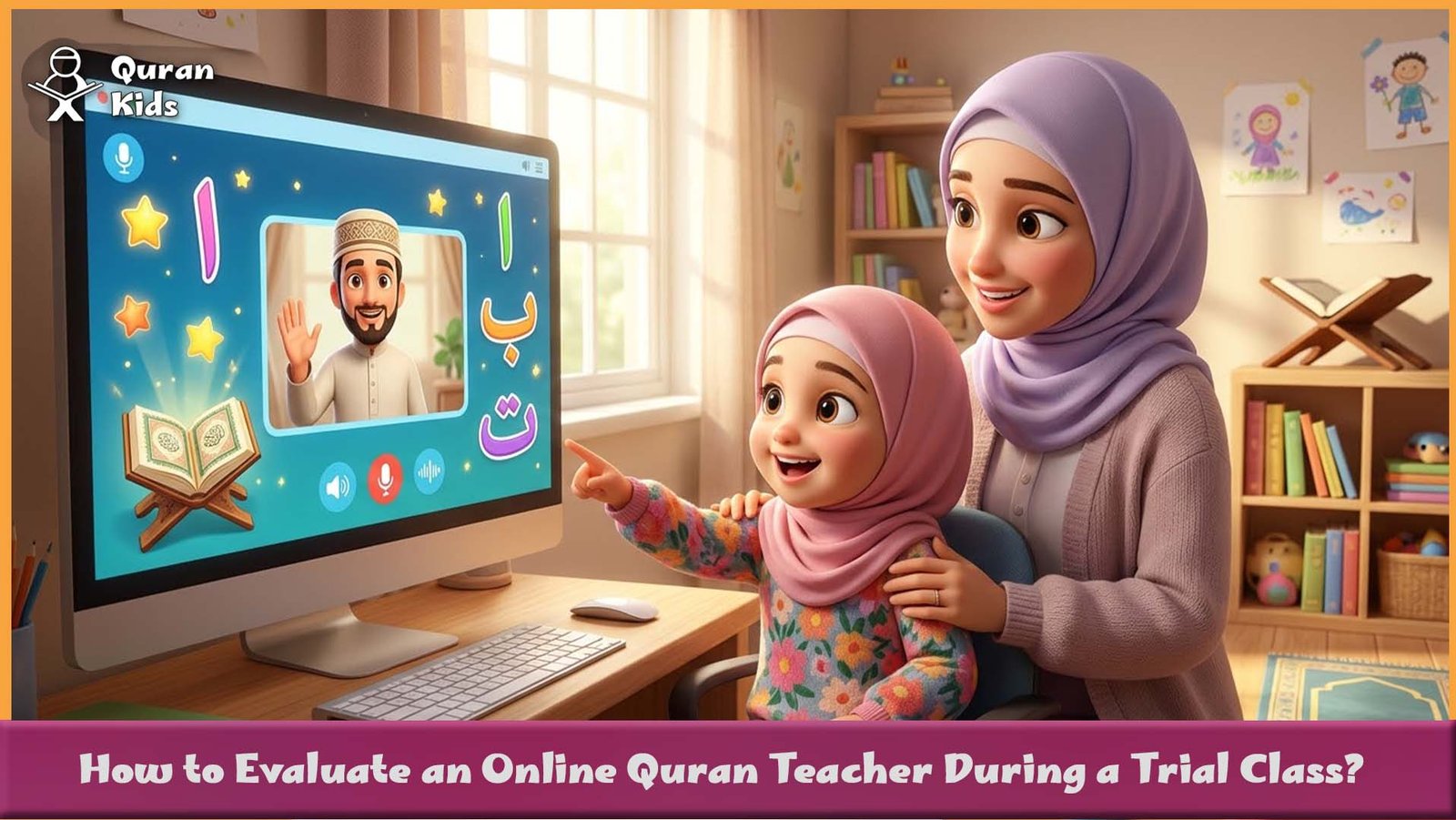
A trial lesson gives parents an opportunity to observe the instructor’s teaching style before making a longer commitment. It should involve more than a brief introduction or a general explanation of available courses.
For a useful assessment, arrange a lesson that reflects your child’s actual learning level. A beginner may need help recognizing Arabic letters, while a student who already reads the Quran may need more detailed Tajweed feedback.
What Should Parents Look for in a Qualified Online Quran Teacher?
- Asks about the child’s current reading ability and previous learning experience.
- Establishes a clear objective for the lesson.
- Explains instructions in language the child understands.
- Listens carefully instead of rushing through the material.
- Corrects mistakes respectfully and demonstrates the correct approach.
- Gives the child enough time to practice independently.
- Checks whether the student understands the explanation.
- Suggests a reasonable next step based on the child’s performance.
In addition, notice how the teacher responds when your child struggles. Patience does not mean ignoring mistakes; rather, it means correcting them in a supportive and understandable way.
If your child has never attended a live online lesson, a Free Trial Online Quran Class for Kids: What to Expect can help you understand which aspects of the experience to observe. Use the opportunity to assess communication, lesson structure, and the instructor’s response to your child’s needs.
Which Questions Help Verify an Online Quran Teacher’s Qualifications?
Once the session ends, ask the instructor to explain what they observed. A useful response should identify strengths, specific areas for improvement, and possible learning priorities.
For instance, the teacher might explain that your child recognizes most Arabic letters but needs additional practice distinguishing certain sounds. Such feedback is more informative than a broad statement that the child is doing well.
You can also ask how the next few lessons would build on the trial. Although a teacher cannot guarantee a precise learning outcome after one session, they should be able to outline a reasonable approach.
When considering Quran Kids Academy, parents can use these questions to structure their evaluation and clarify the teaching arrangements before enrolling. This makes it easier to compare what the instructor promises with what the trial lesson demonstrates.
How to Check an Online Quran Teacher’s Experience With Children?
Teaching the Quran requires subject knowledge, but working with children also calls for communication skills, patience, and age-appropriate instruction. Consequently, a teacher who is comfortable teaching adults may not automatically be the best fit for a young beginner.
What Experience Should a Qualified Online Quran Teacher Have?
Find out how long the instructor has taught Quran lessons and which age groups they usually work with. More importantly, ask whether they have experience teaching children at your child’s current level.
For example, a five-year-old who is beginning Arabic letters needs a different approach from a ten-year-old who is improving fluency or memorizing longer passages.
An experienced children’s teacher may use short activities, repeated demonstrations, simple explanations, and frequent opportunities for practice. However, the most appropriate method depends on the child’s attention span, learning needs, and previous experience.
If your child is older, ask whether the instructor can adapt the lesson to the learner’s maturity and goals. Online Quran Classes for Teenagers may involve different learning priorities from introductory classes for younger children, so experience with the relevant age group is worth discussing.
How Should an Online Quran Teacher Adapt Lessons for Children?
Children do not all learn at the same pace. Some respond well to repetition, while others benefit from visual examples or step-by-step explanations.
Ask how the instructor adjusts a lesson when a student cannot understand a rule. A thoughtful answer should describe practical teaching choices rather than treating every child as if they have identical needs.
You should also clarify how the teacher maintains engagement during online lessons. Regular interaction, appropriate lesson length, and opportunities for the student to recite can help prevent sessions from becoming passive.
A teacher should also recognize when a student needs additional revision instead of introducing new material too quickly. This flexibility helps children build confidence while developing accurate reading habits.
How to Verify an Online Quran Academy and Its Teachers?
An academy’s communication and administrative practices can provide additional clues about the learning environment. Nevertheless, a professional-looking website or active social media account does not prove that every instructor has the qualifications claimed.
Instead, review the information available and use it to prepare specific questions about the teacher.
What Should Parents Check About an Online Quran Academy?
Look for clear descriptions of the courses, teaching approach, instructor qualifications, and enrollment process. Check whether the information is consistent across the website and other official communication channels. Useful details may include:
- The academy’s stated educational objectives.
- The skills taught at each learning level.
- Information about teacher selection or qualification requirements.
- The format and expected duration of lessons.
- The process for assessing student progress.
- Available ways to contact the academy with questions.
An established online presence can help you understand how the organization communicates with families. However, follower counts, attractive advertisements, and testimonials should not replace direct verification of credentials.
How to Evaluate Quran Kids Academy and Its Quran Teachers?
Before enrollment, contact the academy and ask about the instructor who would teach your child. Pay attention to whether the response addresses your actual questions.
A helpful response explains relevant qualifications, teaching experience, and the process for arranging a suitable lesson. By contrast, repeated general assurances without specific information may leave important issues unresolved.
Quran Kids Academy should be assessed using the same practical criteria. Ask for clarification about the assigned teacher, the intended course level, and the arrangements for evaluating your child’s progress. This approach keeps the decision focused on evidence and your family’s requirements.
You should also understand the academy’s policies before paying for lessons. Review its Refund & Cancellation Policy for Online Quran Classes to clarify the applicable conditions for cancellations, refunds, and other enrollment arrangements.
When comparing programs, consider the teaching format and what is included in the learning arrangement. The guide to Affordable Online Quran Classes for Kids can help parents explore affordability as one part of their decision. However, cost should be considered alongside teacher qualifications, lesson structure, and the support available to students.
What Answers Should You Expect From a Qualified Online Quran Teacher?
Parents sometimes receive broad statements such as, “All our teachers are qualified.” While this may be intended as reassurance, it does not explain what the qualifications involve or whether the instructor is suitable for a particular student.
A more informative answer provides details that can be checked or clarified.
For example, a teacher or academy might explain the institution where the instructor studied Tajweed, whether the teacher has memorised the Quran, and how many years they have taught children. They may also describe the type of students they usually teach and the methods they use to assess recitation.
The information does not need to be presented in a complicated way. Rather, it should be clear enough for parents to understand the instructor’s background and ask sensible follow-up questions. Consider these differences:
A specific answer:
“The instructor completed formal Tajweed study, has experience teaching beginners, and uses individual recitation practice to identify pronunciation errors.”
A vague answer:
“Our teachers are excellent, so you do not need to worry about qualifications.”
The first answer offers information that can be explored further. The second asks you to rely on reassurance without providing meaningful details.
Therefore, when evaluating Quran Kids Academy, focus on the substance of the information provided instead of judging confidence or persuasive language alone.
Warning Signs When Choosing an Online Quran Teacher
Not every incomplete answer means that an instructor is unqualified. Sometimes, an academy needs time to retrieve documents or clarify which teacher will be assigned. Even so, certain patterns deserve further investigation.
Which Claims About Online Quran Teacher Qualifications Need Verification?
If an academy describes every instructor as highly qualified but cannot explain the relevant training, ask for clarification before proceeding.
Similarly, be cautious if a teacher claims advanced expertise but cannot explain which subjects they studied or what level of students they teach. Professional terminology is useful only when it corresponds to meaningful knowledge and experience.
Why Should Parents Avoid Pressure to Enrol Immediately?
Parents should have reasonable time to ask questions and consider their options. If an academy pressures you to make a payment before explaining the teacher’s background or basic course arrangements, pause and seek the missing information.
You should also clarify the payment terms, cancellation conditions, rescheduling rules, and any trial-class charges before committing.
Can Testimonials Prove That an Online Quran Teacher Is Qualified?
Positive feedback can provide insight into other families’ experiences. However, testimonials do not establish that an instructor holds a particular certificate or has demonstrated a specific level of recitation proficiency.
Use reviews as supplementary information. Combine them with direct questions, appropriate documentation, and a practical evaluation of the teacher.
Other concerns include inconsistent explanations about who will teach the class, unclear communication about lesson arrangements, and reluctance to explain how student progress is assessed.
When something remains uncertain, ask a direct question and evaluate the response before making a decision. A careful review is more useful than making a quick judgment based on one interaction.
What Makes a Qualified Online Quran Teacher Effective?
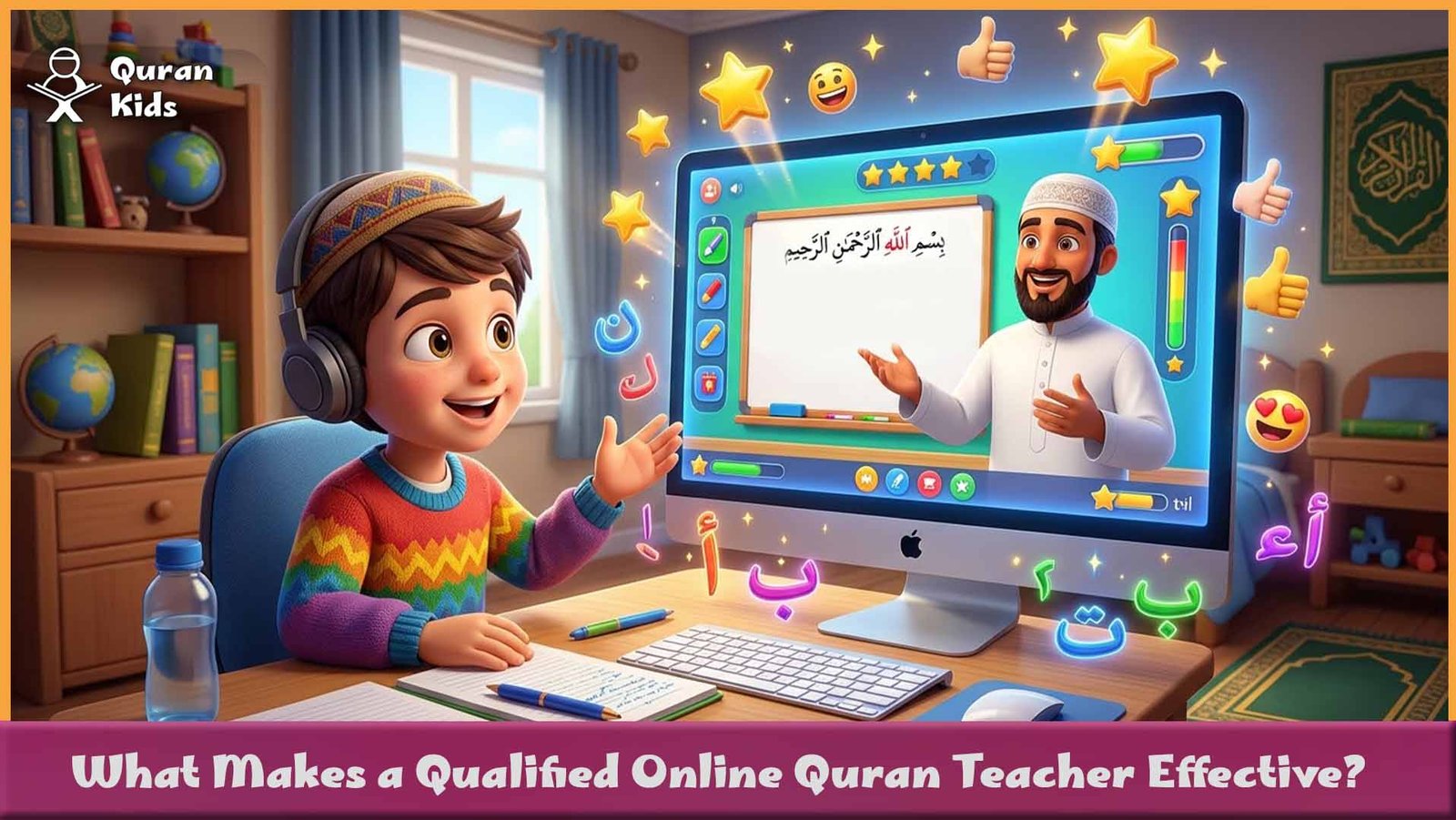
A certificate can demonstrate that someone completed a particular course or met specific requirements. However, effective teaching also depends on how the instructor communicates knowledge and supports the student.
Why Patience and Clear Feedback Matter in Quran Teaching?
Children may repeat the same pronunciation error several times before mastering the correct sound. A suitable teacher remains patient while giving consistent feedback and encouraging continued practice.
At the same time, encouragement should not replace accurate correction. Students need to understand which part of their recitation requires attention and how to improve it.
How Should a Qualified Online Quran Teacher Explain Difficult Concepts?
A good instructor explains concepts at a level the student can understand. When an explanation does not work, the teacher should be willing to demonstrate the rule differently or divide it into smaller steps.
This flexibility is particularly useful for younger learners who may struggle with lengthy explanations or unfamiliar terminology.
How Should an Online Quran Teacher Communicate With Parents?
Parents need a practical understanding of their child’s progress. Therefore, ask how the instructor communicates observations, discusses learning difficulties, and recommends practice between sessions.
Useful feedback identifies specific skills, such as letter recognition, reading fluency, or a particular Tajweed rule. General comments can be encouraging, but they provide less guidance about what to practice next.
Why Do Consistency and Professional Boundaries Matter?
Online Quran lessons should take place through clear, agreed-upon arrangements. Parents should understand the class schedule, communication channels, attendance expectations, and who is responsible for supervising younger children during online learning.
A trustworthy educational environment should also respect student privacy. Ask how lesson recordings, personal information, and communication with children are handled, particularly if classes involve minors.
These qualities complement formal qualifications and help parents determine whether a teacher is a suitable long-term choice. In practice, knowing how to know if an online Quran teacher is qualified means considering both the instructor’s knowledge and the way that knowledge is delivered.
How Quran Kids Academy Fits Into Your Search for a Qualified Online Quran Teacher?
Choosing an academy should begin with your child’s learning needs rather than with promotional claims. Quran Kids Academy should therefore be evaluated according to the same questions parents would ask any online Quran education provider.
Start by identifying the skill your child needs to develop. A beginner may need structured Arabic reading lessons, while a more advanced learner may require additional Tajweed practice or a memorization plan.
Next, ask about the qualifications and experience of the instructor who would be assigned to that learning goal. Clarify whether the teacher’s training matches the subject being taught, and ask what the first lessons would involve. Before enrolling, consider the following steps:
- Explain your child’s current level. Describe whether they are learning Arabic letters, reading short passages, improving recitation, or memorizing the Quran.
- Ask about the teacher’s background. Request relevant details about training, certificates, and experience with the intended age group.
- Arrange a trial lesson if available. Use the session to observe recitation, explanation, correction, and interaction.
- Discuss progress assessment. Find out how the instructor identifies strengths, learning gaps, and suitable next steps.
- Confirm the practical arrangements. Clarify schedules, communication, payment terms, and any applicable cancellation policies.
- Review your child’s response. Consider whether the teacher communicates clearly and whether your child feels comfortable asking questions.
Quran Kids Academy should be considered in light of the information it provides in response to these checks. Confirm the details directly rather than assuming that an academy’s name or general description establishes the qualifications of a particular instructor.
This process allows families to make a more informed decision while keeping their child’s learning objectives at the center.
How to Track Progress With a Qualified Online Quran Teacher?
Checking qualifications before enrollment is only the first step. Once lessons begin, parents should also look for evidence that instruction is helping the child develop the intended skills.
Progress will differ according to age, starting level, lesson frequency, and the complexity of the material. Therefore, avoid judging the teacher solely by how many pages a child completes or how quickly they memorize a passage.
Which Improvements Show That an Online Quran Teacher Is Helping Your Child?
- Recognizing Arabic letters more accurately.
- Distinguishing sounds that previously confused.
- Reading familiar passages with greater fluency.
- Applying previously taught Tajweed rules more consistently.
- Remembering memorized passages during revision.
- Correcting recurring mistakes with less assistance.
Not every skill improves at the same speed. For instance, a child may become more confident reading familiar material before mastering a difficult pronunciation rule.
How Can Parents Request Progress Updates From an Online Quran Teacher?
Request periodic updates explaining what the child has learned, which areas still need attention, and what practice would be useful before the next lesson.
A helpful progress update might identify a specific letter or rule that requires further work. It should also explain how the teacher plans to address the difficulty.
If progress seems slower than expected, discuss the issue before concluding the instructor. The student may need a different practice routine, more revision time, adjusted lesson goals, or a teaching approach better suited to their needs.
Likewise, if the teacher repeatedly provides no clear feedback, ask how learning is being assessed. Consistent communication helps parents understand whether the course remains appropriate.
Questions to Ask Before Choosing a Qualified Online Quran Teacher
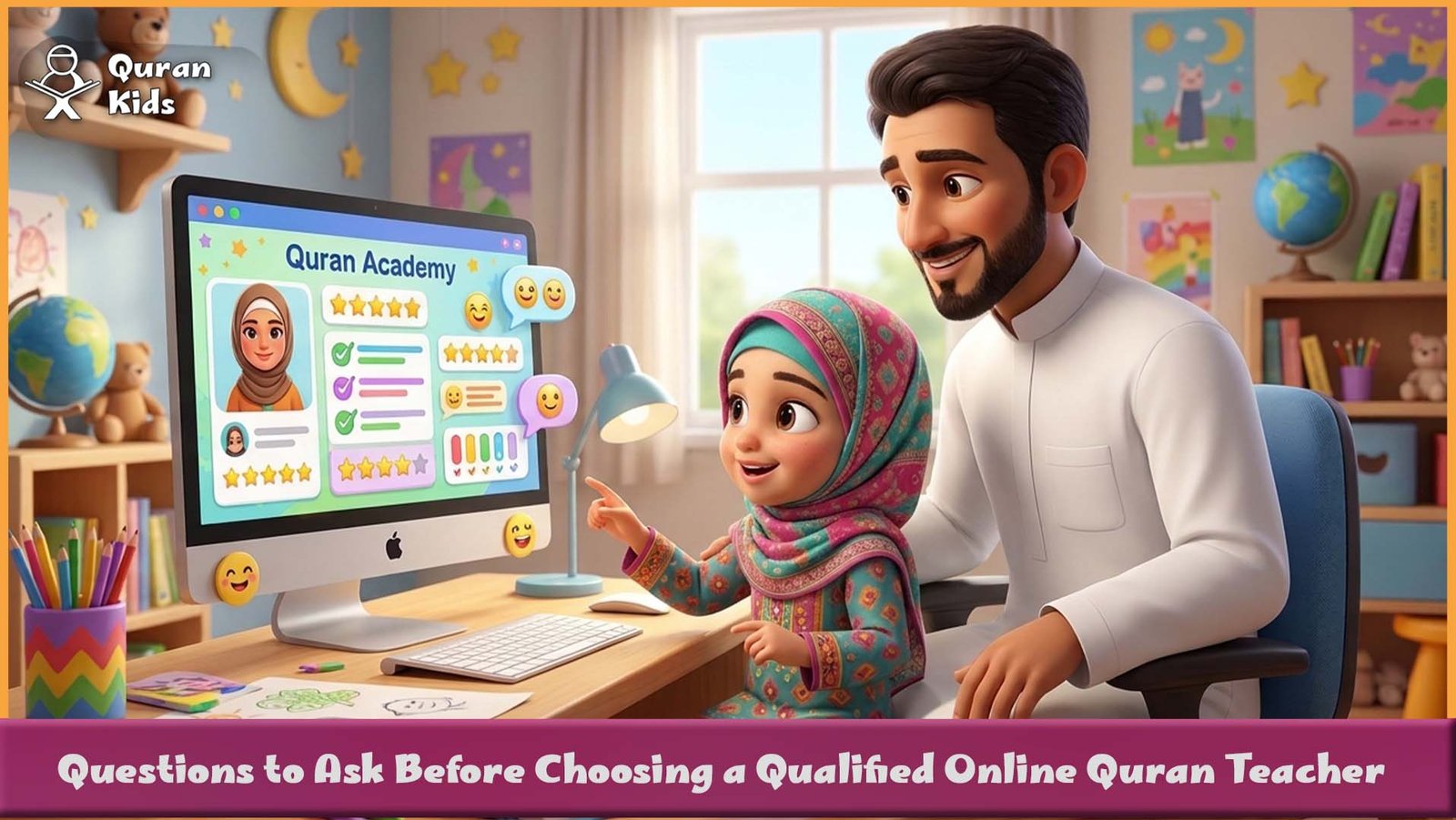
Preparing a short list of questions can make conversations with an academy more productive. Rather than asking whether a teacher is “good,” focus on details that help you evaluate their qualifications and suitability.
Use these questions during an initial consultation or trial-class discussion to understand how to know if an online Quran teacher is qualified and suitable for your child’s learning needs.
- Which Quran-related qualifications has the instructor completed?
- Where did the teacher study Quran memorization or Tajweed?
- What experience do they have teaching children at my child’s age?
- How do they assess a student’s current recitation level?
- What happens when a student repeatedly struggles with a particular rule?
- How will parents receive progress updates?
- Can the teacher’s background be explained or documented before enrollment?
- What are the policies for missed lessons, rescheduling, and cancellation?
- Which communication and privacy arrangements apply to online classes?
You do not need to ask every question in a single conversation. Begin with the qualifications and teaching experience most relevant to your child, then discuss practical arrangements before making a commitment.
When speaking with Quran Kids Academy, these questions can help you gather the information needed to evaluate the proposed instructor. Clear answers, appropriate evidence, and a useful trial lesson provide a stronger basis for choosing than broad promises alone.
Families comparing lesson formats may also find it helpful to review Group vs Private (1-on-1) Online Quran Classes. The class format can affect how much individual attention a student receives, so consider it alongside the teacher’s qualifications and teaching approach.
Frequently Asked Questions About Online Quran Teacher Qualifications
These frequently asked questions explain how to know if an online Quran teacher is qualified, verify teaching credentials, and choose the right instructor for your child.
1. Can an Online Quran Teacher’s Qualifications Be Verified if They Studied Abroad?
Yes, potentially. Ask for the qualification’s name, the institution that issued it, and the training it represents. If necessary, contact the issuing institution through its official communication channels to clarify the credential. Verification procedures may differ between countries and educational organizations, so not every certificate can be checked through the same system.
2. Should Parents Stay With a Child During Online Quran Lessons?
For younger children, parental supervision is generally advisable, especially when they are unfamiliar with online learning. The appropriate level of involvement depends on the child’s age, maturity, the platform being used, and the family’s safeguarding arrangements. Parents should clarify communication and privacy expectations with the academy before classes begin.
3. How Long Does It Take to Evaluate an Online Quran Teacher’s Effectiveness?
A trial lesson can reveal useful information about communication and teaching style, but it cannot establish long-term effectiveness. Observe the child’s learning across several lessons and review progress against realistic goals. The appropriate evaluation period depends on the starting level, lesson frequency, and skills being taught.
4. What Should Parents Do if a Quran Teacher’s Certificate Cannot Be Independently Verified?
Ask the academy for additional information about the qualification, its issuing institution, and the instructor’s training. You can also request a practical assessment by a knowledgeable Quran teacher when appropriate. If important claims remain unsupported, consider other instructors whose backgrounds and teaching abilities can be evaluated more confidently.
Conclusion
Knowing how to know if an online Quran teacher is qualified requires more than checking a profile or reading positive reviews. Parents should verify the teacher’s Quranic knowledge, listen to their recitation, assess their teaching methods, and understand how they monitor student progress.
A qualified teacher should also demonstrate patience, communicate clearly, and adapt lessons to the child’s age and learning needs. These qualities help create a supportive environment where children can improve their recitation, pronunciation, and understanding of Tajweed.
When considering Quran Kids Academy, ask about the instructor’s qualifications, teaching experience, and lesson structure. If a trial lesson is available, use it to evaluate how the teacher interacts with your child and corrects mistakes.
Ultimately, the right teacher combines sound Quranic knowledge with effective teaching skills. Taking time to assess these factors can help parents make an informed decision and establish a strong foundation for their child’s Quran learning journey.