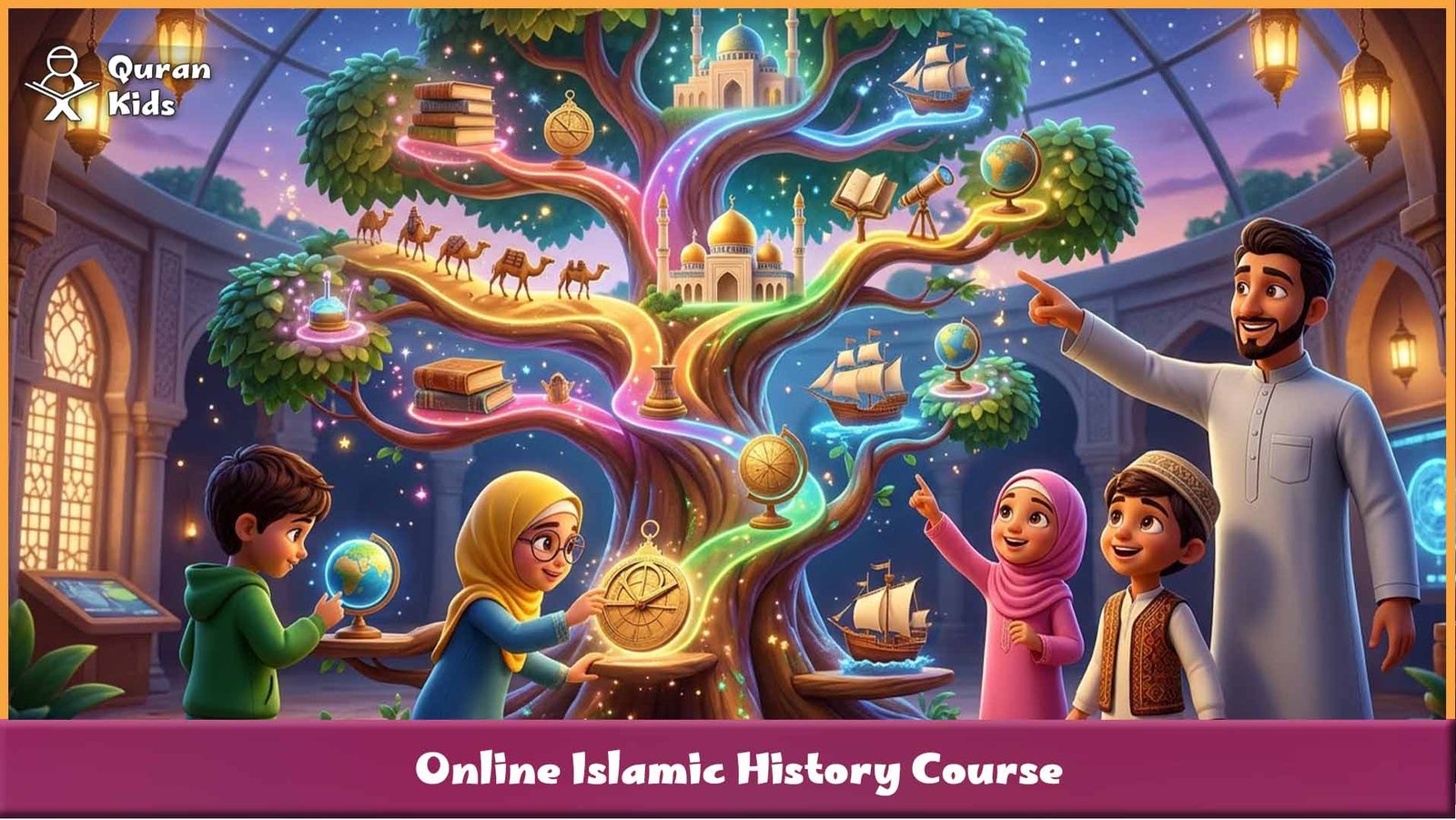
Online Islamic History Course: A Complete Learning Guide
An online Islamic history course gives students an opportunity to discover the events, people, and achievements that shaped the Muslim world. From the life of Prophet Muhammad (peace be upon him) to the development of major Islamic civilizations, studying history helps learners understand how Islam influenced societies, education, science, and culture throughout the centuries.
However, learning Islamic history is about more than remembering dates and historical names. It also means understanding the decisions people made, the challenges they faced, and the lessons Muslims can take from their experiences. With online education, students can explore these subjects through organized lessons without having to attend a traditional classroom.
For parents who want their children to develop a stronger understanding of Islam, combining historical knowledge with Quran and Islamic studies can create a more complete learning experience.
What Is an Online Islamic History Course?
An online Islamic history course is an educational program that introduces learners to important events and developments in Muslim history.
It usually covers the beginning of Islam, the Prophet’s Seerah, the early Muslim community, Islamic dynasties, and the contributions of Muslim scholars. Depending on the curriculum, students may explore several important subjects:
- The Prophetic Seerah: The life of Prophet Muhammad (peace be upon him), the beginning of revelation, the Hijrah, and the establishment of the Muslim community in Madinah.
- The Rightly Guided Caliphs: The leadership and contributions of Abu Bakr, Umar, Uthman, and Ali (may Allah be pleased with them).
- Islamic Dynasties: The Umayyad and Abbasid periods and their political and cultural developments.
- Muslim Scholars: The contributions of historical figures to mathematics, medicine, astronomy, and other fields.
- The Spread of Islam: How trade, scholarship, migration, and other historical factors contributed to the growth of Muslim communities.
A good learning program explains the relationship between these events instead of presenting them as disconnected pieces of information.
Why Is Learning Islamic History Important?
Islamic history helps Muslims understand their religious heritage and appreciate the experiences of earlier generations. It also provides examples of values that remain relevant in everyday life.
1. Understanding the Prophet’s Life
Studying the Seerah gives learners a clearer picture of the challenges faced by the first Muslims. For example, the Hijrah from Makkah to Madinah was not simply a journey from one city to another. It represented sacrifice, careful planning, patience, and trust in Allah.
Likewise, the Treaty of Hudaybiyyah provides an opportunity to discuss patience, negotiation, and looking beyond immediate difficulties.
2. Learning Leadership and Responsibility
The lives of the Rightly Guided Caliphs introduce students to different examples of leadership. Umar ibn Al-Khattab (may Allah be pleased with him), for instance, is remembered for his attention to justice and public responsibility.
These historical examples can encourage young learners to think about honesty, fairness, and helping others.
3. Appreciating Muslim Contributions to Knowledge
Islamic civilization produced scholars whose work influenced different areas of human knowledge. al-Khwarizmi made important contributions to mathematics, while Ibn Sina became widely known for his medical writings.
During the Abbasid period, Baghdad became an important intellectual center, with the House of Wisdom supporting translation and scholarship.
Learning about these achievements helps students recognize that seeking knowledge has a significant place in Islamic heritage.
4. Developing a Stronger Religious Identity
Understanding where Islamic traditions and institutions developed can help young Muslims connect religious knowledge with historical experiences. It also gives them a stronger foundation to discuss their heritage with confidence and understanding.
What Should a Comprehensive Islamic History Curriculum Include?
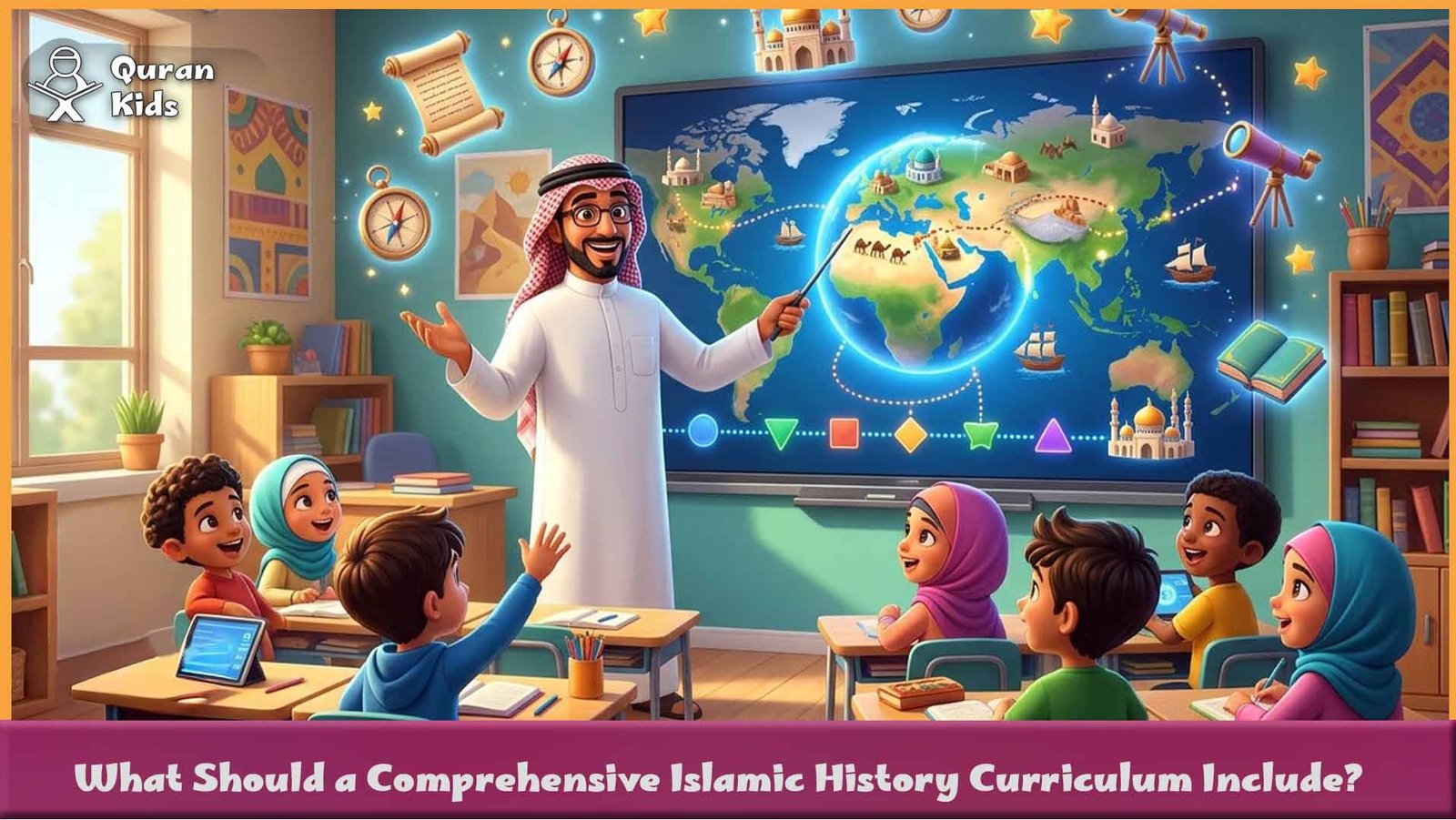
When selecting an online Islamic history course, learners should look for a curriculum that covers different historical periods in a logical order.
The following subjects provide a useful foundation.
The Beginning of Islam
Students should first learn about the social and religious environment of Arabia before Islam, the first revelation, the early Muslims, and the challenges they experienced in Makkah.
The lessons should also explain the importance of the Hijrah and the development of the first Muslim community in Madinah.
The Era of the Caliphs
This stage introduces the leadership periods following the Prophet’s death. Students can explore the major developments during the caliphates of Abu Bakr, Umar, Uthman, and Ali, while understanding the historical circumstances surrounding each period.
The Umayyad and Abbasid Periods
These dynasties played important roles in the political and cultural development of Muslim societies. Lessons may cover the expansion of Muslim territories, administrative developments, educational institutions, and scholarly activities.
The Development of Islamic Civilization
A complete curriculum should also introduce architecture, literature, medicine, mathematics, and other areas in which Muslim communities made historical contributions.
Students can explore examples from different regions rather than assuming that Islamic civilization developed in only one country or city.
How to Choose the Right Online Learning Program?
Choosing an online Islamic history course requires attention to more than the number of lessons or the advertised duration. The teaching approach and reliability of the historical information are equally important.
Consider these factors before enrolling:
- Knowledgeable instructors: Teachers should understand Islamic history and explain events within their appropriate historical context.
- Organized curriculum: Lessons should follow a clear sequence, beginning with foundational events.
- Reliable information: Historical accounts should be presented carefully, especially when scholars differ in their interpretations.
- Age-appropriate teaching: Children need accessible explanations, while adults may prefer more detailed discussions.
- Interactive lessons: Questions, discussions, and historical timelines can help students remember important information.
- Progress assessment: Short activities and reviews help learners recognize what they have understood.
Families interested in broader Islamic education may also benefit from complementary subjects. For example, learning Quran recitation with tajweed can strengthen Quranic reading skills alongside the study of Islamic history.
Similarly, an experienced Egyptian quran tutor may help beginners understand essential Islamic concepts through clear explanations and structured lessons.
How Can Children Enjoy Learning Islamic History?
Children often remember historical events more easily when they are presented through stories and practical activities. Instead of asking them to memorize long lists of dates, parents and teachers can introduce one event at a time.
For example, after discussing the Hijrah, a teacher might ask children why the early Muslims needed patience and courage. Following a lesson about the Abbasid period, students could explore how scholars studied mathematics and medicine.Here are some practical ways to make lessons more engaging:
- Use historical timelines: Help children understand the order of major events.
- Tell stories: Introduce important personalities through age-appropriate storytelling.
- Ask simple questions: Encourage children to explain what they learned in their own words.
- Use maps: Show where important historical events took place.
- Connect lessons with daily life: Discuss values such as honesty, patience, cooperation, and responsibility.
Parents can also introduce complementary subjects. For example, Islamic courses for beginners can help children build foundational knowledge before moving to more detailed topics.
Understanding what is islamic fiqh can also introduce learners to another important area of Islamic knowledge and help them distinguish between historical developments and religious rulings.
Families looking for structured learning opportunities can explore online islamic classes for kids as part of a broader educational routine.
Exploring Islamic Education with Quran Kids Academy
Quran Kids Academy is an option for families exploring online Quran and Islamic education. Parents interested in developing their children’s religious knowledge can explore the academy’s available learning programs and consider how they fit into the child’s educational goals.
When asking about a specific history program, it is important to confirm whether the academy currently offers dedicated Islamic history lessons. Parents should also ask about the curriculum, teachers, lesson format, and suitable age groups before making an enrollment decision.
A thoughtful learning plan can combine Quran studies, Islamic knowledge, and historical exploration without overwhelming children with too many subjects at once.
Frequently Asked Questions: Online Islamic History Course
Find answers to common questions about an online islamic history course, including its topics, benefits, duration, and suitability for children and beginners.
1. What is the best age to start learning Islamic history?
Children can begin with simple stories about Prophet Muhammad (peace be upon him) and the companions at an early age. More detailed historical subjects can be introduced as their reading and comprehension skills improve.
2. Can beginners study Islamic history online?
Yes. Beginners can start with the Prophet’s Seerah and the early Muslim community before exploring Islamic dynasties, historical developments, and Muslim scholars.
3. How long does it take to complete an Islamic history course?
The duration depends on the curriculum, lesson frequency, and level of detail. Introductory programs may take a few weeks, while more comprehensive studies can continue for several months.
Conclusion
An online Islamic history course can help students understand the development of Islam, appreciate the achievements of Muslim scholars, and learn from the experiences of earlier generations. More importantly, it can turn historical information into meaningful lessons about faith, knowledge, patience, and responsibility.
The best learning experience comes from accurate information, engaging explanations, and consistent study. Families considering Quran Kids Academy can explore its available Islamic education programs and confirm whether a dedicated history curriculum matches their children’s needs.