
Difference Between Hafs and Warsh Quran Explained
The Difference Between Hafs and Warsh: The Quran is one of the most common questions among Muslims who notice variations in Qur’an recitation across different countries. At Quran Kids Academy, we help students understand these authentic recitation styles and learn the Qur’an correctly with guidance from qualified teachers.
Although some words may sound different in these two famous readings, Hafs and Warsh both represent authentic methods of reciting the same Qur’an. Muslim scholars and reciters have carefully preserved these methods through generations.
When Muslims listen to Qur’an recitation from different regions, they may notice differences in pronunciation, melody, or the way certain words are read. These variations often make people ask why some communities follow Hafs while others follow Warsh. Learning about these differences helps students at Quran Kids Academy appreciate the depth of Qur’anic preservation and the beauty of the Islamic recitation tradition.
The two most widely recognized recitations today are Hafs ‘an ‘Asim and Warsh ‘an Nafi’. Both follow strong chains of transmission and receive acceptance among scholars of Qur’anic studies. Their differences relate to pronunciation methods, elongation, vowel sounds, and specific recitation rules, not to the message or teachings of the Qur’an.
In this guide, we will explore the origins of Hafs and Warsh, the main differences between them, examples from Qur’anic verses, their historical development, geographical spread, and how students can choose the suitable recitation for learning. Through Quran Kids Academy, learners can develop strong Qur’an reading skills while discovering the rich tradition of Qira’at.
What Are Hafs and Warsh Recitations?
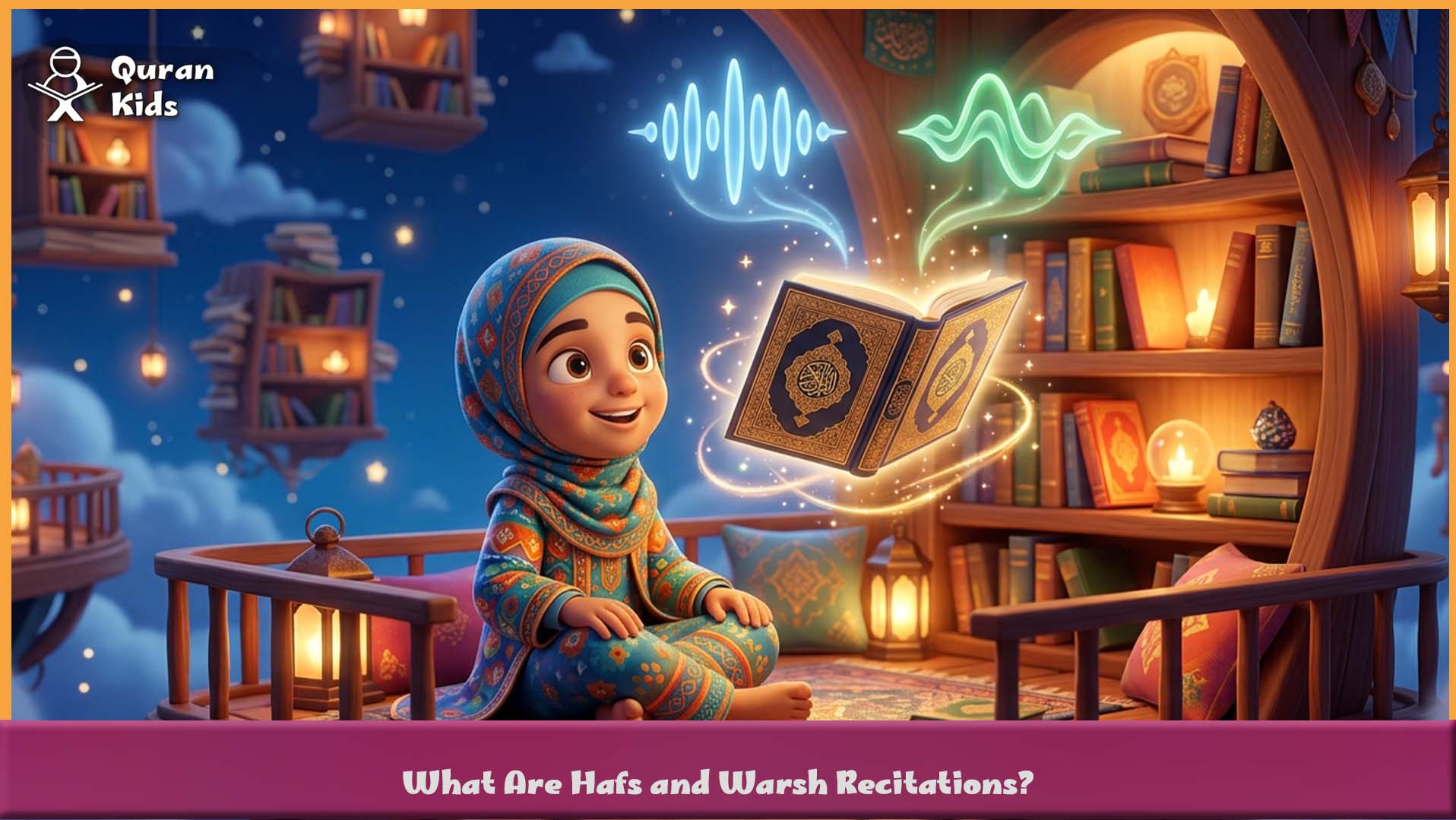
Prophet Muhammad ﷺ received the Qur’an through revelation and taught it to his companions through memorization and recitation. Afterward, generations of scholars preserved different authentic methods of Qur’an recitation, which Muslims know as Qira’at.
Qira’at refers to the accepted ways of pronouncing and reciting Qur’anic words through reliable chains of teachers. Scholars did not create these readings; instead, expert reciters transmitted them carefully from one generation to another. Among the famous authentic readings are:
- Hafs ‘an ‘Asim
- Warsh ‘an Nafi’
- Qalun ‘an Nafi’
- Al-Duri ‘an Abu Amr
Today, Hafs and Warsh remain the two most commonly encountered Qur’anic readings around the world.
Start Learning Tafsir Classes Online Today
If you want to understand the Quran deeply with clear explanations and guided learning, now is the right time to begin your journey. Tafsir Classes Online at Quran Kids Academy provide structured lessons that simplify Quran meanings while helping students apply Islamic teachings in daily life.
In addition, experienced teachers support learners step by step to improve understanding, build confidence, and strengthen spiritual connection with the Quran. Users can also explore more related options.
Therefore, joining today can help you or your children gain authentic knowledge in a flexible and comfortable learning environment. Take the first step now and start building a stronger relationship with the Quran through guided tafsir education.

Understanding Hafs ‘an ‘Asim
Hafs is the most widespread Qur’an recitation style today. Many printed Qur’ans, mobile applications, and online Qur’an learning platforms use this narration.
The name Hafs ‘an ‘Asim refers to the transmission of Qur’an from Hafs ibn Sulayman, who learned from Imam ‘Asim ibn Abi al-Najud, one of the respected reciters of Kufa.
Because many countries adopted Hafs for Qur’an education, a large number of Muslims grow up learning this narration. Students in countries such as Egypt, Saudi Arabia, Turkey, Pakistan, India, and Indonesia often begin their Qur’an studies with Hafs.
Many learners find Hafs easy to follow because teachers commonly explain its rules in Qur’an classes. However, its popularity does not mean it is the only authentic reading. Hafs represents one of several preserved Qira’at that show the richness of Qur’anic transmission.
Understanding Warsh ‘an Nafi’
Warsh is another authentic Qur’an recitation that Muslims have preserved for centuries. It comes from Warsh, whose name was Uthman ibn Sa’id, a student of Imam Nafi’ al-Madani from Madinah.
The Warsh narration became especially common in North and West Africa. Countries such as Morocco, Algeria, Tunisia, Mauritania, and parts of Libya continue to teach and recite Warsh.
Many Muslims in these regions memorize the Qur’an completely using Warsh. Traditional Qur’an schools and mosques continue to include this narration in their educational programs.
Warsh has a unique sound because of its pronunciation rules, vowel applications, and specific elongation methods. These features create a distinctive rhythm while preserving the same Qur’anic text and meaning.
Difference Between Hafs and Warsh Quran: Main Areas of Variation
The Difference Between Hafs and Warsh Quran appears in several technical aspects of recitation. Scholars have documented these variations through the science of Qira’at and authentic transmission. These differences do not represent contradictions. Instead, they demonstrate the richness of Arabic and the careful preservation of Qur’anic readings.
Difference Between Hafs and Warsh Quran in Pronunciation Rules
One noticeable difference between Hafs and Warsh relates to pronunciation. Warsh includes certain pronunciation features that differ from Hafs, such as:
Imalah
Imalah describes a pronunciation method where the sound of the letter “a” moves slightly toward an “e” sound.
In some words, Warsh uses imalah while Hafs usually keeps the standard pronunciation.
Tafkhim and Tarqiq of Ra (ر)
The letter Ra has detailed pronunciation rules in Qur’anic recitation. Depending on its position, readers may pronounce it with heaviness (tafkhim) or lightness (tarqiq).
Both Hafs and Warsh follow precise rules, but some cases show different applications between the two narrations.
Madd (Lengthening)
Another variation appears in madd, which means extending vowel sounds during recitation.
Warsh may extend certain types of madd differently from Hafs. These differences affect the rhythm and sound of recitation but do not change the Qur’anic message.
Difference Between Hafs and Warsh Quran in Vowel Sounds
Arabic sometimes allows more than one authentic pronunciation for certain words. The Qira’at preserve these linguistic variations through reliable transmission. A well-known example appears in Surah Al-Fatihah:
مَلِكِ يَوْمِ الدِّينِ
Hafs commonly reads it as:
Maliki yawmi ad-deen
Meaning:
“The Owner of the Day of Judgment.”
Warsh also reads it as:
Maaliki yawmi ad-deen
Meaning:
“The King of the Day of Judgment.”
Both meanings remain correct and provide a deeper understanding of Allah’s authority. One highlights ownership, while the other emphasizes kingship and complete control. This example shows that different readings increase appreciation of Qur’anic meanings rather than create disagreement.
Differences in Hamzah Rules
The hamzah (ء) plays an important role in Arabic pronunciation, and Hafs and Warsh apply different rules in some situations. Warsh includes special methods related to hamzah, including:
- Softening certain hamzah sounds.
- Adjusting the pronunciation of two consecutive hamzahs.
- Applying specific methods in certain words.
Hafs usually maintains clearer hamzah pronunciation in many cases. Students need guidance from qualified teachers because these details require careful practice.
Difference Between Hafs and Warsh Quran in Word Forms and Meanings
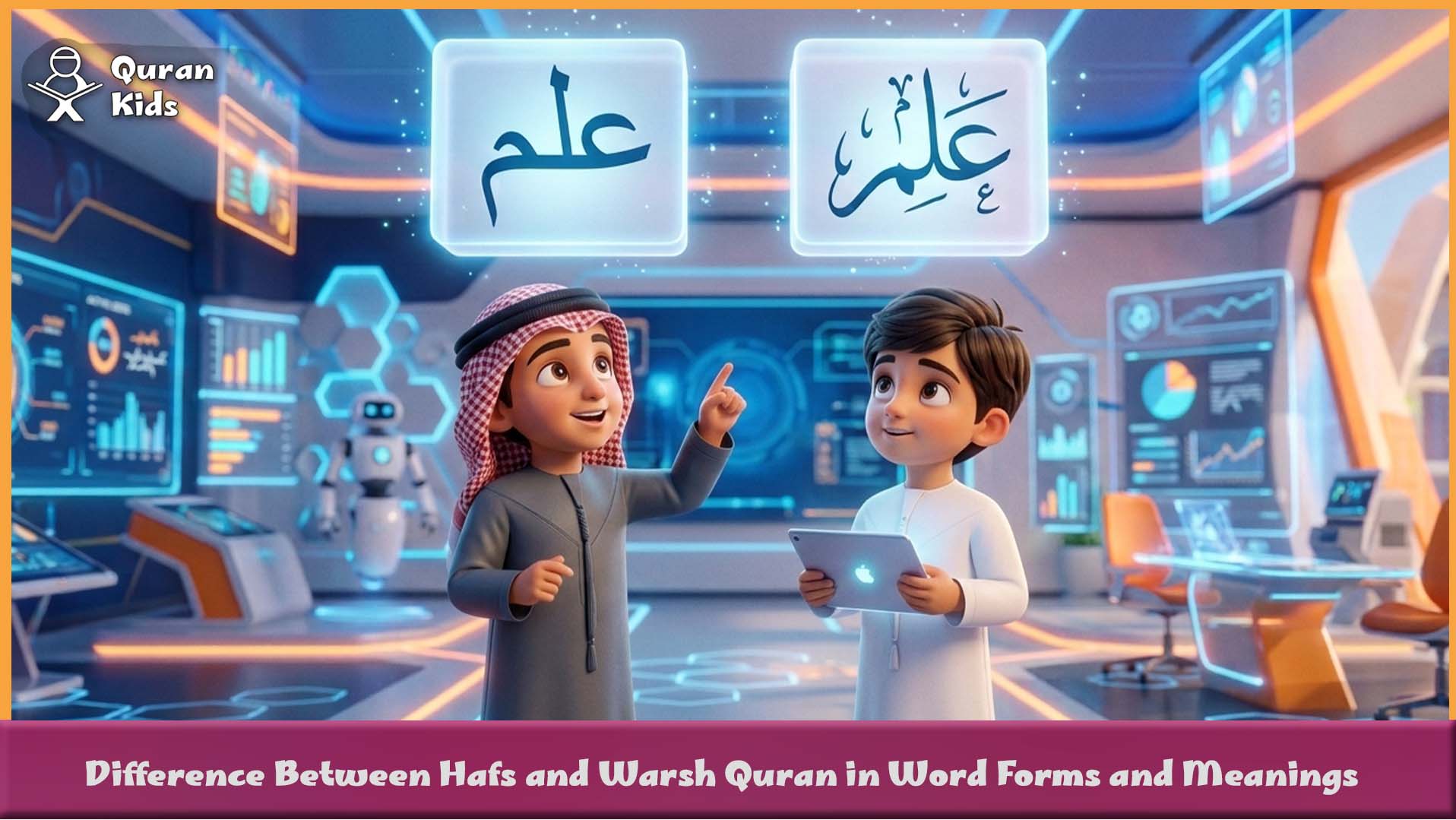
Another important part of understanding the Difference Between Hafs and Warsh Quran involves variations in some word forms.
These differences come from authentic Qira’at transmission and do not represent later changes or personal interpretations. Scholars preserved these readings through reliable chains and recorded them in Qur’anic studies.
Some words may include different vowels, letters, or grammatical forms while keeping the same overall message. For example, the verse in Surah Al-Fatihah:
مَالِكِ يَوْمِ الدِّينِ
appears in two authentic readings:
- Hafs: Maliki — Owner of the Day of Judgment.
- Warsh: Maaliki — King of the Day of Judgment.
Both readings describe Allah’s perfect power and authority.
Difference Between Hafs and Warsh Quran: History and Transmission
The history of Hafs and Warsh shows how Muslims preserved Qur’anic recitation through reliable chains of teachers.
The Chain of Hafs Transmission
Hafs ibn Sulayman learned from Imam ‘Asim ibn Abi al-Najud, one of the famous reciters of Kufa. Muslim scholars and teachers transmitted this narration carefully until it became the most commonly used reading worldwide. Today, Hafs appears widely in:
- The Arabian Peninsula.
- Egypt.
- Turkey.
- South Asia.
- Southeast Asia.
- International Qur’an learning programs.
The Chain of Warsh Transmission
Warsh learned from Imam Nafi’ al-Madani, one of the leading reciters of Madinah.Muslims in North Africa preserved this narration for centuries, and it remains an important part of Qur’anic education in:
- Morocco.
- Algeria.
- Tunisia.
- Mauritania.
- Parts of Libya.
- Several West African communities.
The continued use of Warsh reflects the importance of preserving authentic Qur’anic traditions.
Geographic Spread: Where Do Muslims Commonly Recite Hafs and Warsh?
When comparing Hafs and Warsh, one clear difference appears in the regions where Muslims traditionally use each narration.
Countries Where Hafs Is Common
Hafs remains the dominant recitation in many parts of the Muslim world. Educational institutions, teachers, and Qur’an programs have helped spread this narration through books, recordings, and online courses.
Many students who start learning Qur’an online or attend local classes begin with Hafs because numerous teachers and platforms use it as their main teaching method.
Countries Where Warsh Is Common
Warsh remains an important part of Islamic heritage, especially in North and West Africa. Many children in these regions begin memorizing the Qur’an using Warsh. Traditional Qur’an schools continue teaching this narration and passing its methods to new generations. The presence of multiple authentic recitations shows the diversity of Muslim communities while maintaining unity around the same Qur’an.
Is One Recitation Better Than the Other?
Many beginners ask whether Hafs is better than Warsh or whether Muslims should choose one over the other. Both narrations represent authentic Qur’anic recitations. Neither narration replaces the other, and scholars do not consider one more correct than the other. The choice usually depends on several important factors.
For young learners, understanding the foundations of Islam is also important, which is why some parents prefer programs that help children learn Islam basics for kids alongside their Qur’an studies.
1. Your Location and Community
If you live in an area where Hafs is commonly taught, learning Hafs may feel easier because you can find more teachers, books, and learning resources.
If your community follows Warsh, learning this narration can help you connect with local Qur’an teachers and traditional learning methods.
2. Your Learning Goals
Some students prefer to memorize the Qur’an using the narration they hear most often. Others study different authentic readings to increase their understanding of Qur’anic sciences. A complete Islamic learning journey may also include hadith studies for kids, allowing children to learn valuable teachings from the Sunnah simply and engagingly.
3. Availability of Qualified Teachers
Every Qira’ah requires proper guidance and practice. Listening to recordings alone cannot provide complete learning because students need direct correction for pronunciation, Tajweed rules, and recitation techniques. Qualified teachers can also introduce clear seerah for kids to help young learners understand the life of Prophet Muhammad ﷺ and benefit from lessons in his character and teachings.
Learning Hafs or Warsh With Quran Kids Academy
Understanding the Difference Between Hafs and Warsh Quran helps students appreciate the beauty and depth of Qur’anic recitations. However, mastering either narration requires organized lessons, continuous practice, and expert guidance.
At Quran Kids Academy, students learn Qur’an with qualified teachers who focus on accurate pronunciation, Tajweed application, and correct recitation methods. The academy provides structured support to help learners improve their Qur’an skills while building a stronger connection with Islamic knowledge.
Personalized Qur’an Lessons
Each student has unique abilities and learning needs. A personalized plan allows learners to progress step by step while improving their confidence and reading skills.
Tajweed Training
Proper Tajweed helps students pronounce Qur’anic letters correctly. Learners study letter characteristics, elongation rules, and pronunciation techniques to improve their fluency. Some children may also benefit from aqeedah classes for kids, which introduce basic Islamic beliefs and help them build a strong foundation of faith.
Direct Teacher Guidance
Teachers help students recognize mistakes that they may miss while studying alone. Regular feedback allows learners to develop stronger and more accurate recitation skills.
Flexible Online Learning
Online Qur’an classes give students worldwide access to experienced teachers without needing to travel. Through an organized online quran classes program, learners can study Hafs or Warsh from home with flexible lessons, personal guidance, and continuous support.
Whether learners choose Hafs or Warsh, proper education helps them study each narration with accuracy and respect.
How Should You Choose Between Hafs and Warsh?
The best choice depends on each student’s circumstances and learning environment. Many beginners start with Hafs because they can easily find teachers and educational materials for this narration.
However, students who live in Warsh-speaking regions or want to explore Qur’anic heritage may choose Warsh as their starting point. The most important goal is not simply choosing a narration but learning it correctly through patience, dedication, and proper Tajweed training.
Why Learning Different Qira’at Increases Appreciation of the Quran?
Studying different Qur’anic readings helps Muslims discover the richness of the Arabic language and the careful preservation of revelation. Each authentic recitation represents a valuable part of the tradition that scholars and reciters transmitted throughout history.
Learning about Hafs and Warsh helps remove confusion and shows that pronunciation differences reflect preservation rather than differences in the Qur’an itself. Multiple authentic readings demonstrate the great care Muslims have given to protecting every detail of Qur’anic recitation.
The Importance of Preserving Authentic Quran Recitations
The preservation of Qur’an recitations represents one of the remarkable achievements of Islamic tradition. Throughout history, scholars and teachers dedicated their efforts to maintaining accurate pronunciation, elongation, and recitation rules.
Hafs, Warsh, and other authentic Qira’at continue through reliable chains of transmission from qualified reciters. These readings do not come from personal opinions; they follow established methods passed down through generations.
For modern learners, studying different recitations creates a deeper appreciation of the scholars’ efforts to protect Qur’anic transmission. Understanding these traditions also encourages students to view pronunciation differences correctly. Instead of seeing them as contradictions, learners can recognize them as authentic variations that enrich Qur’anic recitation.
Common Mistakes When Comparing Hafs and Warsh
Many beginners misunderstand Hafs and Warsh because they hear different pronunciations and assume that Muslims read different versions of the Qur’an. This idea is incorrect. These narrations differ in recitation methods, pronunciation rules, and certain authentic variations, but they share the same Qur’anic message.
Mistake 1: Thinking One Reading Is Correct and the Other Is Not
Both Hafs and Warsh are authentic narrations. Muslims should not reject one simply because they are unfamiliar with its pronunciation. Someone who learns Hafs may need time to recognize Warsh, while a Warsh learner may experience the same when hearing Hafs.
Mistake 2: Believing the Meaning Changes Completely
Some variations between readings may highlight additional linguistic meanings, but they do not create differences in Islamic teachings. Instead, they offer deeper insights into the beauty and richness of Qur’anic language.
Mistake 3: Learning Without Proper Guidance
Recordings can support learning, but students need qualified teachers to master Qur’an recitation. Regular correction helps learners apply Tajweed rules correctly and improve their pronunciation.
Benefits of Learning Correct Qur’an Recitation
Learning Qur’an with proper pronunciation helps students improve accuracy, build confidence, apply Tajweed rules, strengthen their connection with the Qur’an, and preserve authentic recitation methods.
- Improve reading accuracy.
- Build confidence during recitation.
- Understand Tajweed principles.
- Strengthen their connection with the Qur’an.
- Preserve authentic recitation methods.
Whether students choose Hafs or Warsh, their main goal remains the same: reciting the words of Allah correctly and respectfully.
Frequently Asked Questions about the Difference Between Hafs and Warsh Quran
Provide clear answers to common questions about these authentic recitations, their variations, and how students can learn them correctly.
1. Can a Muslim pray behind someone who recites using a different narration?
Yes, Muslims can pray behind an imam who recites using another authentic narration. Hafs and Warsh are both accepted methods of Qur’an recitation, and differences between them do not affect the validity of prayer.
2. Can someone learn both Hafs and Warsh recitations?
Yes, a student can learn both narrations. However, it is recommended to first become strong in one recitation before studying another to avoid confusion and build a solid foundation.
3. Why are some Qur’an recordings different from each other?
Qur’an recordings may sound different because reciters may use different authentic Qira’at, such as Hafs or Warsh. These differences come from established traditions of Qur’an transmission.
In conclusion, the Difference Between Hafs and Warsh Quran focuses on variations in pronunciation, Tajweed rules, vowel sounds, and some authentic reading methods. These differences do not represent different Qur’ans or changes in the message of Islam. Instead, they highlight the richness of Qur’anic recitation and the careful preservation of authentic Qira’at through generations.
Hafs ‘an ‘Asim and Warsh ‘an Nafi’ are both respected recitations with strong chains of transmission. While Hafs is more common in many parts of the world, Warsh remains an important tradition in North and West Africa.
Choosing a recitation depends on the student’s learning environment, goals, and access to qualified teachers. The most important step is learning with correct Tajweed, patience, and continuous practice.
At Quran Kids Academy, students can learn Hafs or Warsh through guided online Qur’an lessons that help them improve their pronunciation, recitation skills, and understanding of Qur’anic traditions.