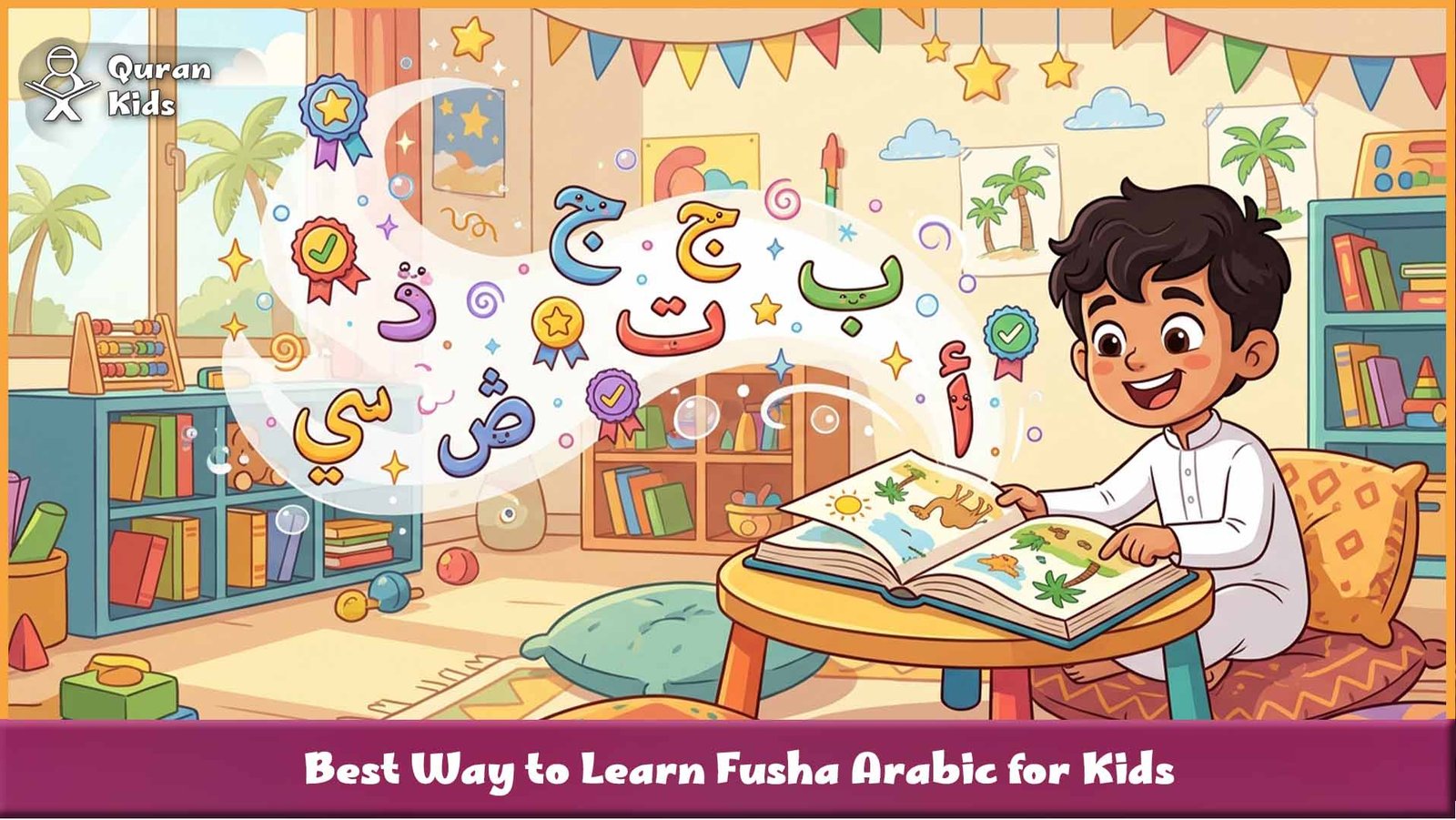
Best Way to Learn Fusha Arabic for Kids: Simple Tips
The best way to learn Fusha Arabic for kids is to introduce children to Modern Standard Arabic through simple words, engaging activities, short conversations, and consistent practice.
Instead of memorizing long vocabulary lists or studying complicated grammar rules, children learn more effectively when Arabic becomes part of their daily routines. With the right approach, they can gradually improve their pronunciation, understand common expressions, and develop confidence in reading, writing, and speaking Arabic.
Fusha Arabic, also known as Modern Standard Arabic (MSA), is the formal form of Arabic used in books, educational materials, news, and many written resources. Learning it from an early age gives children a strong foundation for understanding Arabic texts and exploring Islamic studies.
Why Should Children Learn Fusha Arabic?
Learning Fusha Arabic offers several educational and cultural benefits. It helps children communicate across different Arabic-speaking communities because Modern Standard Arabic is widely understood throughout the Arab world.
Moreover, early exposure makes it easier for children to recognize Arabic letters, understand sentence structures, and develop reading skills. Some important benefits include:
- Better reading skills: Children become familiar with Arabic letters, words, and sentence patterns.
- Improved communication: They learn useful expressions and everyday vocabulary.
- Stronger academic foundation: Fusha supports future learning in Arabic language, literature, and Islamic subjects.
- Cultural understanding: Children become more familiar with Arabic traditions, expressions, and written materials.
- Quranic learning: Understanding Arabic vocabulary can support children’s efforts to explore Quranic meanings.
These advantages make learning Fusha valuable beyond language lessons. It also gives children opportunities to connect with Arabic books, educational resources, and their cultural heritage.
7 Effective Ways to Teach Fusha Arabic to Kids
Finding the best way to learn Fusha Arabic for kids requires choosing methods that match their ages, interests, and learning abilities. The following strategies make lessons more enjoyable while helping children develop practical language skills.
1. Start with Arabic Letters and Sounds
Before introducing complete sentences, children should become familiar with the Arabic alphabet. Teach a few letters at a time and demonstrate their correct pronunciation.
Use colorful flashcards, illustrated books, and simple worksheets to help children recognize each letter. You can also introduce words that begin with familiar letters.
For example, show children the letter ب and introduce words such as باب (door) and بطة (duck).
Short daily exercises are more effective than overwhelming children with too much information in one lesson.
2. Introduce Everyday Arabic Vocabulary
Children learn new words more easily when they can connect them with familiar objects and situations. Start with vocabulary related to their daily lives, including:
- Family members.
- Colors and numbers.
- Animals and food.
- School supplies.
- Body parts.
- Common household objects.
For example, parents can introduce words such as كتاب (book), قلم (pen), and ماء (water) while pointing to the actual objects.
This practical approach helps children understand vocabulary through real experiences rather than relying entirely on translation.
3. Use Pictures, Games, and Interactive Activities
Games make language learning less stressful and encourage children to participate actively. Picture-matching exercises, word puzzles, memory cards, and simple quizzes can reinforce vocabulary.
For instance, parents can show pictures of animals and ask children to identify them using Arabic names. Another activity involves placing several objects on a table and asking children to name each one.
These activities support the best way to learn Fusha Arabic for kids because they combine repetition with entertainment and active participation.
4. Encourage Simple Arabic Conversations
Speaking practice helps children use what they learn instead of simply recognizing written words. Start by helping them learn Arabic alphabet so they can recognize letters and pronounce simple words correctly.
Begin with short expressions such as:
- السلام عليكم (Peace be upon you).
- كيف حالك؟ (How are you?).
- ما اسمك؟ (What is your name?).
- شكراً (Thank you).
- من فضلك (Please).
Parents can practice these expressions during breakfast, playtime, or other everyday activities.
Importantly, avoid correcting every small mistake during conversations. Give children time to express themselves and introduce corrections naturally.
5. Read Short Arabic Stories Together
Storytelling introduces children to vocabulary, sentence structures, and meaningful expressions in context.
Choose illustrated Arabic stories with short sentences and age-appropriate language. Read slowly, explain unfamiliar words, and ask simple questions about the characters and events.
For example, after reading a story about a family, ask children to identify the mother, father, and children in Arabic.
As their reading skills improve, introduce slightly longer stories and encourage them to read short passages independently.
6. Practice Arabic Writing Gradually
Writing reinforces letter recognition and helps children remember vocabulary. Start by asking children to trace Arabic letters before moving to individual words and short sentences.
Once they become comfortable, encourage them to write simple descriptions of familiar objects. For example, they might write:
هذا كتاب. (This is a book.)
Keep writing exercises short and appropriate for their developmental level. Praise their effort and improvement rather than expecting perfect handwriting immediately.
Parents can also explore Affordable Online Quran Classes for Kids as an additional way to support their children’s Islamic learning.
7. Follow a Consistent Learning Schedule
Regular practice helps children retain vocabulary and build language skills over time. A simple daily routine might include:
- 5 minutes reviewing previously learned words.
- 10 minutes learning new vocabulary.
- 5 minutes practicing pronunciation.
- 5 minutes playing an Arabic language game.
- 5 minutes reading a short passage.
When considering Quran lessons, parents can compare Group vs Private (1-on-1) Online Quran Classes to identify a suitable learning format for their child.
Before enrolling, parents should understand how to Know If an Online Quran Teacher Is Qualified and consider the teacher’s experience and teaching approach.
They should also set realistic expectations by learning How Long Does It Take a Child to memorize the Quran online.
Adjust the Arabic learning schedule according to the child’s attention span and progress. Short, enjoyable lessons are often more productive than long sessions that cause frustration.
Learning Fusha Arabic Through Online Classes
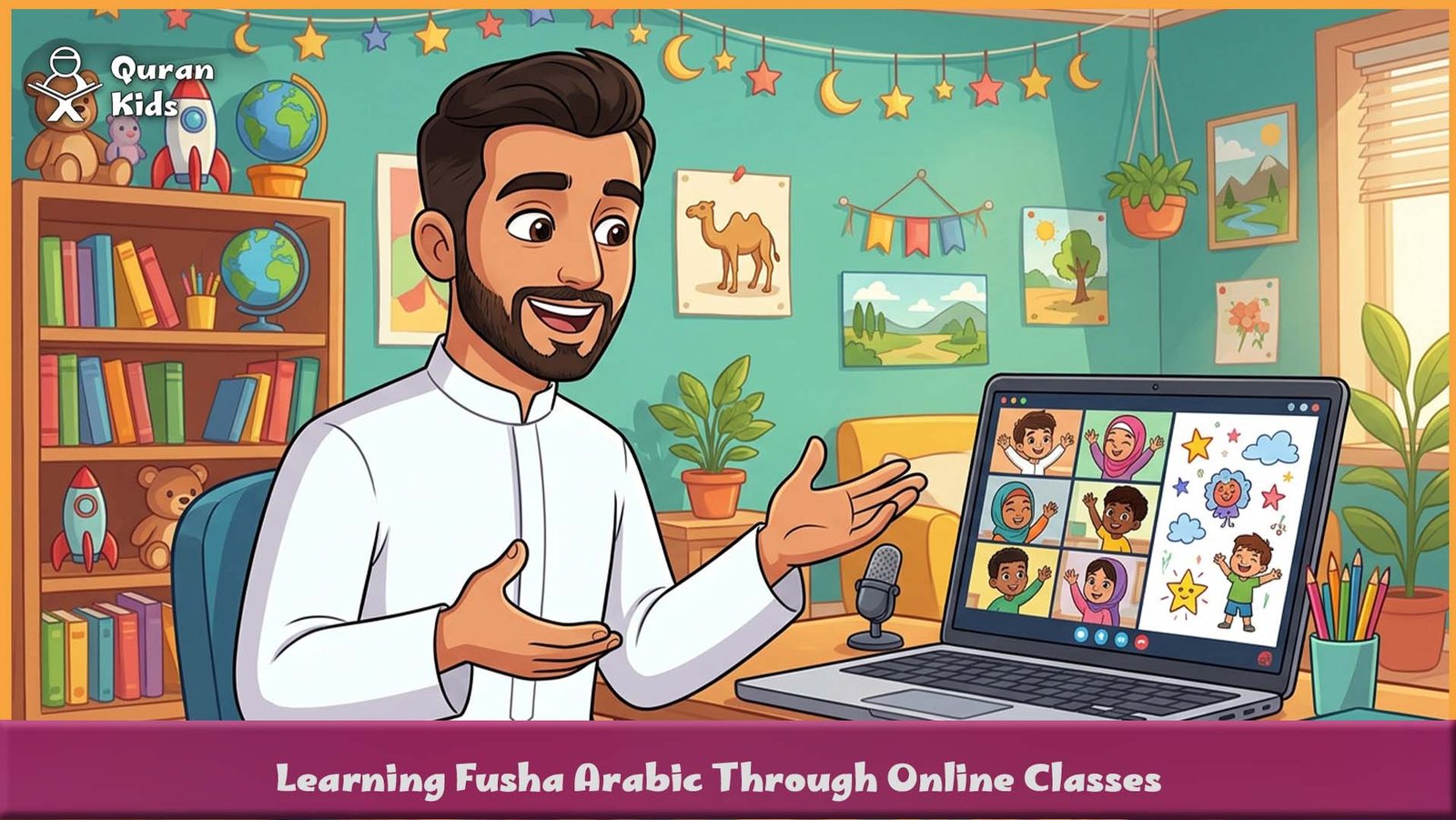
Online education provides another practical option for families looking for structured Arabic lessons. Through live classes, children can learn with teachers, practice pronunciation, and receive guidance according to their individual abilities. When choosing an online program, parents should consider several factors:
- Qualified teachers: Look for instructors with appropriate Arabic language teaching experience.
- Age-appropriate lessons: Materials should match children’s ages and language levels.
- Interactive teaching: Lessons should include conversations, activities, and reading exercises.
- Individual attention: Children benefit from opportunities to ask questions and receive feedback.
- Consistent progress: A structured curriculum helps parents follow their children’s development.
Quran Kids Academy is an option parents can explore when looking for online Islamic and Quran education for children. Its educational approach can be considered alongside the family’s goals for Arabic and Islamic learning.
Parents should review the available courses and teaching arrangements to determine whether they match their child’s needs.
Common Mistakes to Avoid When Teaching Fusha Arabic
Although children can make steady progress, certain teaching mistakes may reduce their motivation.
- Introducing too much grammar too early: Young learners need practical vocabulary and simple sentences before studying complicated grammatical concepts.
- Expecting immediate fluency: Language development takes time. Children need regular exposure and opportunities to practice without pressure.
- Relying only on memorization: Memorizing words is useful, but children should also learn how to use them in meaningful sentences.
- Ignoring pronunciation: Listening and repeating Arabic sounds helps children develop clearer pronunciation from the beginning.
- Making lessons too long: Extended sessions can reduce concentration, especially among younger children. Short activities with regular breaks are more suitable.
Avoiding these mistakes creates a supportive learning environment where children can improve gradually and enjoy the process.
Frequently Asked Questions About Learning Fusha Arabic for Kids
These frequently asked questions explain the basics of learning Fusha Arabic and help parents choose effective methods to support their children’s language development.
1. At What Age Should Children Start Learning Fusha Arabic?
Children can begin developing familiarity with Arabic sounds and simple words at an early age. However, the appropriate activities depend on their development, attention span, and previous exposure to the language.
2. How Long Does It Take a Child to Learn Fusha Arabic?
The learning period varies according to the child’s age, starting level, practice frequency, and learning environment. Regular lessons and daily exposure can help children make gradual progress.
3. Is Fusha Arabic Different from Spoken Arabic Dialects?
Yes. Fusha is the formal Arabic variety used in education, books, and official communication. Spoken dialects differ in vocabulary, pronunciation, and expressions across regions.
Conclusion
Finding the best way to learn Fusha Arabic for kids starts with making language learning enjoyable, practical, and consistent. Through interactive games, everyday conversations, Arabic stories, and simple writing exercises, children can gradually develop their vocabulary and communication skills.
Parents can also support this progress by creating opportunities to practice Arabic at home and choosing suitable educational programs.
Ultimately, the best way to learn Fusha Arabic for kids is to combine regular practice with age-appropriate lessons and positive encouragement. With patience and the right learning environment, children can build a strong foundation in Fusha Arabic and develop a lasting interest in the language.