Online Quran Classes vs. Quran Apps: Which Is Better?
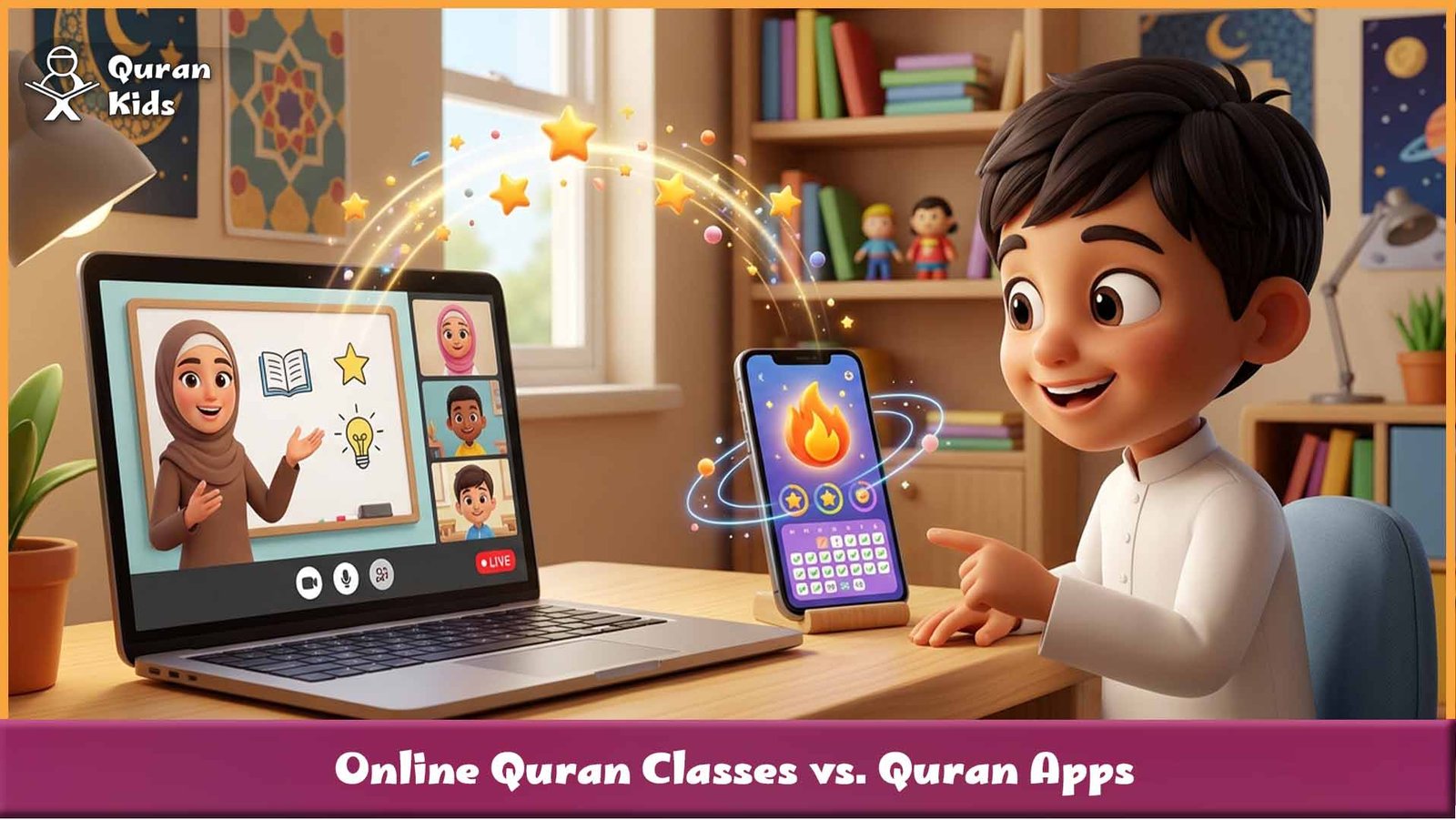
Online Quran classes vs Quran apps is an important decision for parents who want to help their children learn Quran recitation, memorisation, and Tajweed correctly.
While Quran apps provide convenient tools for listening, repetition, and independent practice, online lessons offer direct interaction with a teacher who can explain mistakes and guide learning step by step.
Quran Kids Academy is an option parents can explore when looking for structured Quran lessons for children. Understanding the differences between these two methods can help families choose an approach that matches their child’s age, learning level, and educational needs.
Online Quran Classes vs Quran Apps: The Main Differences
The main difference is guidance. A teacher can listen, explain, and adapt a live lesson. An app usually provides recorded recitations, digital text, repetition tools, and sometimes interactive exercises.
| Learning factor | Online Quran Classes | Quran Apps |
|---|---|---|
| Teacher interaction | Direct communication with an instructor | Usually self-guided |
| Recitation feedback | A teacher can correct mistakes in real time | Depends on the app’s tools |
| Schedule | Set lesson times, sometimes flexible | Available whenever the child practises |
| Learning pace | It can be adjusted to the student | Mainly controlled by the user |
| Progress support | May include teacher or parent follow-up | Often depends on personal tracking |
Neither option is best in every situation; the choice depends on the child’s needs.
What Do Online Quran Classes Offer Children?
Live lessons can help children recognize Arabic letters, read words, and improve recitation. A teacher can notice repeated errors, demonstrate the correct sound, and ask the child to try again.
This guidance matters when children begin Tajweed. A recording provides an example, but may not explain how to adjust a child’s pronunciation. Parents comparing online Quran classes vs traditional madrasa can also consider how each setting provides teacher interaction, routine, and opportunities to practise with others.
A live class also creates a learning appointment, helping some families make Quran study part of the week. Others may prefer to compare online quran classes vs mosque classes when deciding which learning environment fits their child and family schedule.
What Can Quran Apps and Cannot Do?
Quran apps are convenient for short, repeated practice. In the online Quran classes vs Quran apps comparison, their main strength is independent access. This distinction matters when choosing tools for home practice. Depending on the application, children may be able to:
- Listen to different reciters and replay selected verses.
- Follow the Arabic text while listening.
- Review memorised passages.
- Read translations or brief explanations.
- Use quizzes or other learning activities.
App features vary. Some offer speech-recognition tools, but automated feedback may not match a teacher’s individual correction. Apps are useful practice resources, not always a replacement for personal instruction.
Which Option Is Better for Beginners and Young Children?
For a child starting Arabic, direct instruction is often helpful because a teacher can explain letter sounds and correct mistakes as they happen. This makes online Quran classes vs Quran apps an important decision for beginners. An app can then support revision between lessons.
Confident readers may use apps for daily listening and review. Children who need help with motivation, Tajweed, or memorisation may benefit from teacher-led lessons.
Families can also review practical considerations such as affordable online Quran classes for kids and decide what lesson frequency and format are realistic for their budget and routine.
Can You Combine Online Classes and Quran Apps?
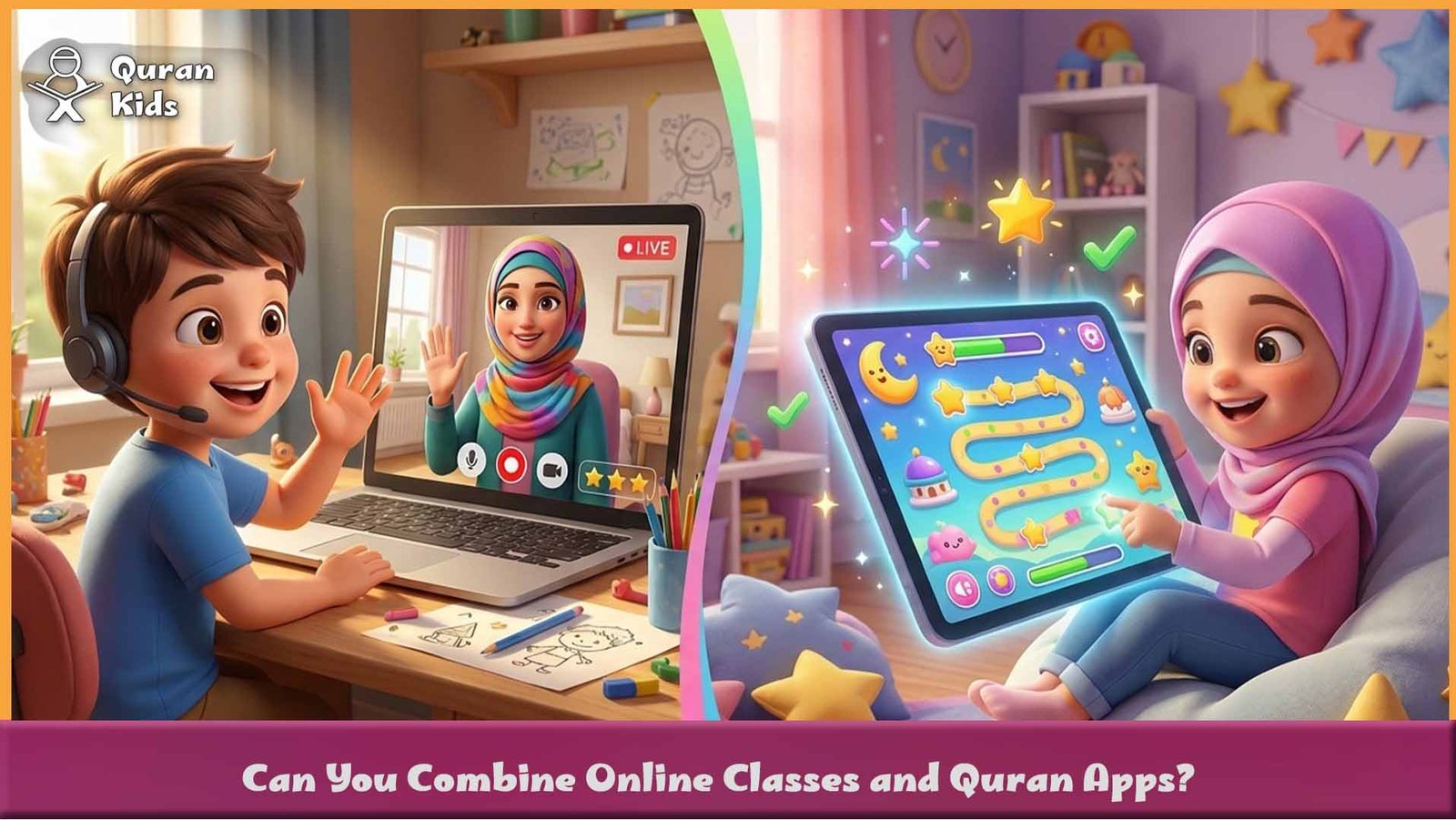
Yes. Combining both options is practical for many households. Rather than treating online Quran classes vs. Quran apps as an either-or decision, parents can use each for a different purpose.
For example, after a 30-minute lesson, a child could spend 5–10 minutes on three or four days listening to the assigned verses and following the text. The routine should suit the child’s age.
This balance often guides online Quran classes vs. Quran apps decisions. The app supports repetition, while the teacher checks understanding and recitation.
How to Choose the Right Learning Setup?
Consider the child’s reading ability, goals, schedule, and need for individual attention. Ask how lessons are organised, how progress is reviewed, and whether the format suits your child. Parents should revisit online Quran classes vs Quran apps as skills develop.
If you are considering private or shared lessons, this guide to group vs private (1-on-1) online Quran classes can help you compare the learning experience. It is also worth checking how to know if an online Quran teacher is qualified before choosing a teacher, especially when accurate recitation and Tajweed are priorities.
Parents can explore Quran Kids Academy and review its available programmes, teaching arrangements, schedules, and level of teacher support before deciding whether they meet the child’s needs.
Frequently Asked Questions About Online Quran Classes vs Quran Apps
The following FAQs about online Quran classes vs Quran apps address common questions parents ask when choosing the most suitable Quran learning method for their children.
Can a Quran app correct my child’s pronunciation?
Some apps offer pronunciation or speech-recognition features, but their accuracy and capabilities differ. A teacher can provide more individual feedback and explain how to correct a specific sound.
Are Quran apps useful for memorisation?
Yes. Replaying verses and following the text can support repetition. Children may still benefit from reciting what they have memorised to a teacher or parent.
Should my child use an app during a Quran lesson?
It can be useful if the teacher recommends a particular app or audio resource. However, the device should support the lesson rather than distract the child.
How much practice should children do between lessons?
Keep practice short and appropriate to the child’s age. A few focused minutes on most days may be more manageable than occasional long sessions.
Conclusion
Choosing between online Quran classes vs Quran apps depends on your child’s learning needs and the level of guidance required. Quran apps are useful for listening, memorisation, and daily revision, while online lessons allow children to receive direct feedback, improve pronunciation, and learn Tajweed with a teacher.
For many families, combining both methods offers a practical way to balance structured instruction with independent practice. Parents can explore Quran Kids Academy to review its available programmes and determine whether its learning options suit their children’s goals.