Live Quran Tutor vs. Quran Learning Software: Key Differences
live quran tutor vs quran learning software is an important comparison for parents who want to give their children a convenient and effective way to learn the Holy Quran. With the growth of digital education, families can choose between learning directly from a qualified Quran teacher and using software designed to support Quran reading and recitation.
Both methods offer useful learning opportunities, but they do not provide the same experience. Digital programs allow children to repeat lessons, listen to recorded recitations, and practice independently. Meanwhile, a live tutor offers personal guidance, corrects pronunciation mistakes, and adapts lessons to a child’s individual needs.
Understanding these differences can help parents select an approach that matches their children’s abilities, learning preferences, and Quran education goals.
Understanding the Two Quran Learning Methods
Before comparing the advantages of each option, parents should understand how these learning methods work.
What Is a Live Quran Tutor?
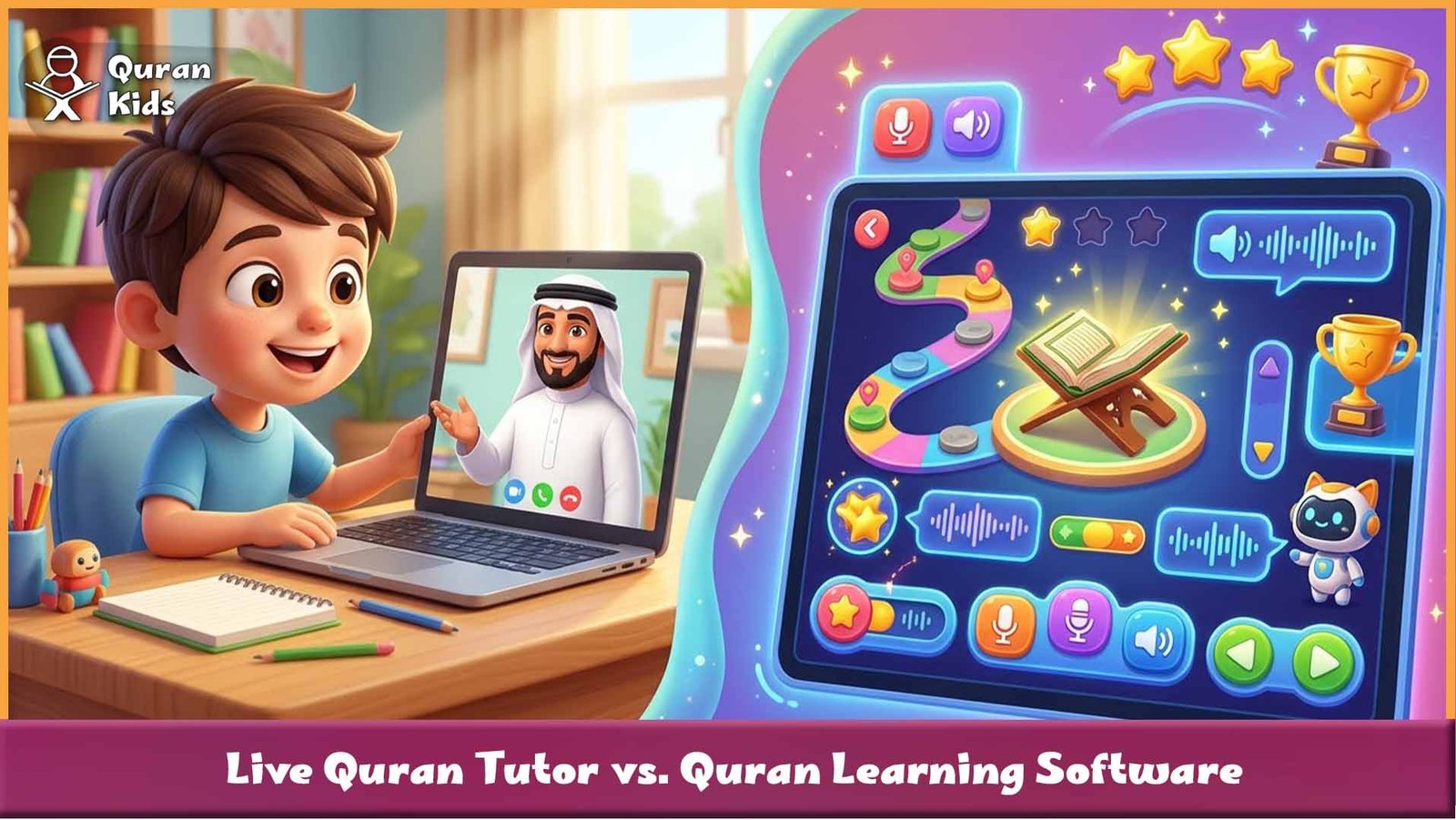
A live Quran tutor teaches students through direct online sessions, usually using video communication platforms. Lessons may cover Arabic letters, Quran reading, Tajweed rules, memorization, and proper pronunciation.
One important advantage is direct communication. Children can ask questions, repeat verses, and receive immediate feedback when they make mistakes.
A teacher can also recognize when a student struggles with a particular Arabic sound and provide additional explanations. This individual attention can make learning easier, especially for beginners who need guidance while developing their reading skills.
Parents interested in understanding the differences between online lessons and other educational environments can also explore online quran classes vs traditional madrasa.
What Is Quran Learning Software?
Quran learning software refers to digital applications and programs that help students practice Quran reading and related skills. Depending on the program, children may find recorded recitations, interactive exercises, Arabic letter recognition activities, and pronunciation examples.
These tools allow learners to repeat lessons at their own pace. They can revisit difficult sections without waiting for another scheduled class.
However, software capabilities vary. Some programs offer speech recognition or automated pronunciation feedback, while others mainly provide audio and visual learning materials. Parents should understand what a particular tool actually offers before relying on it as their child’s primary learning method.
For a closer look at the features of digital Quran learning tools, read our guide to online quran classes vs quran apps.
Live Quran Tutor vs Quran Learning Software: Key Differences
Although both approaches use technology, their teaching experiences are quite different. The best choice depends on the level of guidance a child needs and the family’s learning priorities.
1. Personal Guidance and Feedback
A live tutor can observe a child’s progress and identify specific pronunciation problems. For example, a beginner may confuse two Arabic letters that sound similar. The teacher can demonstrate how to pronounce each letter and ask the child to repeat it until the sound improves.
Software can provide useful examples, but automated feedback may not recognize every pronunciation mistake accurately. Direct instruction can therefore be particularly helpful when children are learning unfamiliar Arabic sounds.
2. Flexibility and Learning Independence
Quran learning software gives children more control over when and how they practice. They can listen to a verse several times, repeat exercises, and review previous lessons whenever they have free time.
Live lessons usually require an agreed schedule. Although this means less flexibility, regular appointments can help children develop consistency and a stronger learning routine.
Parents comparing different learning environments may also find it useful to read about online quran classes vs mosque classes before deciding which arrangement suits their family.
3. Motivation and Engagement
Children often respond differently to digital activities and human interaction.Some enjoy colorful interfaces, quizzes, and interactive exercises. Others feel more comfortable when a teacher encourages them, answers their questions, and recognizes their efforts.
A supportive teacher can also adjust the lesson when a child becomes distracted or finds a topic difficult. Software may maintain interest through activities, but it cannot always respond to a child’s learning needs in the same way.
4. Learning Tajweed and Correct Pronunciation
Tajweed requires more than recognizing Arabic words or listening to recorded recitation. Students need to understand pronunciation rules and apply them correctly when reading the Quran.
Audio lessons can help children become familiar with correct recitation. Nevertheless, a qualified teacher can listen to their reading, identify errors, and explain how to improve their application of Tajweed rules.
Parents should also understand what makes a teacher suitable for their child’s needs. Our guide on How to Know If an Online Quran Teacher Is Qualified explains important points to consider when evaluating a teacher’s qualifications and teaching approach.
Comparison Table: Which Learning Method Offers More?
| Comparison Factor | Live Quran Tutor | Quran Learning Software |
|---|---|---|
| Personal feedback | Direct teacher feedback | Depends on software features |
| Pronunciation correction | Individual correction | Limited or automated |
| Learning schedule | Scheduled sessions | Flexible practice |
| Interaction | Direct human interaction | Digital interaction |
| Tajweed learning | Personalized guidance | Depends on available lessons |
| Progress monitoring | Teacher observation | Available tracking features vary |
| Independent practice | Requires lesson preparation and revision | Convenient repeated exercises |
The comparison shows that each option serves a different purpose. Software is useful for independent practice, while a live tutor provides guidance that can help children overcome specific learning difficulties.
Which Method Is Better for Different Learning Needs?
The comparison between live quran tutor vs quran learning software becomes easier when parents consider their children’s current abilities and educational goals. A live tutor may be more suitable for:
- Beginners who need help recognizing Arabic letters and connecting them.
- Children who struggle with pronunciation or basic reading skills.
- Students learning Tajweed and needing regular correction.
- Young learners who benefit from encouragement and direct interaction.
- Children following a structured Quran memorization plan.
Quran learning software may be useful for:
- Children who want to review previously learned lessons.
- Students who enjoy independent digital activities.
- Families looking for additional practice resources.
- Learners who need repeated listening exercises.
- Children who want to become more familiar with Quranic vocabulary and recitation.
For example, imagine a child who repeatedly struggles to pronounce the Arabic letter ع. A teacher can listen carefully, demonstrate the correct articulation, and provide individual exercises. A recorded lesson can offer a useful pronunciation example, but it may not identify exactly where the child’s mistake occurs.
Neither option has to replace the other. Combining personal instruction with digital practice can create a balanced learning experience.
How Can Parents Choose the Right Quran Learning Approach?
Choosing an appropriate learning method requires more than comparing available features. Parents should consider several practical factors before making a decision.
- Start with your child’s current level. A child who has never learned Arabic letters may need more direct guidance than someone who can already read basic Quranic words.
- Consider attention span. Some children concentrate better during short interactive lessons, while others enjoy exploring educational applications independently.
- Think about learning goals. If the main objective is improving recitation, learning Tajweed, or memorizing Quranic passages with correction, access to qualified instruction is important.
- Check the quality of educational resources. Whether you choose a teacher or software, make sure the learning materials are accurate, age-appropriate, and suitable for your child’s level.
- Maintain a consistent routine. Short, regular practice sessions can be more productive than occasional long study periods. Parents can also encourage children to review what they learned between lessons.
If memorization is one of your child’s main goals, understanding how long does it take a child to memorize the Quran online can help you develop realistic expectations and a suitable practice routine.
How Can Quran Kids Academy Support Children’s Quran Learning?
For parents who prefer structured online Quran education, Quran Kids Academy is an option to explore when looking for guidance for young learners.
A suitable online learning experience should consider each child’s age, reading ability, and educational goals. Parents can contact Quran Kids Academy to learn more about its available programs, teaching approach, lesson arrangements, and teacher qualifications.
Before enrolling, it is helpful to ask how students receive pronunciation feedback, how lessons are adapted to different learning levels, and how parents can follow their children’s progress.
These questions can help families determine whether the available learning arrangements match their expectations.
The goal is not simply to complete lessons but to help children develop a meaningful relationship with the Quran through understanding, practice, and consistent learning.
Frequently Asked Questions About Live Quran Tutors and Quran Learning Software
These FAQs help parents compare live Quran tutors and learning software and choose the best option for their children’s learning needs.
1. At What Age Can Children Start Learning the Quran Online?
Children can begin exploring basic Quran learning activities when they are developmentally ready to recognize sounds, follow simple instructions, and participate in short educational sessions. The appropriate starting age varies from one child to another.
2. How Can Parents Monitor Their Child’s Quran Learning Progress?
Parents can review completed lessons, listen to their child’s recitation, communicate with the teacher, and observe improvements in reading confidence and pronunciation over time.
3. What Equipment Do Children Need for Online Quran Lessons?
Most online learning arrangements require a reliable internet connection, a computer or tablet, a microphone, and headphones when necessary. A quiet study area can also help children concentrate.
Conclusion
Choosing between a teacher and a digital learning program depends on what a child needs to achieve. Software can provide convenient practice, repeated listening, and interactive activities, while a live tutor offers personal explanations, pronunciation correction, and direct encouragement.
When considering a live quran tutor vs. Quran learning software, parents should focus on the quality of instruction, their child’s learning style, and the importance of accurate Quran recitation.
For many families, combining both methods can offer a practical solution. Digital resources can support daily revision, while guidance from a qualified teacher can help children build stronger reading and recitation skills. Exploring suitable learning arrangements through Quran Kids Academy may be a useful starting point for parents seeking online Quran education for their children.